

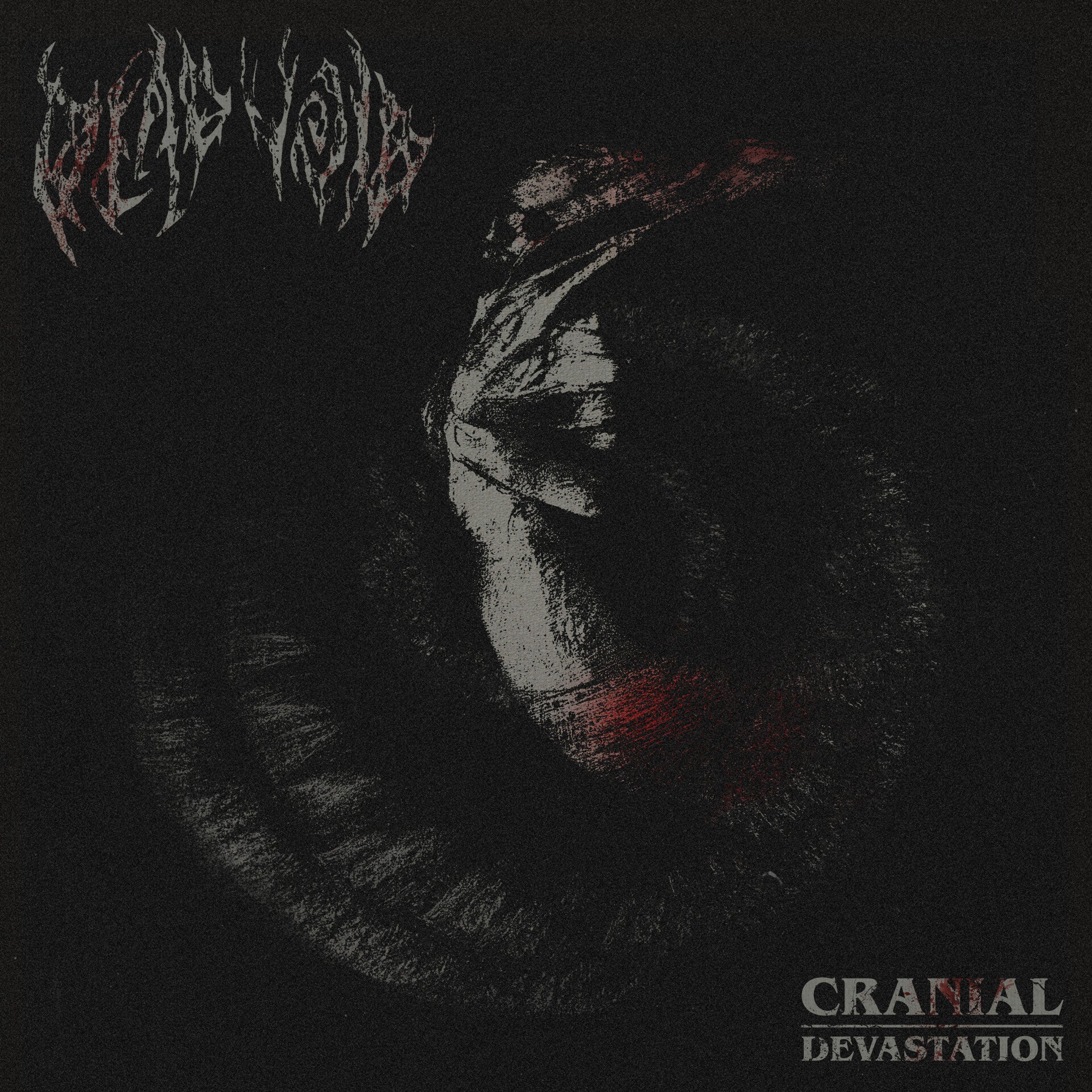
Release Date June 5th, 2026
Format CD/LP/Digital
Genre Death-Doom Metal
Origin Denmark
Dead Void emerged from Copenhagen with a stripped down two member lineup and a clear devotion to old school death metal filtered through slow, suffocating doom. Since their debut, "Volatile Forms", the band has built its reputation on long compositions, oppressive atmosphere and an obsession with psychological decay instead of simple horror themes. Their music draws from the darkest corners of the underground, where riffs are allowed to linger and every section is built to increase tension instead of chasing speed or instant impact.
Working as a duo has never limited their sound, as A. and K. create an overwhelming presence through layered guitars, deep bass and tortured vocal performances. Their second full length, "Cranial Devastation", continues along the same path with a sharper focus on songwriting and a stronger grip on pacing, showing a band refining its craft without abandoning the bleak character that first defined it.
Recorded primarily live at No Master's Voice by Marcus Ferreira Larsen, "Cranial Devastation" captures a raw and organic performance where imperfections become part of the experience. The production refuses to smooth out the rough edges, giving the guitars a suffocating presence while the drums retain an earthy, natural tone. James Plotkin's mastering adds depth without sanding away the rough surfaces, allowing the album to retain its oppressive character.
Visually, the choice of artwork by Odilon Redon fits the unsettling atmosphere, reflecting the record's fascination with decay, isolation and fractured states of mind. Lyrically, Dead Void remains focused on psychological collapse, inner torment and existential dread, staying far away from fantasy or shock value. The closing interpretation of Adrian Borland And The Sound's "Jeg Kan Ikke Flygte Fra Mig Selv" blends surprisingly well with the surrounding material, translating its emotional despair into the band's suffocating death doom language without sounding disconnected.
The slow sections stretch out with intent, while the faster bursts arrive at the right moments to shake up the pacing. Several passages sink deep into oppressive atmosphere, though some transitions could have been tighter and a few ideas stay around longer than necessary. The vocals are among the album's strongest elements, alternating between cavernous growls and tortured screams that reinforce the bleak character of the music without becoming monotonous. The rhythm section provides a relentless foundation throughout, helping the songs maintain momentum even during their longest passages.
Dead Void commits fully to one approach and rarely steps outside that framework. The songwriting is disciplined, though some sections begin to blend together after repeated listens, making individual moments harder to recall once the album ends. There is enough quality in the riff writing and atmosphere to maintain interest, though a little more contrast could have elevated the material significantly.
Fans of oppressive death-doom will recognize the care put into every composition, even if the album stops short of becoming one of the more distinctive releases in its field. "Cranial Devastation" is a respectable follow up that strengthens Dead Void's position in the underground without reaching the intensity or memorability suggested by its strongest moments.
|7.0
Add comment
Comments