

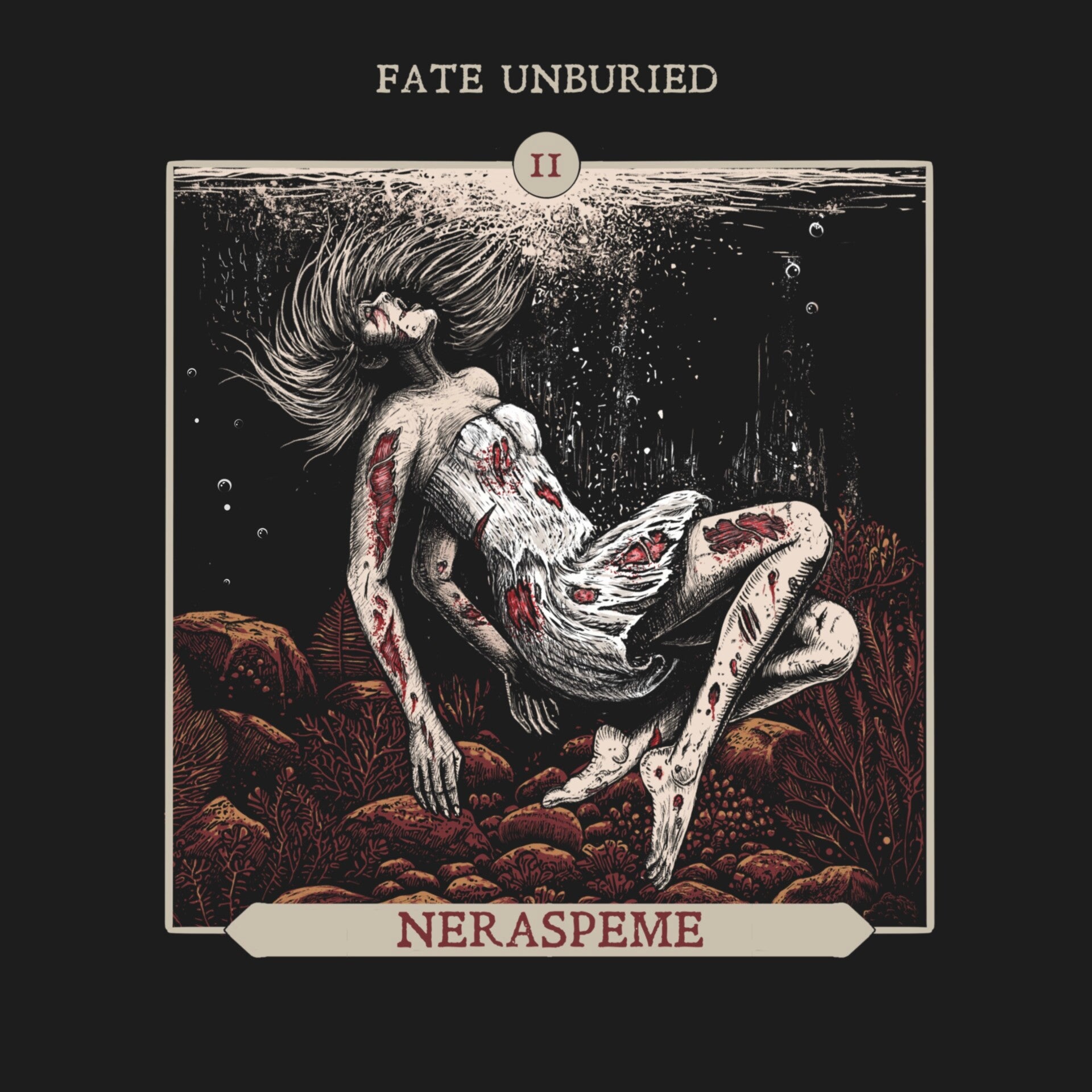
Release Date October 16th, 2026
Format LP/CD/MC
Genre Progressive Death Metal
Origin Italy
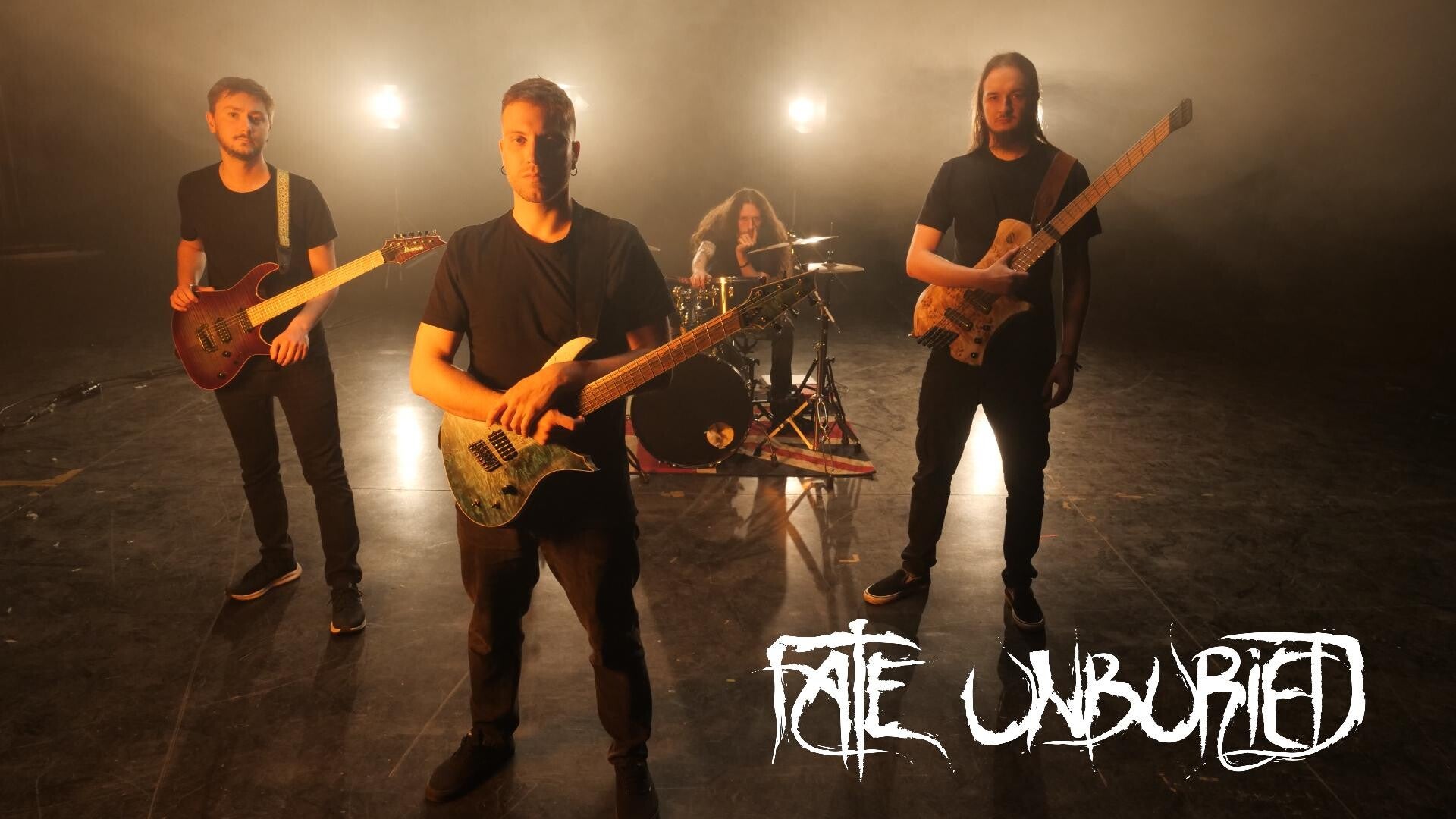
Fate Unburied is an Italian progressive death metal quartet whose documented path begins with the 2012 demo “Dehumanized Society”. Their first full length album, “Logos”, arrived in 2017, followed by two linked EPs in 2020 and 2021. That catalogue charts a shift from a more traditional death metal base toward longer arrangements, abrupt rhythmic changes, dissonant guitar language and darker atmospheric sections. The current lineup consists of Riccardo Babbolin on vocals and guitar, Francesco Garatti on guitar, Davide Piccolo on bass and Giorgio Piva on drums. “Neraspeme”, issued through Time To Kill, is their second full length release and arrives after a five year gap.
The passage of time is audible in the greater scale of the writing and in the wider emotional range. Fate Unburied uses precision as a tool for unease, with melody appearing in damaged forms and rhythmic order repeatedly collapsing into tension. Their catalogue has never followed a straight line, and “Neraspeme” extends that path through a more ambitious framework. It also places the quartet in a difficult part of progressive death metal, where intricate composition must coexist with songs that remain identifiable after the final chord. They reach that balance often enough, although their appetite for sudden change occasionally outruns the material.
“Neraspeme” contains twelve songs built around the decline of a relationship. Anger, confusion, obsession and a corrupted form of hope shape the lyrical arc. The concept is grim without turning into empty misery. The words focus on mental collapse, recurring thoughts, self deception and the failure to leave a destructive cycle. “Garden” sums up that approach through mechanical attacks, martial rhythms and quieter sections marked by melancholy. Across the album, clipped riffs meet dissonant chords, sudden tempo changes and suspended passages
where the guitars pull back and let the unease spread. The drums move between grooved patterns and rigid, almost militaristic accents, giving the songs a restless pulse. The bass remains audible beneath the layered guitars, adding depth to the lower register and refusing to disappear behind distortion.
Vocals stay severe and controlled, with enough variation to stop the concept from becoming one long emotional note. The production is detailed and wide, separating the moving parts while retaining aggression. Guitar tones have a dry edge, the drums retain impact, and the atmospheric sections do not turn cloudy. There is discipline in the mix, especially during crowded passages, where several rhythmic ideas occupy the same stretch without collapsing into noise. The album also avoids the common mistake of treating melancholy as a decorative pause between violent sections. Here, subdued passages extend the psychological damage and make the heavier returns more unsettling.
The album reaches its best level when catchy riffs and progressive structures meet in the same section. Several guitar phrases linger after one play, an important quality in music built from constant changes. The weaker moments arrive when too many turns are packed into a short span. A few transitions resemble hard edits more than logical developments, and the emotional arc occasionally loses momentum under the amount of information being presented. The twelve song length also exposes passages that revisit similar tension without adding much. Stricter editing could have made the final third more decisive and removed several minutes of excess. Those faults do not erase the quality of the writing.
“Neraspeme” has substance, skilled musicianship and an oppressive atmosphere that rarely becomes flat. It asks for patience, though it offers enough hooks and rhythmic movement to reward that patience. The main issue is restraint. Fate Unburied sometimes stack another riff, another tempo shift or another atmospheric break onto a section that had already reached its conclusion. When the arrangements are more selective, the album becomes far more effective, pairing emotional damage with intricate death metal writing in a way that sounds more personal than academic. “Neraspeme” is ambitious, thoughtful and frequently gripping, with several excellent passages and a handful of structural decisions that need refinement. It marks a substantial advance over the earlier releases. More disciplined editing could have turned a very good album into a more complete one.
|7.5
Add comment
Comments