

Release Date July 31st, 2026
Format Vinyl/CD
Genre Thrash Metal
Origin United States
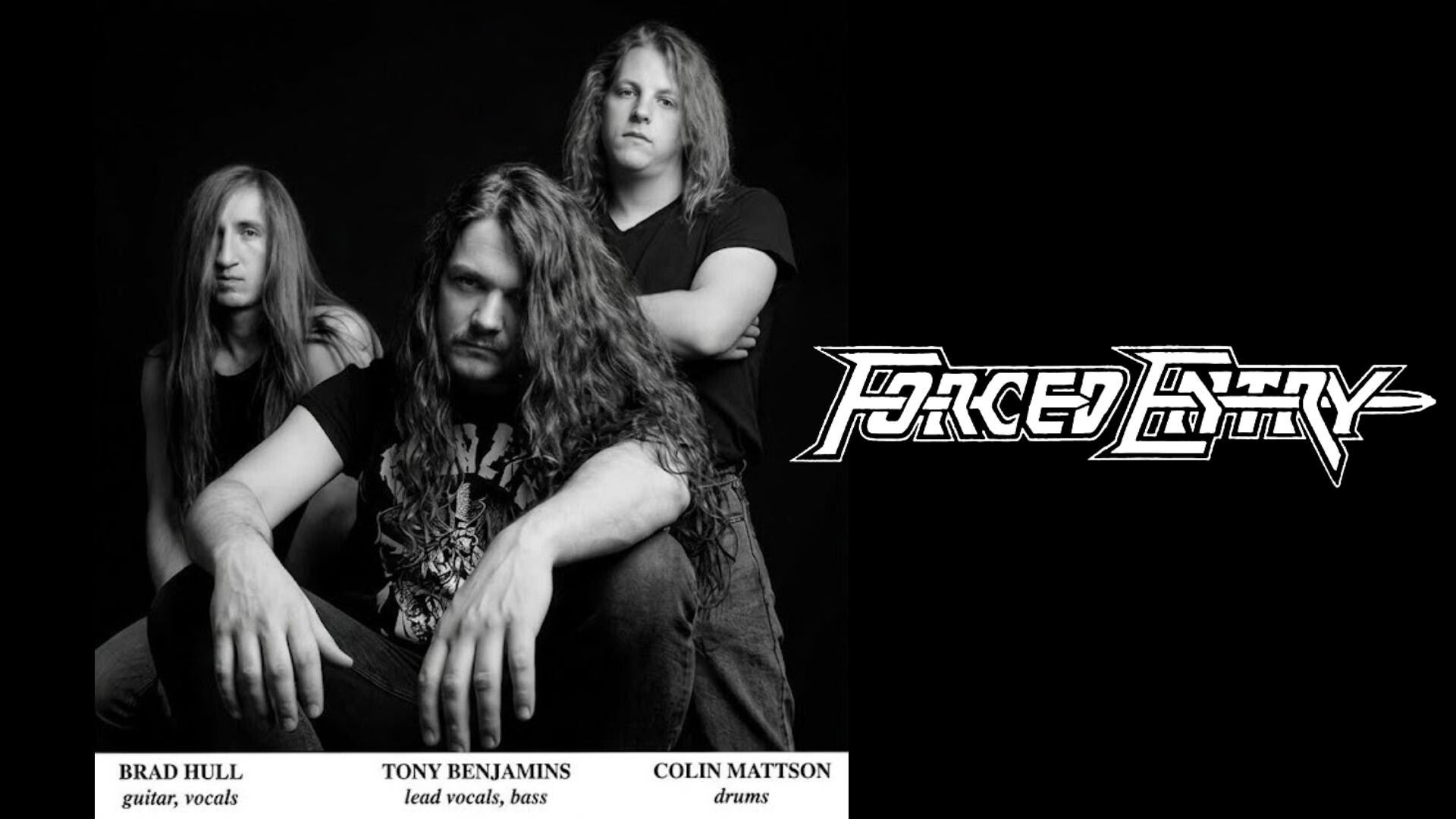
Forced Entry formed in Seattle during the late 1980s, when the city’s underground metal scene had far more going on than the history books usually mention. The trio of Tony Benjamins on vocals and bass, Brad Hull on guitar, and Colin Mattson on drums built its name through relentless local shows, tape trading, fanzines, and three demos that circulated far beyond Washington. Combat signed the band and issued “Uncertain Future” in 1989, followed by “As Above, So Below” in 1991. Tours with Sacred Reich, Coroner, Atrophy, and Obituary placed Forced Entry alongside bands that treated thrash as a form open to odd timing, abrupt turns, and progressive construction.
Hull later joined the reformed Sanctuary, though Forced Entry’s original run remains the source of the band’s reputation. Along with Bitter End and Panic, the band represented the metal side of Seattle before the city became shorthand for grunge. Forced Entry played with speed and aggression, though the main distinction came from how the trio arranged riffs, bass movement, and rhythmic shifts. The music was rarely content with a straight line. It moved through crooked patterns, sudden pivots, and groove-heavy passages that gave the songs a physical pull beneath the cerebral writing. That combination placed the band in a narrow lane between technical thrash, progressive metal, and the tougher end of the American underground. The band’s catalog is small, two studio albums from its original era, though its influence and cult status have remained larger than the discography suggests. M-Theory Audio also plans to compile the three early demos in 2027, giving the formative material an official release after decades of circulation through collectors and tape traders.
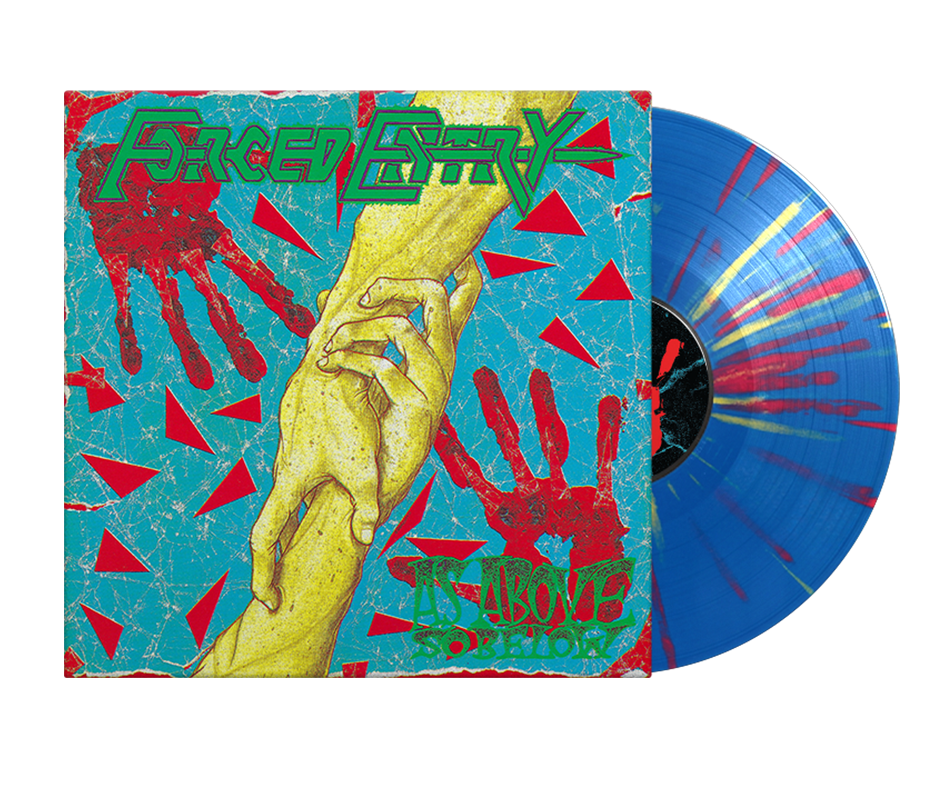
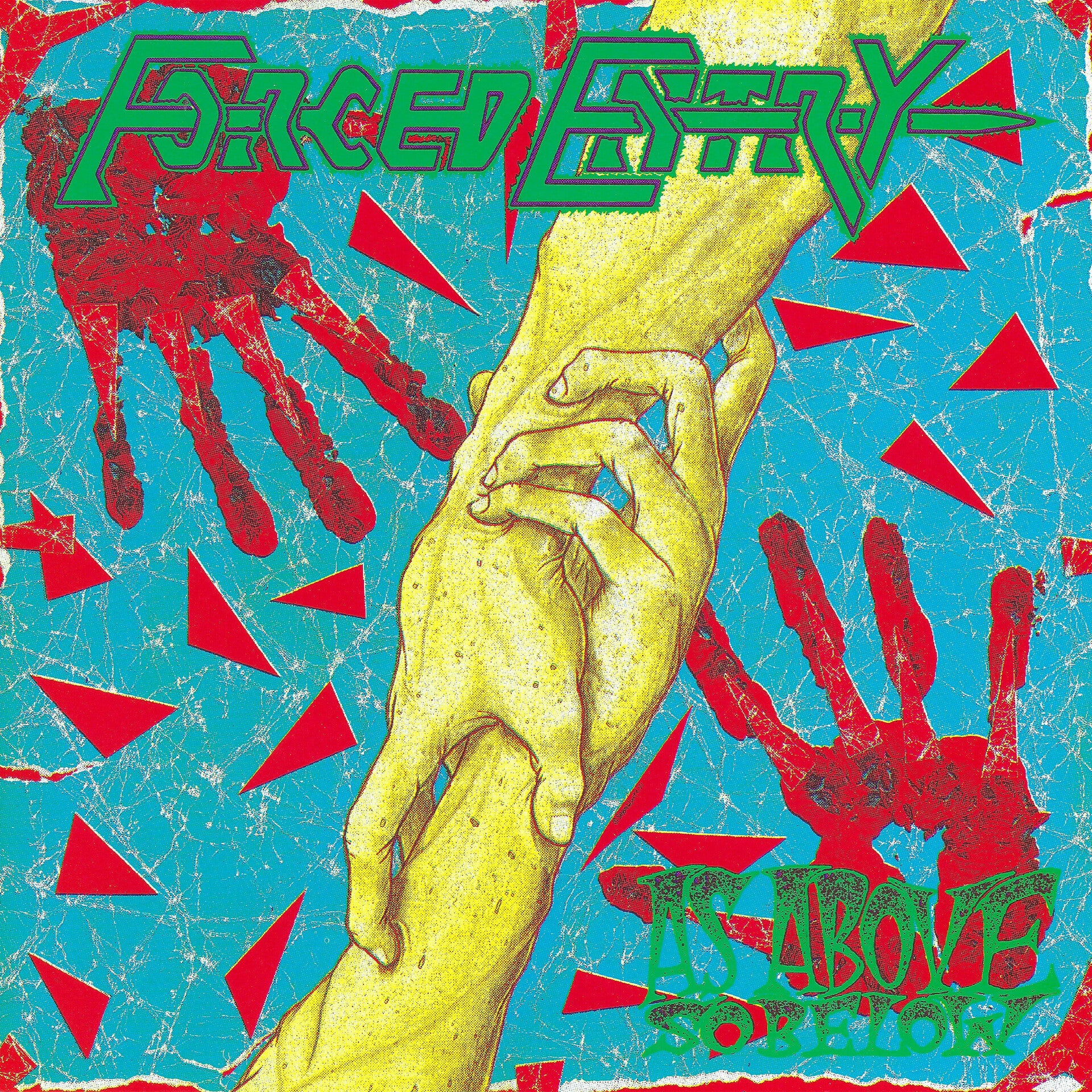
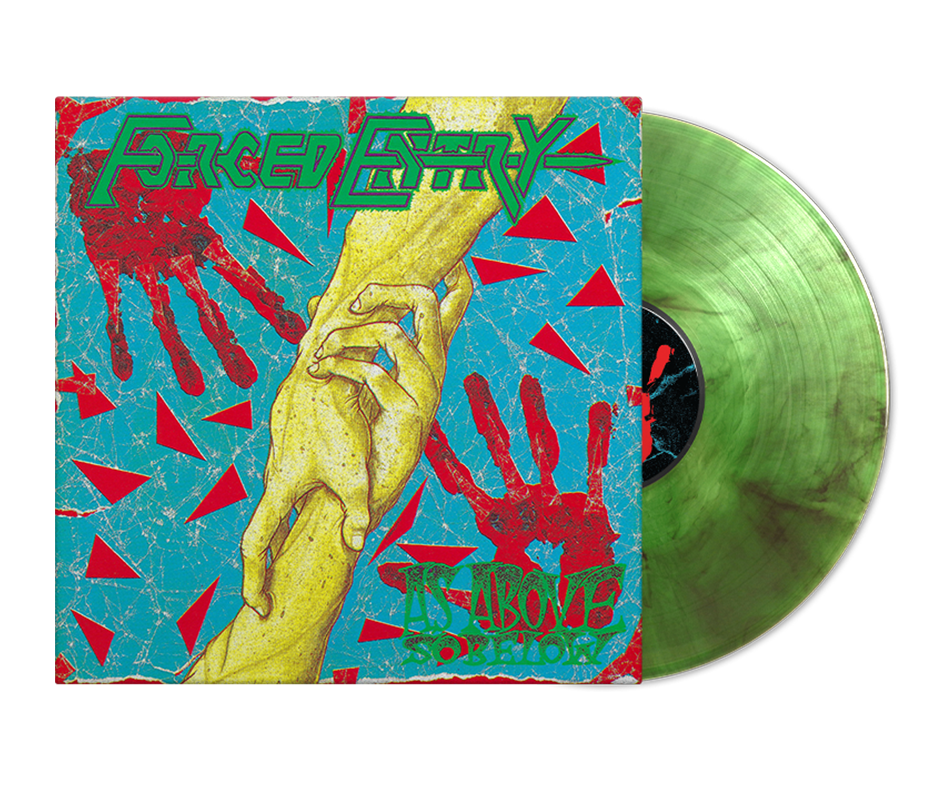
Originally released in 1991, “As Above, So Below” returns through M-Theory Audio for its 35th anniversary. This edition marks the album’s first vinyl pressing, with 300 copies on Microcosm Splatter vinyl and 100 mail-order copies on Sludge Green vinyl. A Digipak CD edition, while Marc Lopes has expanded the layout with a new Tony Benjamins interview, additional photographs, and vintage flyers. The original album was produced by Tom Soares, whose credits include Demolition Hammer, Cro-Mags, and Meliah Rage, and engineered by Jamie Locke, known for work with Obituary, Prong, and Leeway. Sean Wyett supplied the artwork, adding another link to the era through his work with Exodus, Cyclone Temple, and Devastation.
Musically, “As Above, So Below” remains a precise collision of thrash-speed, progressive structure, and low-end groove. Hull’s guitar work crosses the rhythm section with angular patterns and sudden changes of course. Benjamins does far more than follow the guitar; his bass frequently shapes the riff from underneath, adding movement and tension where a simpler line would flatten the song. Mattson’s drumming shifts between fast thrash beats, clipped accents, and heavy syncopation, giving the album a restless pulse. The trio format leaves little padding. Most passages are built from closely linked parts, and the songs move through numerous ideas without turning into random collections of riffs.
The dry production exposes the playing and preserves the hard edges of the original sessions. It also makes a few transitions sound rigid, and some vocal phrases sit too close to the riff pattern, reducing their separate impact. Those flaws are limited. The larger impression comes from disciplined writing, unusual rhythmic choices, and an aggressive performance that remains physically immediate decades later. This reissue is more than a catalog refresh because the vinyl debut finally gives the album a format long overdue, while the expanded visual material adds useful context without distracting from the music. “As Above, So Below” is intricate, tense, and grounded in riffs that strike with immediate physical impact. It belongs among the better technical thrash releases of its period as a focused album from a Seattle band operating outside the city’s dominant story.
|8.3
Add comment
Comments