


Release Date May 15th, 2026
Format CD/LP
Genre Thrash Metal
Origin United States
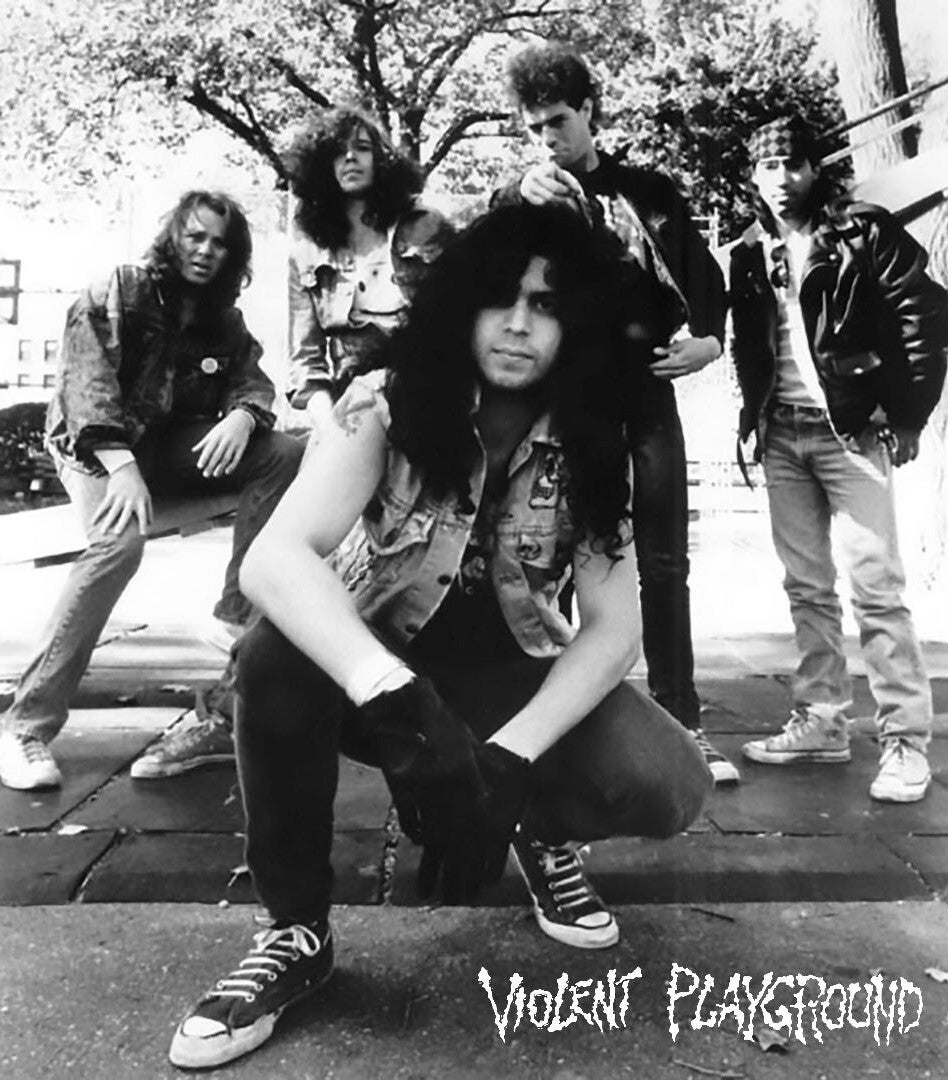
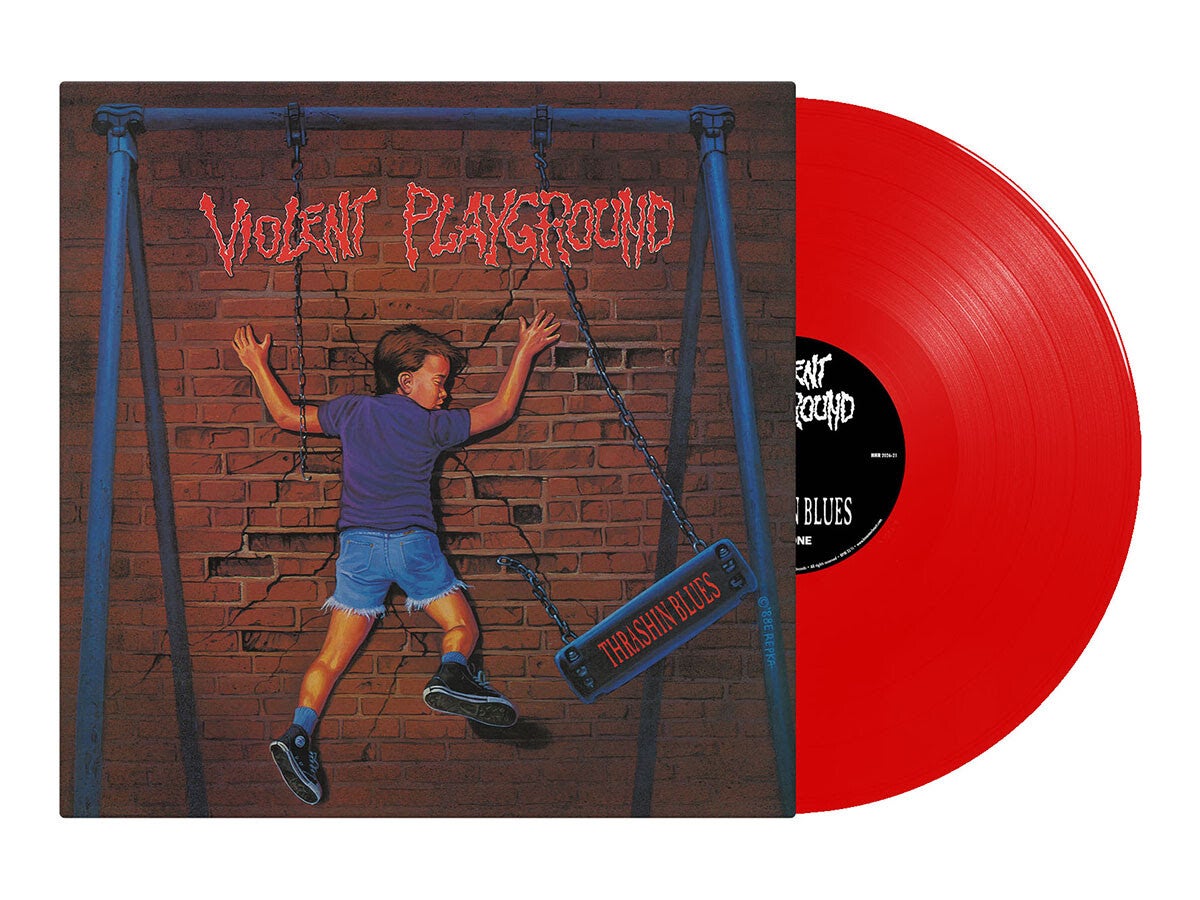
Violent Playground emerged in Fort Lauderdale in 1987, built around Manny on vocals and harmonica, Rocko and Kenny “The Son” Civale (R.I.P. 2004) on guitars, Gerrit on bass, and Bobby Sheehan on drums. The band existed for a brief period and released only one full length album, “Thrashin Blues,” through Big Chief in 1988. The sessions took place at UCA Studios in New York City, with Carl Canedy handling production, a fitting choice for music caught between metal speed and older hard rock habits. That short lifespan explains part of its obscurity, though poor timing and limited exposure matter just as much. American thrash was crowded, labels chased bands with a simpler image, and Violent Playground arrived with boogie phrasing, hard rock swagger, blues solos, and harmonica inside a fast metal frame.
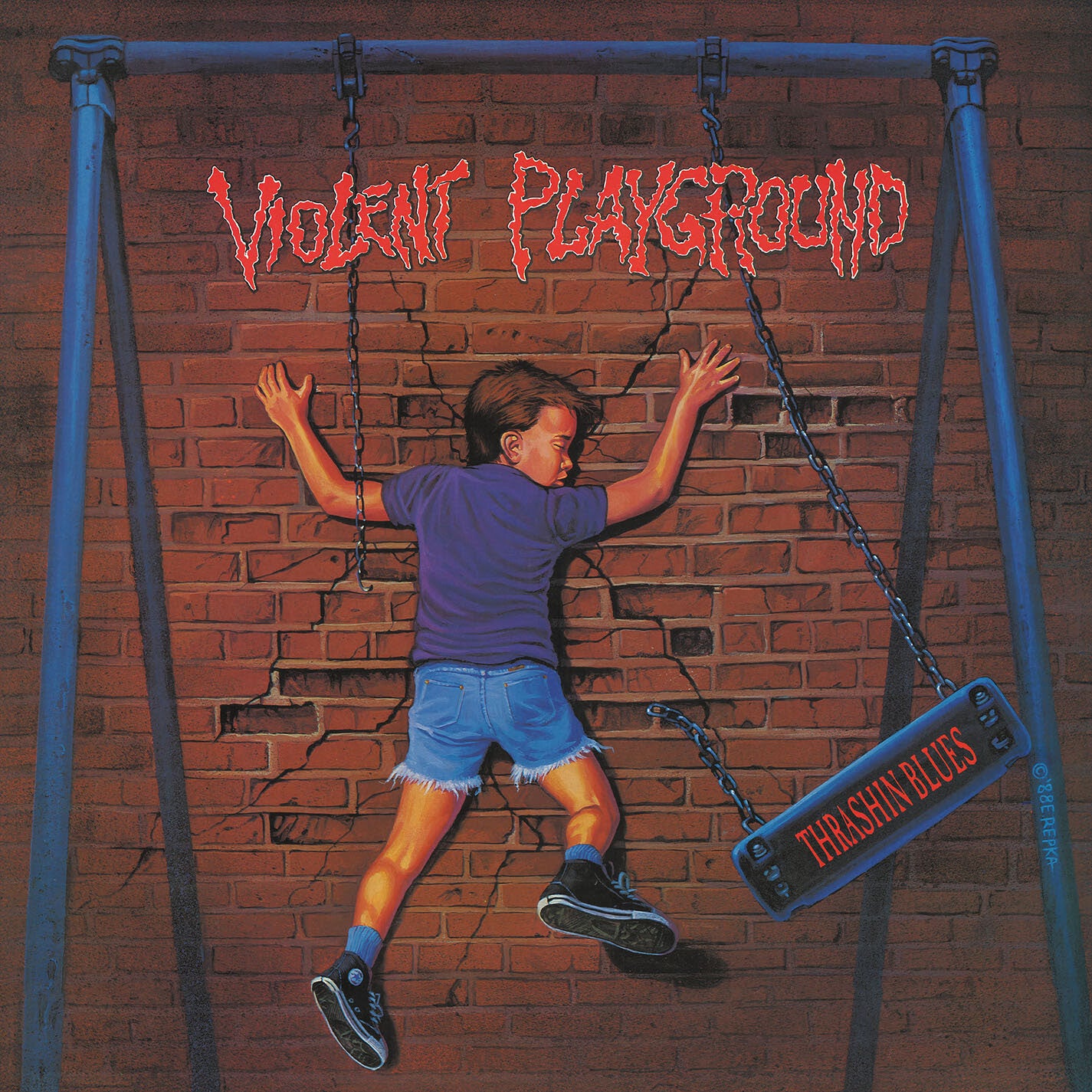
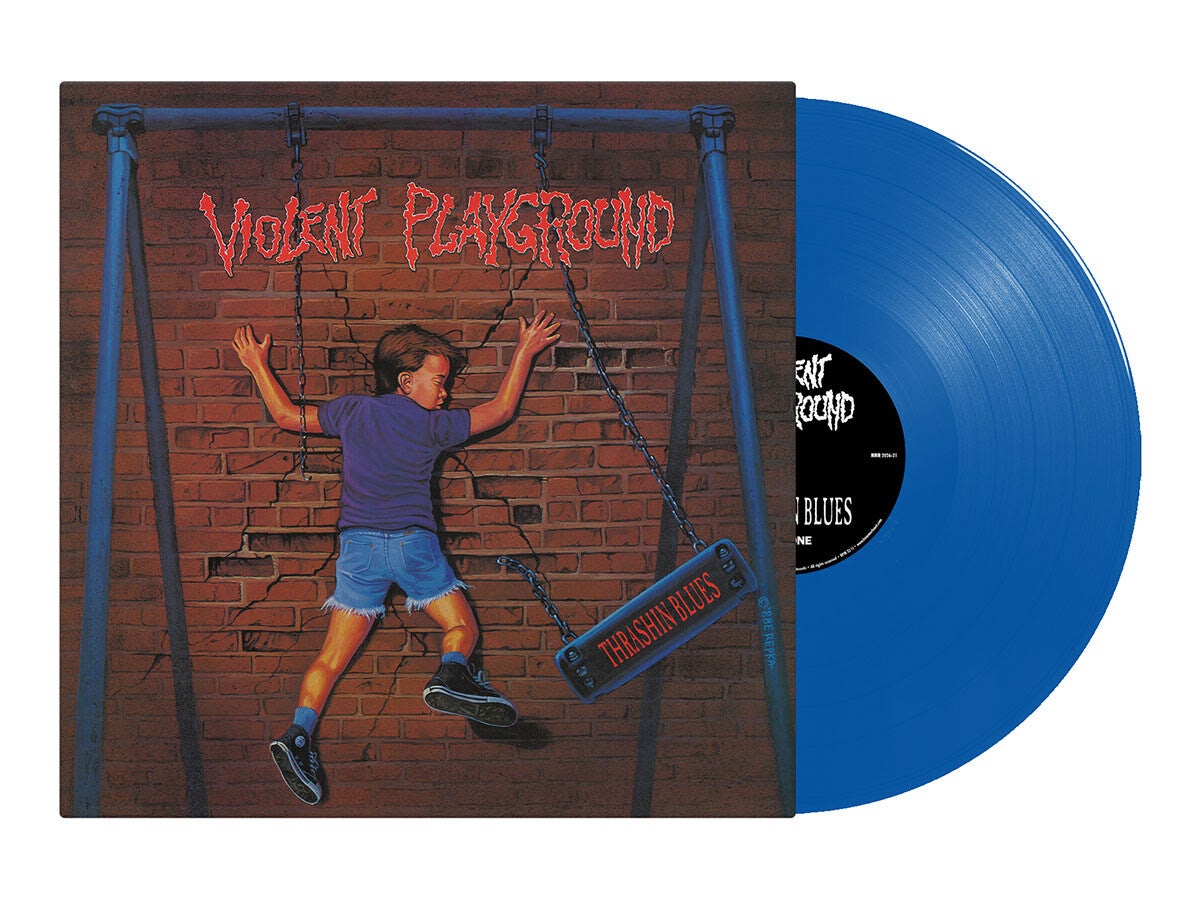
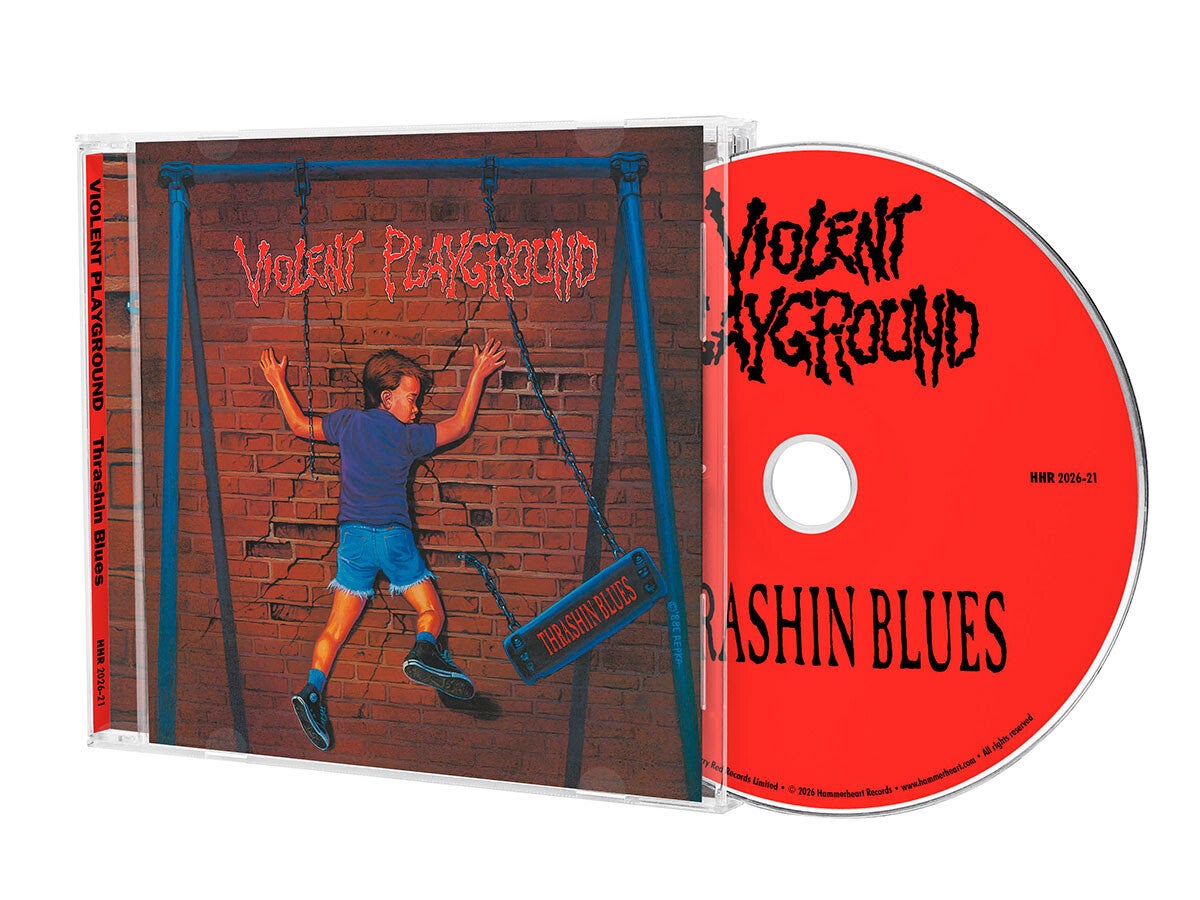
The combination separated them from the standard Florida metal profile of that era. Their only major visual connection to the wider metal scene came through Ed Repka, whose cover art placed the album beside work associated with Megadeth, Death, Toxik, and Vio-Lence. The music remained buried, original CD and LP copies became expensive, and the band disappeared before a second album could define where this mixture might go. Hammerheart has now returned “Thrashin Blues” to CD and LP, giving a neglected name another pass through circulation, away from collector bait and auction prices.
“Thrashin Blues” is built on a strange collision that has actual substance. The riffs draw from late eighties thrash, especially the streetwise swing heard around Exodus and Anthrax, while the lead guitar frequently drops into blues scales, bent notes, and tavern phrasing. The harmonica on the title song is not decoration pasted onto metal riffs, it belongs to the arrangement and announces the album’s central idea in plain terms. Across 37 minutes, Violent Playground moves between speed, mid paced groove, hard rock hooks, and loose blues jams.
The transitions can be abrupt, and a few sections stretch past their best point, though the album rarely becomes dull. Songs such as “I Hate My Boss,” “Poverty Sucks,” and “Lame From The Neck Up” use blunt titles and equally blunt lyrics, aimed at dead end work, money problems, vanity, social stupidity, and everyday resentment. There is little poetry here. Manny sings with a rough, mocking edge, closer to a tavern agitator than a trained metal vocalist, which gives the choruses an immediate character.
The twin guitars do most of the heavy lifting, switching between clipped thrash patterns and blues based leads without turning the whole album into parody. Bobby Sheehan’s drumming is compact and active, while the bass supports the grooves without drawing much attention. Carl Canedy’s production has an unvarnished late eighties sound. The drums are dry, the guitars have separation, and the vocals sit high enough to make every sneer obvious. A larger budget might have added impact to the rhythm section, though a slicker mix could also have erased the scrappy charm. The album’s main weakness is its uneven quality.
Several riffs and choruses stick after one spin, while other passages resemble extended blues club workouts placed inside a thrash album. “21st Century Bluesmen (Boogie Chillun)” pushes the fusion furthest and exposes the two sides of the idea, strong chemistry when the groove locks, weaker focus when the jam runs long. The faster material has more urgency, especially when the blues phrasing appears as a sudden turn and not as the entire foundation. The guitar solos are melodic, wiry, and rooted in blues vocabulary, with enough speed to remain inside the thrash framework. The vocal hooks can become childish, although that bluntness also suits songs built around bosses, poverty, ego, and violence.
This reissue presents a curious album, not a hidden classic. Violent Playground had a distinct approach, a capable lineup, and enough worthwhile material to deserve recovery from obscurity. “Thrashin Blues” remains uneven, occasionally corny, frequently energetic, and far more individual than many forgotten thrash releases from the same period. It’s a good album with a real concept, several durable songs, and enough rough edges to stop it from reaching a higher tier.
|7.5
Add comment
Comments