

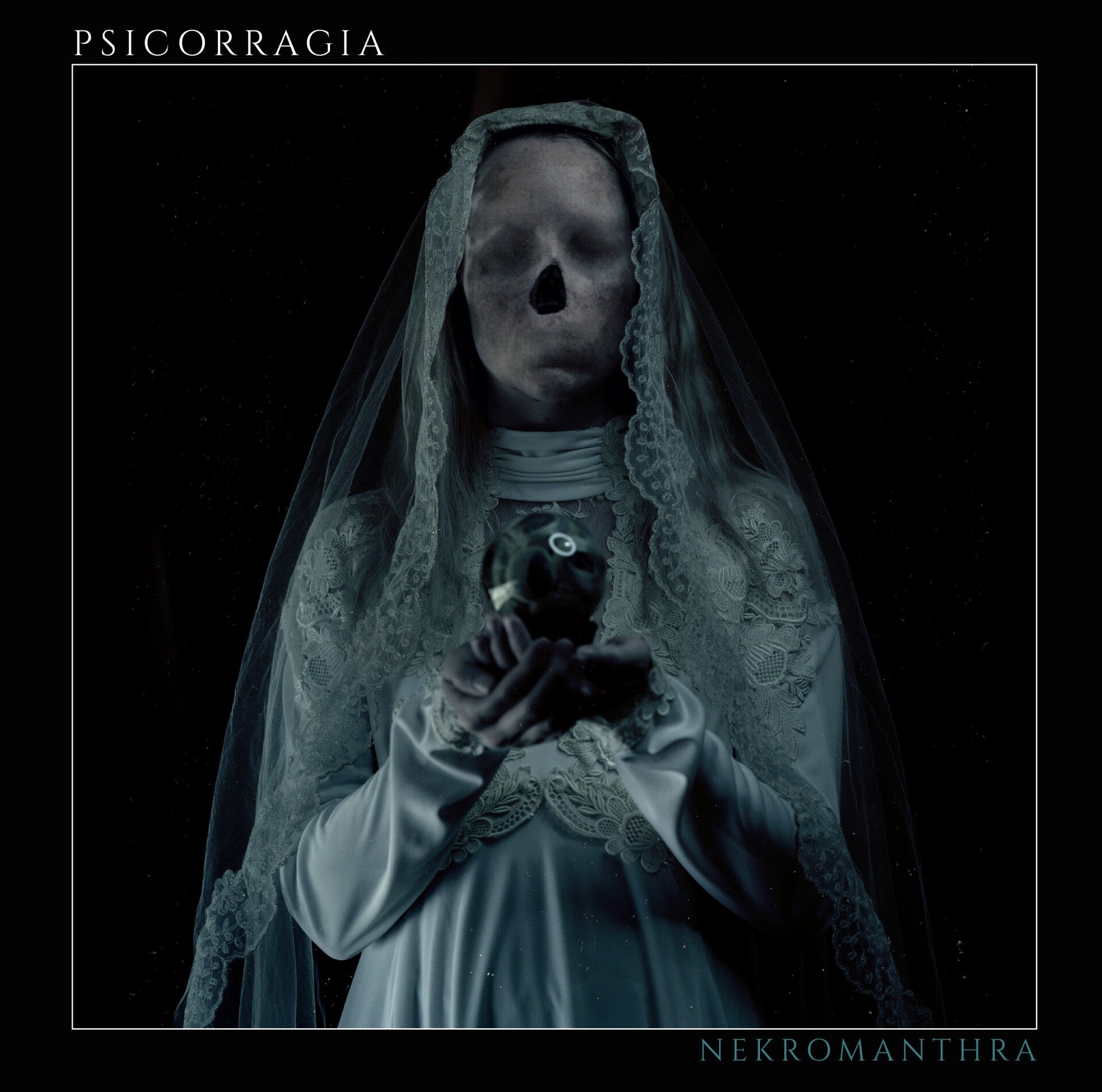
Release Date June 23rd, 2026
Format CD/Digital
Genre Death/Doom Metal
Origin Peru
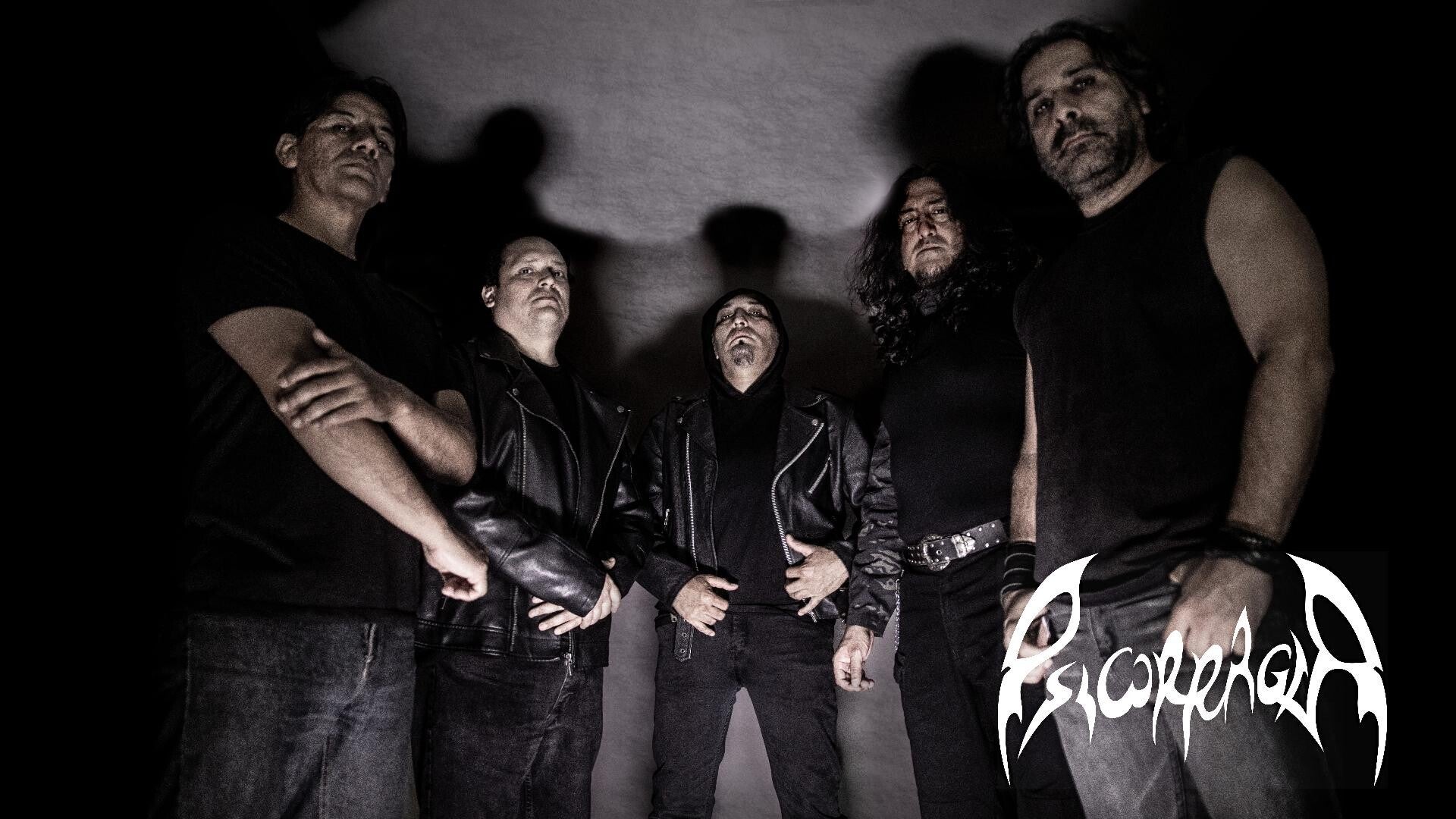
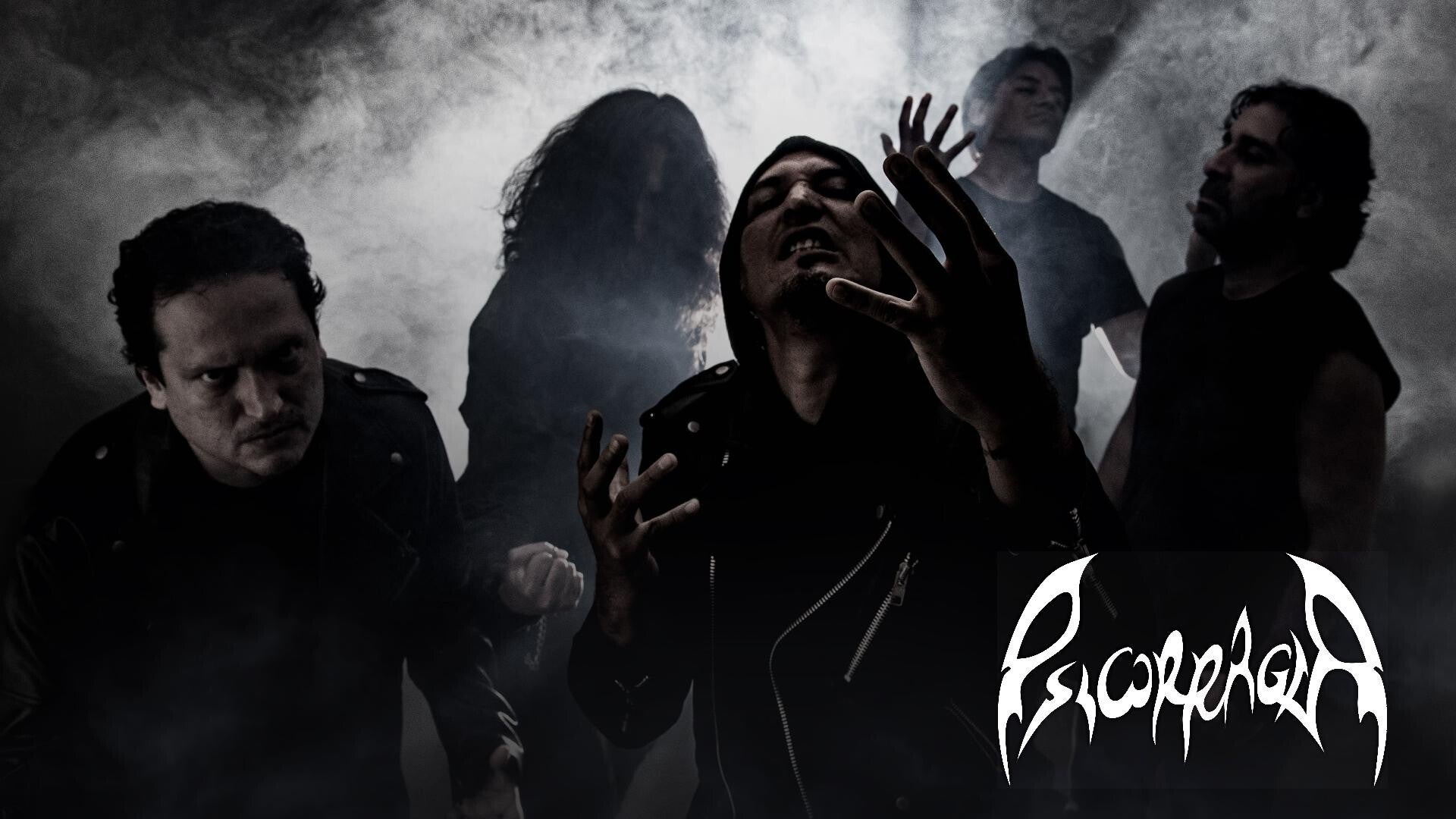
Psicorragia formed in Peru in 1994, developing a sound rooted in death-doom metal with elements of traditional death metal, black metal and other dark musical influences. “Nekromanthra” is the band’s third full-length album, featuring Mario Romanet on vocals and bass, Marco Borra and Alick González on guitars, Antonio Duncan on keyboards, and Teo Suchero on drums. The band’s long history within the South American underground gives this release a background shaped by decades of extreme metal, with its musical direction leaning towards funeral-like atmospheres, bleak melodies and death metal aggression. The lyrics, written by Romanet, explore physical and moral decay, mortality, abyssal forces and the darker impulses of humanity, establishing a grim thematic thread across the six compositions.
In forty-five minutes, “Nekromanthra” moves between slow death-doom riffs, melancholic keyboard passages and bursts of traditional death metal, with black metal elements adding further darkness to the arrangements. The self-produced album was recorded in 2024, with mixing and mastering completed between January and July 2025. The production preserves a raw edge while allowing the guitars, keyboards and rhythm section to support the changes between funeral-paced sections and faster attacks. “Abismales” and “Lo Inexorable” reflect the album’s bleak atmosphere, while “Sombras Luminosas” introduces a contrast between sombre melodies and heavier riffing.
The closing composition, “Nekromanthra, El Meditar De Los Fúnebres”, brings the album back to its central themes of death and contemplation. The songwriting occasionally relies heavily on established death-doom patterns, and some transitions lack the impact needed to make the longer arrangements fully engaging. Nevertheless, the combination of oppressive atmospheres, old-school death metal and dark keyboard textures gives the album a coherent musical direction, while Thomas G. Anderson’s artwork reinforces its grim aesthetic.
|8.0
Add comment
Comments