

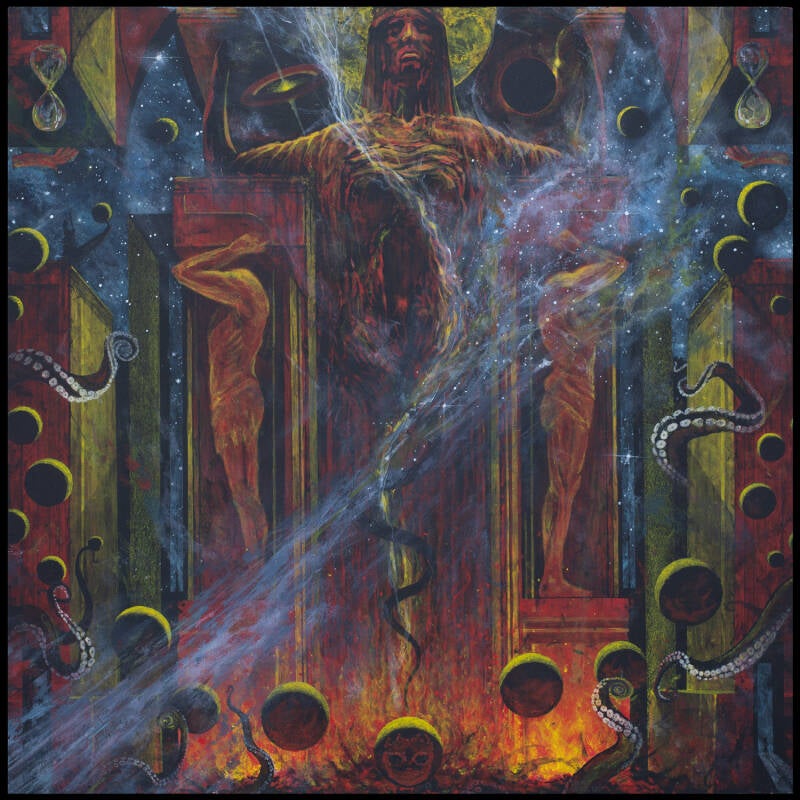
"Quantifying Cosmic Doom" is a very unusual and mysterious album title. What ideas or emotions were behind choosing that name?
Twan: To put it in one word; I’d say the core concept behind the title is fearlessness. I thought about it, and still do, how much the title resonates on so many levels. It also switches from internal to external meaning, depending on one’s mood and how deep you want to dive into the dark matter it holds. For instance, it can be about dealing with depression and anxiety for the things that are out of reach, being lost and isolated within a crowd and how to outshine that noise and dirt that holds you down. But also, it literally means anticipation towards the end of the universe and existence as we know it. My wife was reading this book called “The End Of Everything: (Astrophysically Speaking)” by Katie Mack, where I stumbled upon a chapter with the same name. It immediately spoke to me and became the perfect words that fitted Eric’s music he had written so far for the album. Because if one thing became sure, it was that these new songs were massive and layered delightful with details, for some wild philosophical depth.
Soulburn mixes old school extremity with a very spiritual and obscure atmosphere. Do you think modern extreme metal sometimes misses that darker mysticism?
Eric: The spiritual side or the vibe, as we call it has always been part of us. We feel a certain kind of magic, and when we play together that feeling becomes even stronger. The extreme parts we create also grow out of that; it’s simply part of the whole process of making our music. Yes, it’s true that we like to incorporate the spiritual aspect and themes, and let them merge with the mystical atmosphere. That comes through both in the lyrics and in the music. It’s our way of playing, but also our way of thinking about how we can give the songs twists that enhance that atmosphere even more. It’s simply our way of performing and what we want to present to the people. I can’t make a judgment about modern extreme metal, or claim that it lacks that theme. It’s up to every metal band to decide which themes they want to emphasize. For Soulburn, this is our perfect blend, at least.
Many songs on the album have a cosmic and almost philosophical atmosphere. What inspires the band lyrically when writing material like this?
Twan: It’s a cocktail of things. First comes the music, which is my main inspiration for the vibe of the lyrics. It gives me direction, a pace, and that comes with a type of vocalline or melody how I want to sing to it. And then that vocal line comes with words that start to flow, it builds itself, and from there on sets a tone of emotions. I actually never really think about what I am going to write, I just literally feel. And then words just start to flow and form lyrics. Topics are always philosophical in their DNA. Combine that with a deep-rooted dose of poetic misanthropy and a lustful desire to intrigue with ambiguous depth. The music is the vessel, the words are its ghost.
The music becomes darker and more immersive with every album. Do you think Soulburn has reached its purest form with this release?
Eric: That’s actually a very accurate observation. With each new album we always take things a step further, in our development, but also in the direction of inspiration we want to follow. We’re not done yet; there is still so much to discover and to work out. At least we’ve taken a clear step in shaping how we want Soulburn to sound and the ideas we want to express. In short, the journey continues.
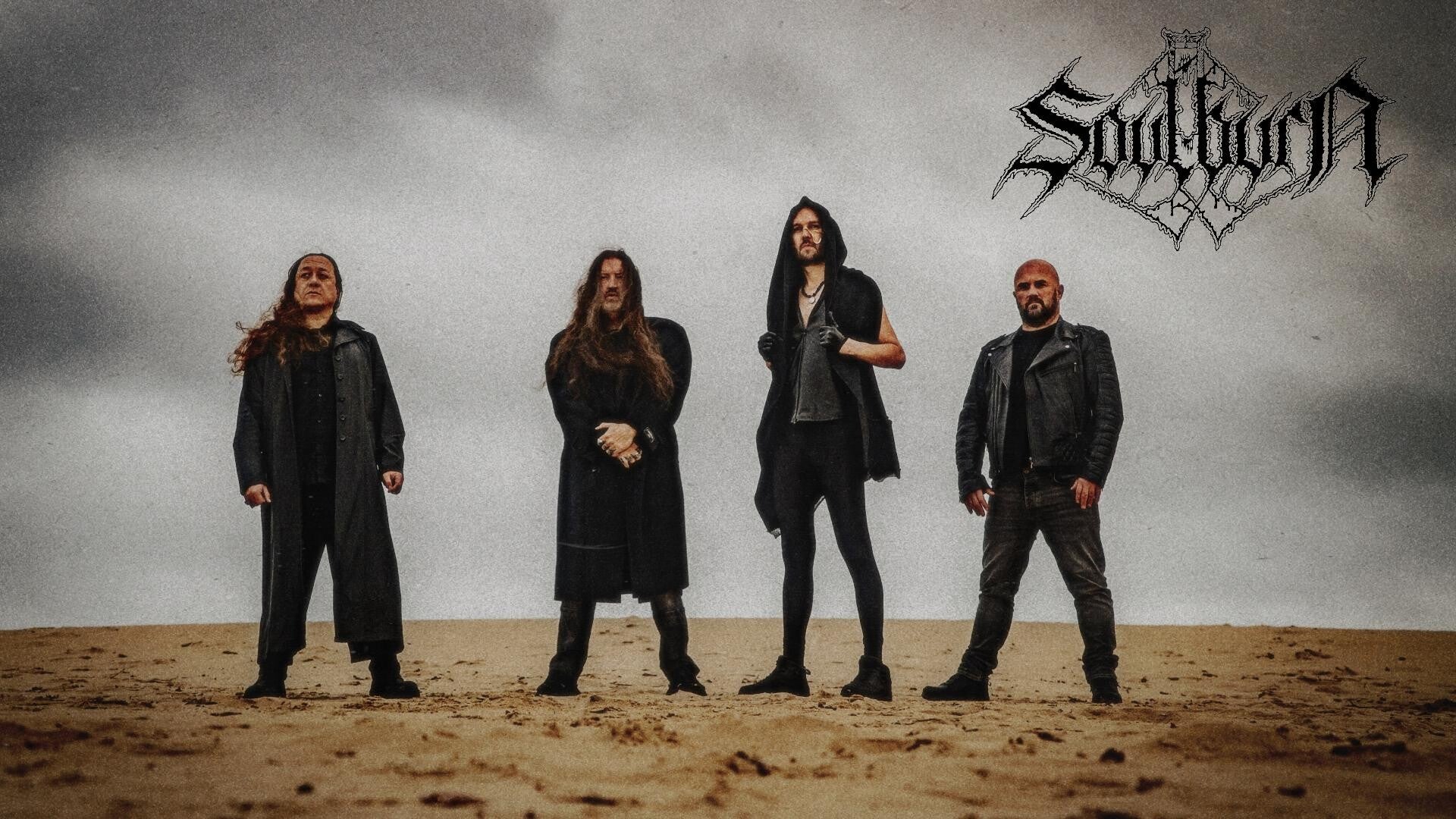
"We will continue creating the music we want to make, and keep exploring, because that’s extremely important to us. The dynamics, but also the ongoing discovery of our musical possibilities. It’s very motivating and challenging to find the right vibe, as we call it, and ultimately capture it definitively."
Eric Daniels
There is a strong emotional weight throughout the album, especially in the slower sections. How important is atmosphere when composing new material?
Eric: Atmosphere and what we call “the vibe” are very important when composing our songs. Most of the time that inspiration emerges together with the compositions themselves. We’re not really searching for it, the music simply comes to us, and then we refine it here and there to make it even more beautiful and better. We’re musicians and we draw inspiration from everywhere, even from films, series, etc. So the right atmosphere is extremely important. The doom parts, as you call the slower sections, also run like a red thread through our music.
Soulburn came from the ashes of Asphyx during the 90s. Looking back now, did you ever expect the band to grow into such a respected name in extreme metal?
Eric: No, I didn’t expect that, because Soulburn should really be seen separately from Asphyx. To me they’re definitely different. Soulburn is more rooted in black metal, doom, etc. Of course there are Asphyx elements in there as well, but that’s simply the style we’re familiar with. No, I did not expect that we would become, and continue to be, a respected name in the extreme metal scene. That’s why it’s so beautiful to see this happening.
The underground metal scene has changed massively because of streaming and social media. Do you think underground music gained more opportunities or lost some of its mystery?
Eric: That’s a difficult question. It’s natural that things change or evolve over the years. New generations come along, each with their own characteristics and their own ideas about what they want people to listen to. I find it a beautiful and interesting development. Underground music will always exist, that has everything to do with the different currents in musical taste. Commercial music is of course much more accessible, but in the end it’s the listener who decides whether music is considered underground or not. For Soulburn, I’m inclined to say that we navigate somewhere between commercial and underground, and I don’t mind that at all. I don’t think underground music is losing its mystique. There are still plenty of interesting bands that carry that spirit with them. Since the arrival of Spotify, a huge amount of music has become accessible in terms of choice. I see it as a perfect example of how social media and similar platforms have evolved, you basically have a complete digital music collection at your fingertips.
The Dutch metal underground has always produced legendary acts. How do you view the current state of the extreme metal scene in the Netherlands today?
Twan: The current state, good question. I don’t follow the scene that much anymore like I used to do ten years ago. So I don’t really know the fresh new blood that is currently most popular. But my guess is that with bands like Doodswens, Asagraum, Terzij De Horde, Autarkh and Fluisteraars, the Dutch scene is no joke and convincing with its extreme Art. But honestly, a real (NEW) big extreme metal band in the likes of Gorefest, Asphyx, Severe Torture, God Dethroned or Legion of the Damned, I have yet to discover. It’s all more obscure somehow.
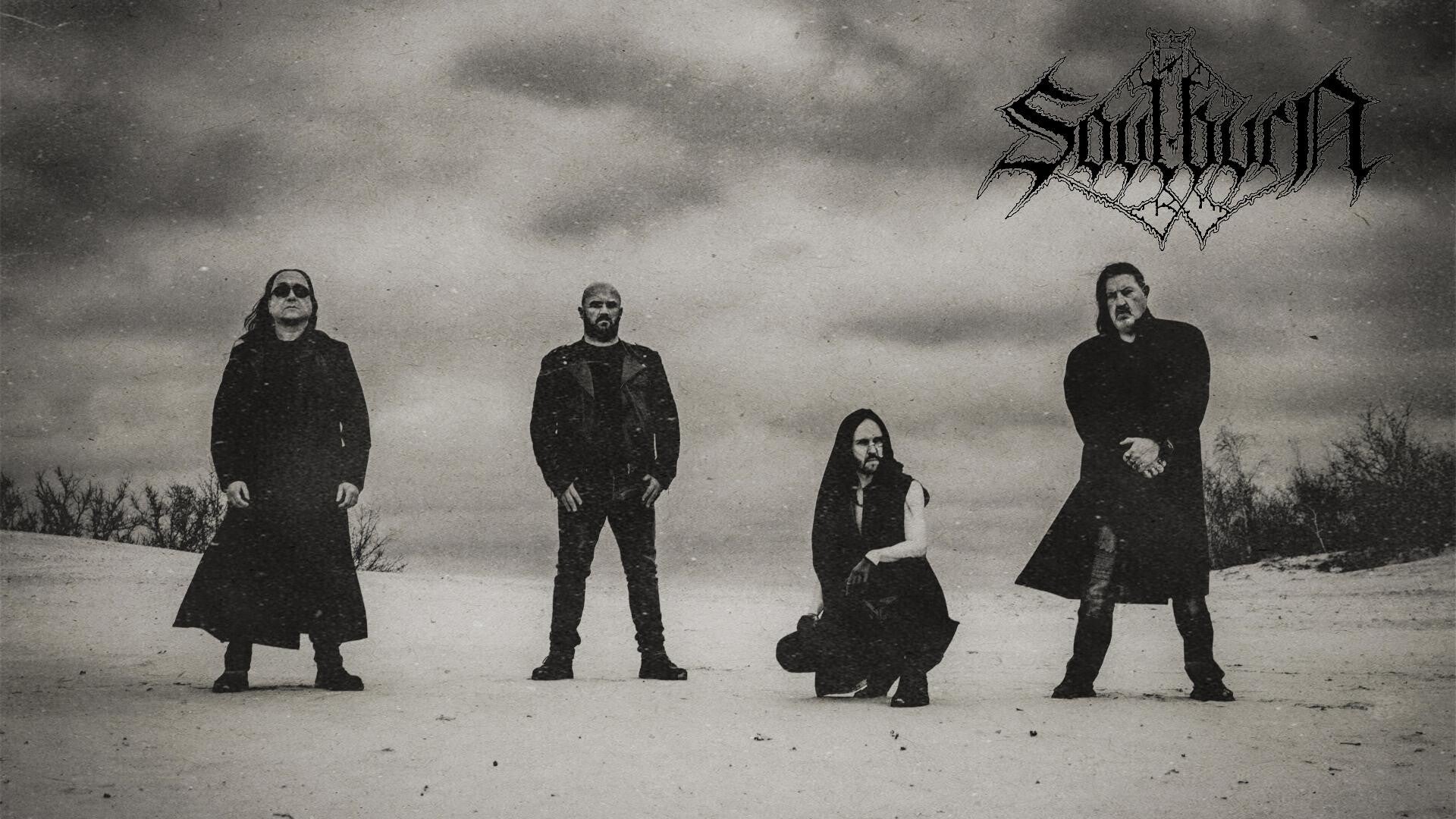
"I actually never really think about what I am going to write, I just literally feel. And then words just start to flow and form lyrics. Topics are always philosophical in their DNA."
Twan van Geel
Albums like "Feeding On Angels" and "Earthless Pagan Spirit" became very important for many underground fans. How do you see the evolution of Soulburn across the years?
Eric: “Feeding On Angels” was the first album we did, released in 1998. In the years that followed, the band was inactive for a while, partly because we returned to the name Asphyx. Much later, in 2013, we picked it up again, and from that moment on we started creating music much more intensively, bringing in more of the influences we enjoy playing. Every album that followed was another step forward for us, eventually leading to our latest record, “Quantifying Cosmic Doom”. It has been a musical journey, one we want our fans to hear and experience together with us.
The production on "Quantifying Cosmic Doom" sounds very organic and powerful. What was most important for the band when shaping the final sound of the album?
Eric: We deliberately chose to make the production sound organic yet powerful. That was the starting point. Erwin Hermsen from Toneshed Studio mixed, mastered, and also produced the album, so he added his own ideas as well, which helped shape it even more into the result we were aiming for. In the end it took four or five mixes before we finally said: yes, this is the sound we wanted. Before entering the studio, we always created demo tracks at home using Cubase. That’s where we write and compose the songs so they really come to life. We call those our blueprints, and we brought them into the studio as well, because we wanted to capture the exact same atmosphere as on the demos, especially the samples and the clean guitars. Erwin translated that beautifully in his final mix.
Soulburn has built a strong live reputation through European and South American shows. Which kind of audience reacts most intensely to your music on stage?
Eric: Well, to be completely honest, the shows in South America, where we toured together with the Norwegian band Mork, were the most intense in terms of audience energy. The people and fans there are incredibly passionate and genuinely grateful that you come all the way to play for them. Of course, we also get a very strong response in Europe. It just varies from country to country. We would love to return to South America, and even Central America, because we’ve barely played there so far. In short, all across the world, Soulburn wants to preach the true word and spread the true sound.
After creating such a massive and emotionally heavy album, where do you see Soulburn heading next in musically?
Eric: Thank you very much for that comment. Soulburn is far from finished with the mission we’ve set for ourselves. We will continue creating the music we want to make, and keep exploring, because that’s extremely important to us. The dynamics, but also the ongoing discovery of our musical possibilities. It’s very motivating and challenging to find the right vibe, as we call it, and ultimately capture it definitively. When fans listen to our new album, they embark on a musical journey. We take them into the unknown, and it’s amazing to see people connect with us because they feel that same vibe. In short: Join Us.

Add comment
Comments