

Your musical journey began back in 2013 in Cagliari. Looking back at your early days how has the underlying musical vision of the band evolved over the past thirteen years to bring you to the point of creating an album like "Toward The Storm"?
To be honest, the origins of the band feel much further away than just thirteen years ago. The initial core was formed by Claudio and Simone, who were playing together in a project outside the metal scene at the time. They wanted to work on material that could move in a darker direction, searching for a sound and a musical identity that would remain open and capable of evolving in different ways. Initially, the band comprised a drummer and a guitarist, but they were still missing a vocalist. It was at this point that I was asked if I would be interested in joining the project. I came from another metal band here in Cagliari, but its style was quite different to that of Ilienses Tree. Despite everything being extremely raw and undeveloped, I accepted the challenge because it would finally enable me to be part of my favorite genre: doom/death metal.
That is how it all began. It certainly wasn't easy because we lost two members almost immediately. However, Giammarco's arrival on drums was undoubtedly a major turning point because we finally had a reliable and dedicated drummer whose contribution immediately changed the dynamics of the band. He brought a different level of commitment and seriousness to our pursuit of an increasingly personal and effective sound, and the band reaped the benefits almost immediately. The same can be said for the guitarist position, where several musicians came and went over the years. However, it was only with Matteo’s arrival that we finally became a truly cohesive and solid band with all five members moving in the same direction. Naturally, this long and winding journey has always been reflected in our music and artistic expression. What was once extremely raw gradually matured and evolved alongside the band’s own path. I believe this growth can be clearly heard simply by listening to our releases in chronological order.
The atmosphere across the album feels deeply introspective and personal. Did you approach this release differently compared to your previous material?
As I mentioned before, everything is the result of a growth process that first led us to recognize our past mistakes and, finally, to work with the same people from the very beginning of the songwriting process. We poured our heart and soul into what gradually evolved into the songs that make up our latest album. This record certainly possesses a strong sense of authenticity and emotional depth that sets it apart from our previous releases. However, I can honestly say that this wasn’t the result of a deliberate or calculated decision during the writing process. It was a very natural evolution, driven simply by our desire to create an album that would be powerful, emotional, and genuine.
Sardinia has always had a unique identity and atmosphere compared to mainland Italy. Does the environment and isolation of the island influence your music in any way?
There is a lot that could be said about this topic, because for those who do not live in a place like ours, it is difficult to fully understand how different, and at the same time how magical, it is to live in such an isolated environment. It is a unique and solitary reality, almost meditative in a way, one that allows for truly special connections between the natural forces this land radiates and the souls of those who are willing to absorb them. In that sense, yes, our homeland certainly plays an important emotional role and constantly influences us. That said, in 2026 our beloved Sardinia is connected to the rest of the world just like any other place. As a result, we feel much closer to everything than our geographical isolation might suggest, moving beyond the stereotype of a distant land where nobody really knows what happens. Quite simply, we are at the heart of the Mediterranean, we live in a magnificent land, and we are proud of who we are.
“Toward The Storm” actually represents a metaphor for what human beings often find themselves facing in secret. A journey through downfall, disorientation, the acceptance of one’s inner darkness, and the fear that arises when confronting doubts and failures."
The album title "Toward The Storm" serves as a metaphor for a conscious choice to confront your inner demons. How does this conceptual idea tie into the musical architecture of the record, and did the music dictate the theme or vice versa?
First of all, thank you for truly understanding and capturing what conceptually lies at the very core of this work. This is not a concept album about meteorology, nor is it dedicated to rainstorms filled with melancholy and sadness to be contemplated from behind a window. No, it is none of that. You described very well in your question what “Toward The Storm” actually represents: a metaphor for what human beings often find themselves facing in secret. A journey through downfall, disorientation, the acceptance of one’s inner darkness, and the fear that arises when confronting doubts and failures. At the same time, it reflects the growing awareness that, sooner or later, we must face ourselves in order to defeat what gradually become our personal demons.
In this sense, the storm and the slow approach toward it serves as a representation of how important it is not to be afraid of stripping away our defenses and admitting that suffering, and expressing our pain, should never be something we feel ashamed of. Too often, people choose to conceal their struggles behind masks designed to satisfy the expectations of others and fit within their social status. In doing so, we ultimately become skilled architects and creators of our own darkest sides. The message behind the album is that we should seek the storm within ourselves, simply because it deserves to be confronted and, perhaps, in some way, overcome through a process that inevitably comes with its own difficulties. As reflected throughout the album, the music and the theme gradually merged together in a completely natural way.
Tracks like "To Not Be Forgotten" and "Sudden Rain" seem to touch on deeply personal, almost confessional struggles with pain, fear, and human fragility. When writing these lyrics together, how difficult is it to balance such raw emotional vulnerability with the crushing weight of traditional death/doom metal?
I don’t think there is a better genre to embrace lyrics that deal with themes such as the ones you mentioned. If everything comes across as genuinely authentic, then it means we have achieved a small but important goal: being able to convey something real, which is absolutely fundamental to me. The two songs you mentioned are certainly filled with meaning and, in their own way, represent two different stages in the journey of someone who is coming to terms with themselves.
“To Not Be Forgotten” seeks to portray and communicate the sense of emptiness and shame that can emerge when a person is forced to accept their downfall and the consequences of their own mistakes. It speaks of the fear of looking into the mirror and no longer recognizing oneself, the desperate hope of not being forgotten or abandoned, and the longing for someone to see and understand how suffering often manifests in silence. In many ways, it feels like the final chapter, or a last cry for help, from someone who is beginning to realize that they are collapsing into their own abyss.
With “Sudden Rain”, we move into a later stage of the journey introduced at the beginning of the album. Here, the focus shifts to the fear of not making it through, to the possibility that every attempt at recovery may ultimately fail. It suggests the terrifying idea that we may end up overwhelmed and drowned if we do not find a way to move away from the abyss into which we have fallen while trying to survive and react. The song explores that moment when a person becomes fully aware of their inner wounds and struggles, and begins searching for a form of inner survival, one that inevitably becomes the driving force behind physical survival as well.
Your sonic foundations strongly channel the spirit of old-school heavyweights like early Paradise Lost and Officium Triste. How do you honor those foundational 1990s doom/death roots while establishing a distinct, authentic identity that belongs solely to your band in 2026?
Well, it goes without saying that if we chose to play this kind of music, it’s also because certain bands managed to leave a lasting mark on our hearts. The bands you mentioned have certainly done that, and they have undoubtedly influenced the way we express ourselves and draw inspiration. However, they are far from being the only ones. Personally, I listen to a huge variety of bands and genres, and I constantly allow myself to be inspired and overwhelmed by all kinds of music. Perhaps the secret, if we can even call it a secret, behind developing a sound that feels genuinely ours is that we never consciously set out to copy our musical forefathers. Instead, we allowed ourselves to be influenced by them while remaining free to follow our own path.
From the very beginning, we wanted to maintain complete freedom during the songwriting process, paying little attention to the clichés of the genre and taking both the compositions and the vocal choices wherever we felt they naturally belonged.
There has never been any intention to revolutionize the genre we love so much or to invent something completely new. Rather, our goal has always been to express our own voice and our own artistic vision. I believe that today, more than ever before, we are pursuing that goal in the right way, and I hope we will continue to grow and refine it in the future.
The recording, mixing, and mastering duties for the record were handled locally by Lorenzo Mariani at Overcore Studio. How did working in your hometown studio help capture the visceral, organic atmosphere required for these heavy, introspective tracks?
Yes, for this album we chose our young friend Lorenzo Mariani because we wanted to get the very best out of these new songs and create a full-length record that would truly reflect who we are and who we wanted to be, especially considering the way our music sounds in a live setting. Through the mixing and mastering process, achieving greater clarity and a definitive sonic coherence became a top priority. Unfortunately, this was something missing from our previous release. That record certainly had potential and, in many ways, it laid down a very concrete foundation for what we eventually developed on “Toward The Storm”. If you listen to it, we can certainly talk about it.
However, several limitations emerged, particularly in terms of the mix and the overall optimization of the final product. Despite containing some strong songs, the album ultimately lost part of its impact and effectiveness because of those issues.
We started from that point, from understanding what should never happen again. That is why we decided to involve Lorenzo. Besides being one of the leading figures in the Sardinian hardcore scene, a musician, and a producer, he is also one of the sound engineers who has worked with us live on several occasions, always delivering excellent results.
With patience and dedication, we managed to communicate all the ideas and details necessary to take a significant step forward in terms of production quality, giving our work the right sonic direction and allowing us to release a record that genuinely represents who we are. Needless to say, our genre was an absolute challenge for him. A challenge that, today, I feel confident in saying we overcame together, and we are truly happy with the result.
The lyrics explicitly portray a constant friction between absolute despair and a desperate need for redemption or healing. Do you view the music of this album as a pessimistic exploration of defeat, or is there an underlying sense of inner resistance and hope hidden within the bleakness?
I have already touched on this topic in previous answers, and I can only reiterate the core concepts behind the lyrics of this album and the message hidden within the narrative progression of what is meant to be a cursed encounter between understanding and accepting that we are not exactly who we pretend to be. In this sense, conflict is meant to be the central element of the story, a point of no return for those who will never find the courage to admit it, express it, talk about it, or confront it. Therefore, yes, the album is a tragic exploration of how a soul can reach rock bottom, but at the same time it is also about the choice one faces, even in the darkest moment: whether to react or not.
If we think about it, the album never truly reveals what happens after the storm has been confronted, that is, after confronting oneself. It deliberately leaves that question unanswered. Everything remains open to interpretation, allowing each listener to find their own meaning within the journey.
The album deals heavily with alienation, fear, loss of identity and inner resistance. Was the writing process emotionally difficult while working on such dark subjects?
What emerges from the lyrics was born out of a difficult period of change that all of us went through over the years. Those experiences led me to explore and discuss certain themes, trying to lay bare the concepts I mentioned earlier. In that sense, no, the writing process was not difficult, it was actually stimulating. It gave me the opportunity to reflect on and express feelings and experiences that deserved to be addressed openly.
This is an album dedicated to everyone who, like me and the rest of the band, has had to overcome challenging moments in life without being afraid to talk about them.
Alienation and the loss of identity are major themes explored across the new material. In today's fast-paced, digital world, do you feel that the crushing, deliberate slowness of doom metal acts as a perfect sonic protest or counterweight to modern societal chaos?
Honestly, I don’t know whether doom metal can be considered a form of sonic protest or a counterbalance to the chaos of contemporary society. The genre is incredibly diverse, encompassing many different approaches and themes. What I do know is what it represents for us. Being able to speak in a profound way about aspects of human complexity and fragility is certainly something that enriches our work and makes it deeply personal. As far as I’m concerned, doom metal is a genre that offers endless sonic horizons and lends itself remarkably well to emotionally driven songwriting. A music capable of stirring emotions, provoking reflection, and, hopefully, awakening something within the listener.
The visual side of your release features artwork created by the band itself. How does the imagery chosen for the cover art visually represent the concept of human fragility and the internal storm detailed in the lyrics?
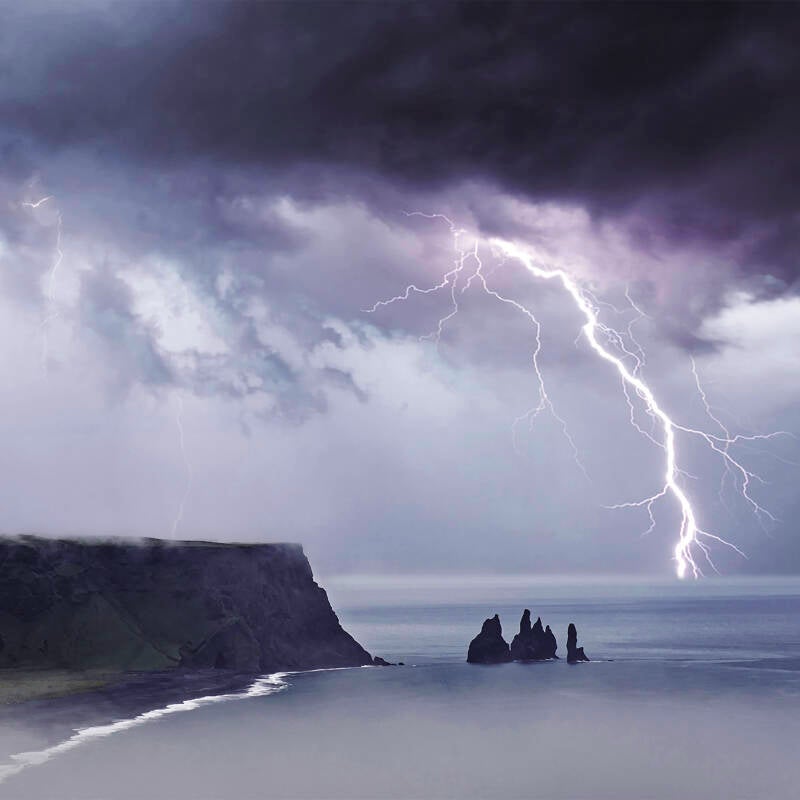
With the artwork, we wanted the imagery to fully convey the feeling of looking toward a place that evokes austerity, solitude, distance, and power, but also a sense of respect and closeness to that very storm we discussed in the previous answers. We chose to represent this concept through a landscape that embodies the idea of someone who understands that what lies ahead is exactly what they must face if they wish to continue their journey toward self-preservation and inner salvation.
We deliberately avoided additional graphic elements or visual distractions. Instead, we focused on a single gaze directed toward a place that metaphorically represents a profound inner conflict. The image is meant to capture that moment of confrontation, the awareness that the path forward requires facing what we fear most within ourselves.
Now that the new record is officially out on CD, what are the next steps for the band? Are there plans to bring these massive, slow-burning atmospheres onto the live stage for physical tracking and festival appearances later this year?
Yes, the album is available on CD, vinyl, and all major streaming platforms. I would say that listening to it is not difficult, nor is purchasing it. What is certainly more challenging is spreading the word and increasing our visibility. The first reactions have been very positive, and we are extremely pleased with the feedback and reviews we have received so far, which have already helped us gain a bit more exposure. Last month, we officially presented the album here in our hometown, and it was a very emotional experience. At the same time, it is only natural that our goal is to bring our music beyond Sardinia and into different contexts, whether that means individual shows, festival appearances, or even a mini-tour. I believe it is important to have that kind of ambition. Speaking once again about our homeland, however, it certainly does not make these aspirations easy to achieve. Unfortunately, distance is often a significant obstacle in terms of travel time, logistics, and costs. Nevertheless, we will do our best to create opportunities for ourselves, hoping that someone out there believes in what we do. We are more than ready for that opportunity when it comes. Last but not least, I would like to thank you for the great opportunity to talk about our album and for the exposure you gave to the band.
Add comment
Comments