

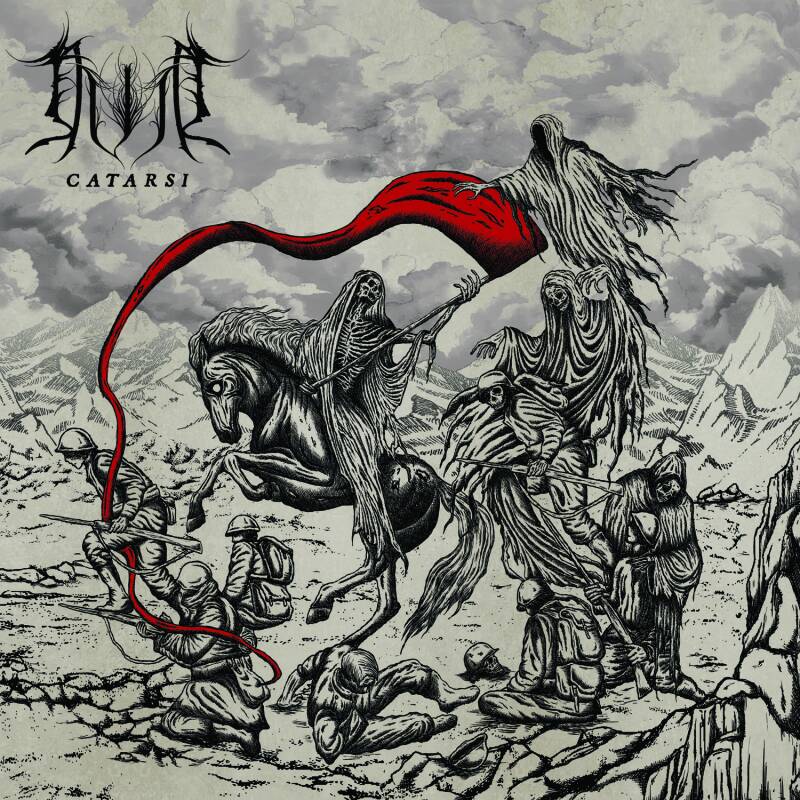
"Catarsi" takes us directly into the horrors of the First World War. What drew the band to this specific historical nightmare?
Part of the inspiration came from a place that is deeply meaningful to us: an Austrian fort built in 1845, which today serves as our rehearsal space. Being surrounded by those walls, carrying so much history and memory, naturally led us to reflect on the past and on the lives of the people who once inhabited those spaces. It created an atmosphere where history feels almost tangible, and that inevitably shaped the emotional direction of the album. Another important influence was “All Quiet On The Western Front”, especially in the way it portrays the loss of innocence and the devastating impact of war on ordinary young men. That perspective resonated strongly with us and helped us frame the emotional core of the concept. What attracted us to the First World War was never its military or political dimension, but its profoundly human one. Millions of young people were suddenly placed in extreme circumstances, facing fear, hope, disillusionment, suffering and death under conditions completely beyond their control. It is this human experience, fragile, intimate and universal, that we wanted to explore through “Catarsi”.
The concept follows a young soldier caught between pride, despair, and oblivion. Is this character based on actual historical diaries and letters, or is he a symbolic representation of the psychological destruction caused by war?
The character is not based on a specific individual, but rather functions as a symbolic representation of the psychological and emotional impact of war. We wanted to focus less on a singular, concrete biography and more on a broader human experience. The young soldier becomes a vessel through which we can explore the internal conflict between pride, despair and eventual numbness, states that gradually unfold as the narrative progresses. In that sense, he is not meant to be interpreted as a historical figure, but as an emotional construct. His journey reflects the fragile balance between duty and identity, and the slow erosion of both when exposed to extreme and inhuman conditions. This approach allowed us to keep the perspective intimate and human, while also giving space for listeners to project their own interpretations and emotional responses onto the character.
Your sonic identity utilizes flute, bagpipe, and hurdy gurdy. How do you balance these traditional folk elements with crushing black metal riffs to ensure the music maintains its aggressive, dark edge?
For us, the balance between folk instruments and the more aggressive black metal elements is not something we approach as a technical equation, but rather as a question of purpose and emotion within each composition. The flute, bagpipes and hurdy-gurdy are not used as decoration or contrast for its own sake, but as integral voices within the music. They often carry the melodic or atmospheric core of a passage, while the guitars and drums define its weight, tension and intensity. Depending on the moment, one side naturally steps forward while the other recedes and that dynamic shift is what gives the music its depth.
"Catarsi" translates to catharsis. In a world currently plagued by new conflicts, geopolitical instability, and modern anxieties, do you view extreme music as a necessary form of spiritual purification for both the band and the listener?
We would not frame it in terms of something “necessary” or prescriptive, because that would imply a kind of function that music cannot universally fulfill for everyone. People experience and process emotions in very different ways. That said, we do believe that extreme music can create a space where intense emotions are not avoided, but confronted. In a world that is constantly marked by instability, conflict and anxiety, there is something meaningful in allowing those feelings to exist without filtering them away or simplifying them. In that sense, music can become a form of release or reflection, depending on the listener. For us personally, “Catarsi” was never conceived as a tool for purification, but rather as a way to give shape to emotional experiences that felt too complex or overwhelming to express in a straightforward way. If listeners find something cathartic in it, that is something very personal to them, and we see it as a natural consequence of engagement rather than an intended outcome.
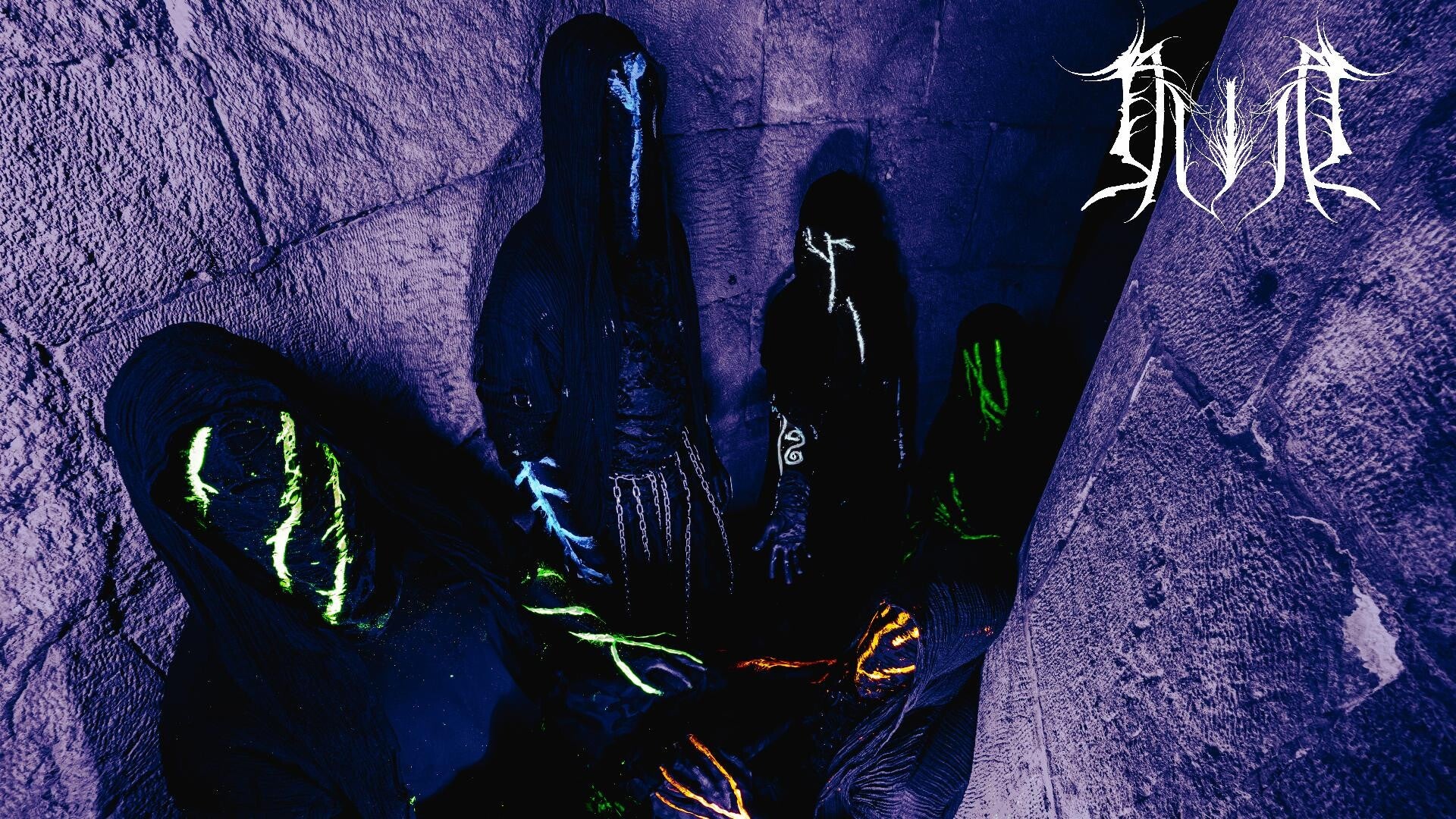
"What attracted us to the First World War was never its military or political dimension, but its profoundly human one."
L.G. from Ellende contributes guest vocals on the track "Impeto". How did this collaboration come about, and what do you think his distinct vocal style added to the emotional weight of that specific track?
The collaboration came about in a very natural and straightforward way. We had been in contact with Lukas Gosch from Ellende for a while, and there was already a mutual respect for each other’s work. When “Impeto” started taking shape, we felt that the track carried a very specific emotional intensity that could benefit from an additional vocal layer. We reached out to him with the idea, and he immediately understood the atmosphere and direction of the song. There was no need for extensive explanations; he instinctively grasped what we were trying to convey and approached it in a very natural way. His vocal style added a raw and almost immediate emotional edge to the track. It brings a different texture compared to our own vocals, creating a sense of dialogue and tension within the song. Rather than simply adding weight in a sonic sense, his contribution amplifies the emotional contrast, making certain passages feel more direct and exposed.
For the mixing and mastering duties, you worked with P.G. of Groza at Ad Nauseam Sounds. What did he bring to the table in terms of capturing both the haunting melodies and the visceral, raw intensity of your live sound?
P.G. immediately understood that the challenge of “Catarsi” was not simply to make the album sound heavy, but to preserve the balance between its different emotional layers. The record moves constantly between aggressive black metal passages, atmospheric sections and a wide range of folk instruments, and it was important that none of these elements overshadowed the others. What he brought to the table was an ability to give each part the space it needed while maintaining a cohesive and powerful overall sound. The melodies retain their clarity and emotional impact, while the heavier sections still feel intense and uncompromising. At the same time, he managed to preserve a certain organic character that was very important to us. We did not want an overly polished production; we wanted the album to feel alive and emotionally honest. He understood that from the beginning and worked with the material rather than trying to reshape it into something else.
Looking back at your 2022 album, "T.S.N.R.I. – Impermanenza", how do you feel the songwriting and lyrical focus of Duir has evolved leading up to the creation of "Catarsi"?
“Impermanenza” was a very important record for us because it established many of the foundations of Duir, both musically and lyrically. Its focus was largely introspective, dealing with themes related to existence, transience and the human condition through a more personal and philosophical lens. With "Catarsi", those themes are still present, but they are explored through a more structured narrative framework. Instead of looking inward from an individual perspective, we chose to place those same existential questions within a specific historical setting and follow the emotional journey of a character confronted with circumstances far greater than himself. From a songwriting perspective, we also became more attentive to narrative flow and atmosphere. Every song was conceived not only as a standalone piece, but as part of a broader emotional arc. The arrangements, dynamics and transitions were all shaped with that journey in mind, allowing the album to unfold more cohesively from beginning to end. At its core, however, the evolution is not a departure from “Impermanenza”, but a continuation. Both albums are concerned with what it means to be human in the face of impermanence, loss and uncertainty. "Catarsi"simply approaches those ideas from a different angle and on a larger narrative scale.
The name Duir is rooted in the Celtic symbol for the oak, representing longevity and wisdom. How does this symbol of natural permanence tie into an album that deals so heavily with the sudden, violent destruction of human life in the trenches?
The oak, and the symbolism behind Duir, represents endurance, continuity and a timescale that extends far beyond a single human life. In many ways, it stands in opposition to the fragility that lies at the heart of "Catarsi". The album is centered on young lives interrupted by forces completely beyond their control. Dreams, identities and entire futures can disappear in an instant. Yet while human lives are often marked by impermanence, the world itself continues. Nature remains indifferent to our conflicts, persisting long after wars have begun and ended. We find something both beautiful and unsettling in that idea. The oak becomes a reminder that there are things that endure beyond individual suffering, while "Catarsi" explores the very human experience of confronting how brief and fragile our existence can be. Rather than seeing these concepts as contradictory, we view them as complementary. The permanence symbolized by Duir gives greater weight to the transience explored in "Catarsi", and the album itself is, in many ways, a reflection on that tension between what endures and what is inevitably lost.
The current extreme metal underground is flooded with thousands of digital releases every week. In your eyes, what makes "Catarsi" stand out as an authentic, uncompromising monument of black metal art in an era dominated by superficiality?
We think that is ultimately for listeners to decide. We never approached "Catarsi" with the ambition of creating something that would stand above other releases or position itself as a statement against the current scene. What we can say is that every aspect of the album was driven by conviction rather than trends or expectations. We took the time the music required, followed the themes that genuinely resonated with us, and focused on creating something emotionally honest. The concept, the songwriting, the use of folk instruments, the visual identity and the narrative were all developed with the same goal in mind: to serve the atmosphere and message of the album. In an age where music is often consumed very quickly, we still believe in albums as complete experiences, works that invite the listener to immerse themselves reflect and return to them over time. That was the mindset behind "Catarsi" from the very beginning. Whether that makes the album stand out is not for us to judge. But if listeners find sincerity, depth and a genuine emotional connection within it, then we have achieved what we set out to do.
Europe is currently experiencing massive cultural and societal shifts. Does the grim reality of the modern world influence the way you write extreme music, or do you use historical themes strictly as a mirror to reflect timeless human suffering?
We do not write music as a direct commentary on current political or social events, and "Catarsi" was never intended to be a statement about contemporary Europe. However, it would be dishonest to claim that we create in complete isolation from the world around us. The emotions that inspired the album, fear, uncertainty, loss, disillusionment and the search for meaning, are not confined to a single historical period. They are part of the human experience and continue to resonate today, even if the circumstances are different. This is one of the reasons we chose to approach the First World War from a deeply human perspective rather than a political one. The historical setting provides a framework, but the emotions explored throughout the album are timeless.
Now that "Catarsi" is ready to be unleashed via AOP Records this month (June), are there any immediate touring plans to bring these battle hymns to life on stage?
Absolutely. Bringing "Catarsi" to the stage is one of our main priorities now that the album is finally ready to be released. As of today, we have two confirmed shows in Italy: one supporting our labelmates Servant and another alongside Hellripper. We are currently working on additional dates and hope to announce more shows in the near future. We are very much looking forward to sharing this new chapter of Duir with listeners in person and bringing these songs to life beyond the studio.
Add comment
Comments