

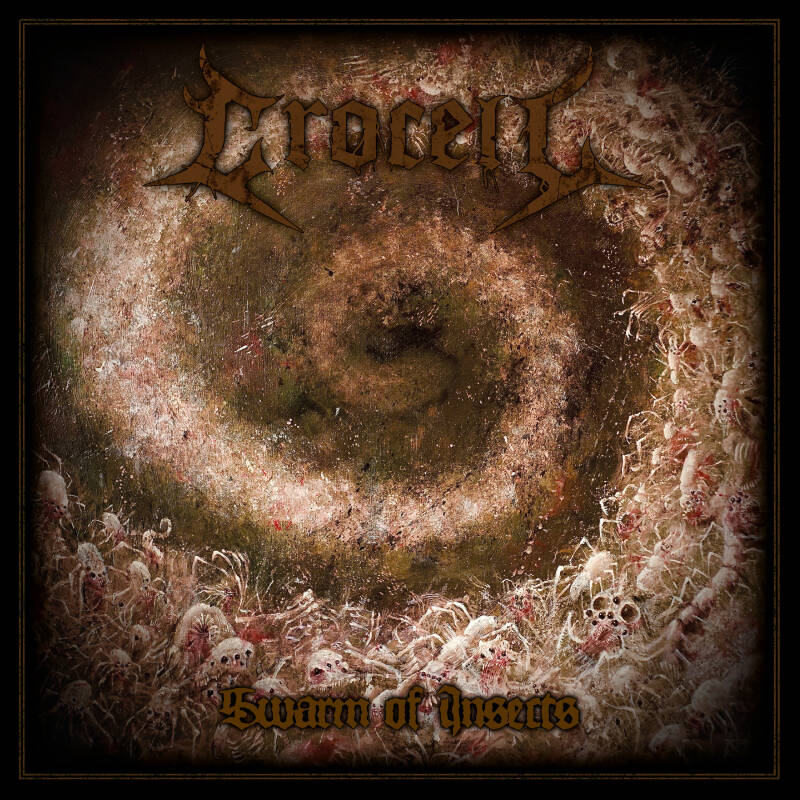
“Swarm Of Insects” has a very disturbing and symbolic title. What inspired the image behind it?
Andreas: The title is meant to be just that: disturbing and symbolic. Of course, a swarm of insects can be a very concrete threat, but not least it invokes strong images of divine oppression, sin, and rebellion. The Bible, and religious fables in general, remains a great source of shared cultural metaphors.
The album deals with tyranny, betrayal and oppression. Did current world events influence the writing process?
Mads: They definitely did, even though we didn’t try to address any specific events or write a political album for that matter. But music, and maybe especially metal music, is the perfect lens for exploring the frustration, emotions, and hope that can arise in a sinister time where the world seems increasingly chaotic. Of course we primarily aim to write good music that moves people, and that we ourselves enjoy listening to, but as human beings we are influenced by what is going on around us, so it is inevitable that our experiences are transformed, condensed, and channeled into the music that we create, even if only in an abstract sense.
This was the first Crocell album fully recorded by the band itself. How different was the atmosphere compared to previous recordings?
Andreas: On some of the previous albums we have recorded vocals, bass or guitars ourselves, but this was the first time where we also recorded the drums. We coordinated with Lasse Ballade, who also mixed and mastered the album afterwards, so we knew that the raw material was in good hands.
Recording everything ourselves changed things quite a lot, not least because the recording process became a natural extension of the writing process. We could already begin working on some of the sound aspects while demoing the songs, and at the same time it made it easier to carry experiments and "coincidents" on to the final version. By having control it became easier to actually let the music be a little less controlled, and with Lasse's production we think that we have captured a raw and dynamic feeling, which is exactly what we aimed for.
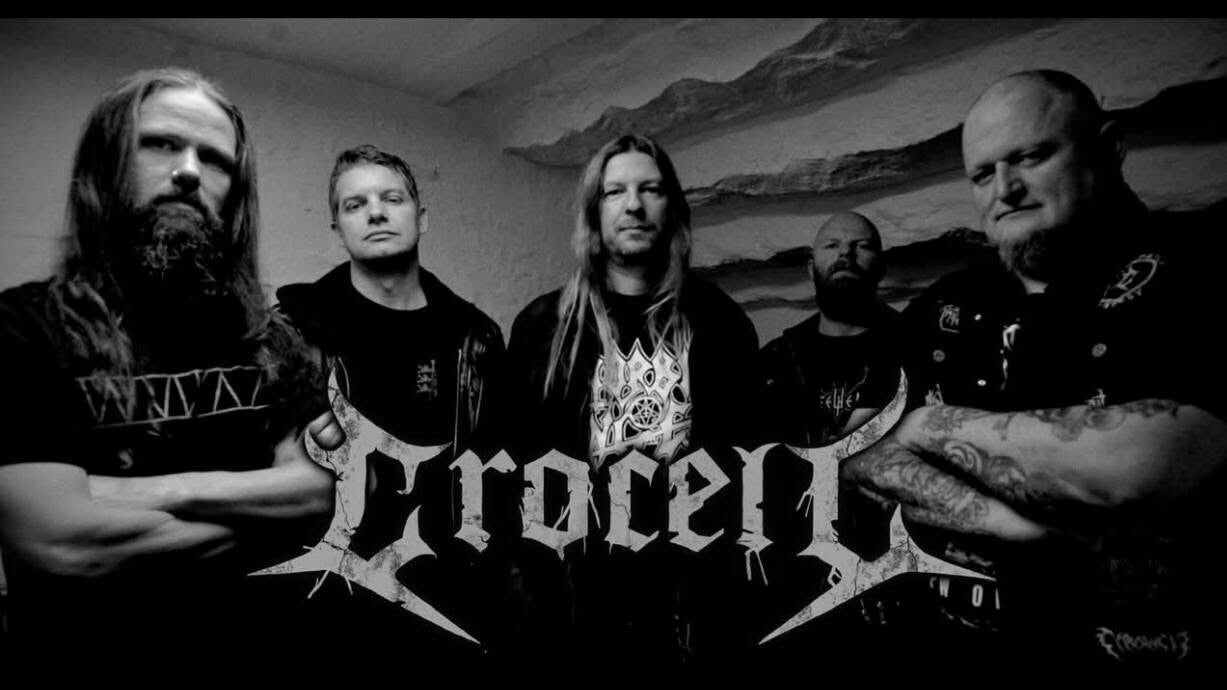
The album has a very bleak and oppressive atmosphere. What inspired that direction?
Mads: It is not like we agreed beforehand that we wanted to go in this exact direction, but as explained above we are definitely not unaffected by the current state of the world or by certain events in our individual lives. Besides from that it has just been a natural development for Crocell to gradually move closer to black metal through the years, and up until this point, "Swarm of Insects" is the culmination of that development.
Was there a specific challenge during the self-recording process that pushed the band harder than expected?
Andreas: We had tested some things beforehand and coordinated with Lasse Ballade in order to make sure that we would deliver the best possible raw material to him. Of course we ran into a few things along the way, but not more than you would expect and nothing that wasn't easily fixed. So the recording process itself went really well. On a personal level, though, our former guitarist, Rasmus "Hexen" Henriksen, passed away while we were recording the album. He had left the band a couple of years before due to a cancer diagnosis, but we were still just as close friends so it was a huge blow to all of us, and it definitely affected us during the process.
How did Mads’ arrival affect the songwriting and chemistry inside the band?
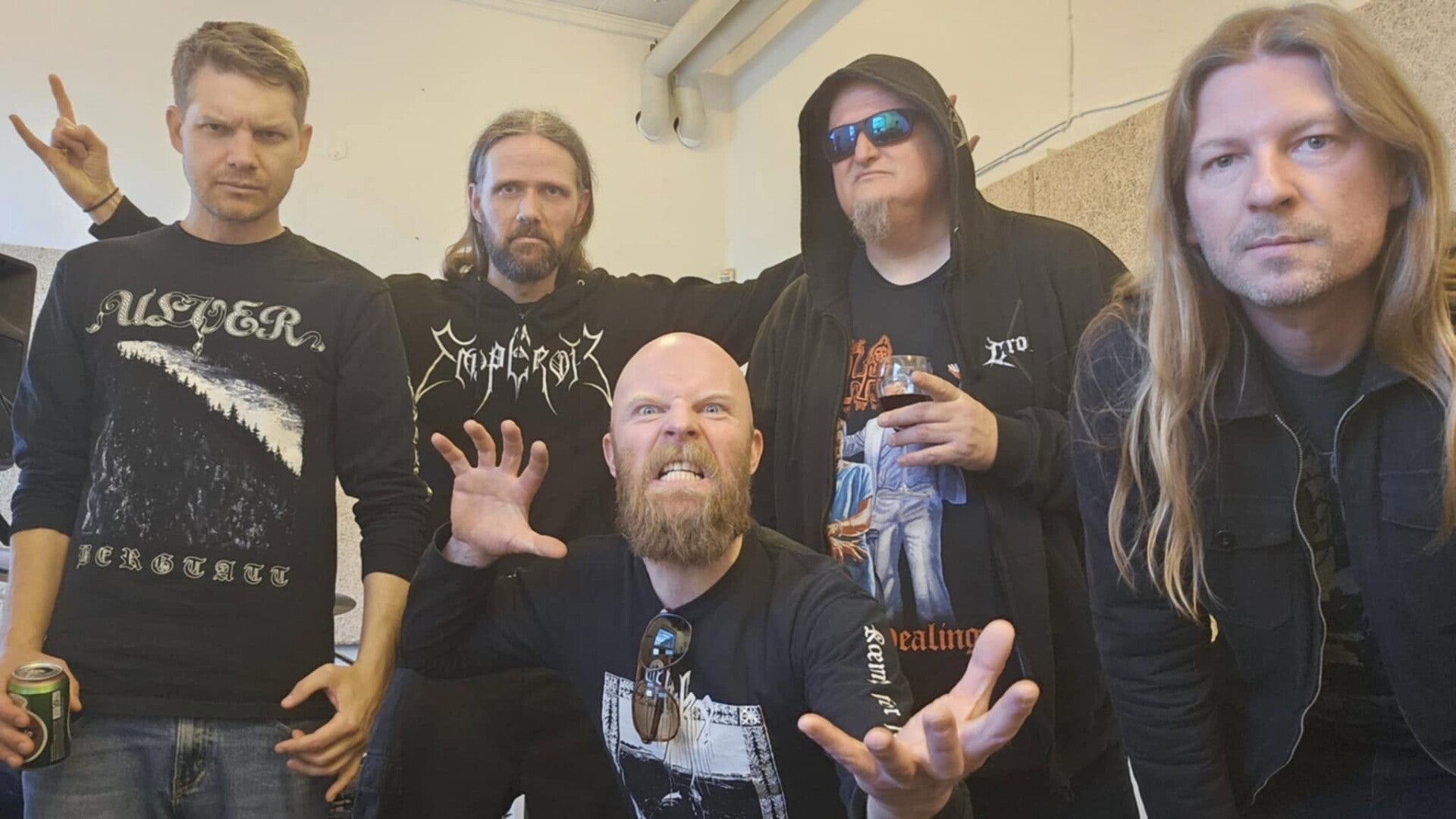
Andreas: We have known Mads for a long time, and he has helped Crocell many times through the years. To be more specific he had already played several shows with us before joining the band, filling in on both bass and guitar, especially during Hexen’s last time in Crocell. He also helped us record parts of the “Baptized In Bullets”/”Funeral Bliss” EP’s, etc. So when Hexen had to leave the band, and Mads became a permanent member, he was already more or less a part of the band. Of course Mads brought his unique musical taste and creative ideas with him into the band, and that is probably also one of the reasons that the album turned out so dark. But as far as the songwriting process itself we could more or less just continue where we left off with ”Of Frost, of Flame, of Flesh”.
"What I find more interesting are bands that explore and build upon the genre, and push its boundaries, rather than just copying the work of the giants."
Mads Gath
How do you balance aggression and melody without weakening either side of the music?
Mads: I think it comes natural as a part of the songwriting to feel when it’s going too soft and we need to spark some fire into the music, or when we need allow the listener to breathe and slow down. Often it also feels natural to add some aggression to a melody by simply letting the second guitar provide a tonal counterpoint to the melody, or by blasting through some simple minor chords on top of the melody. Aggressive drum patterns or a twisted vocal is definitely also something that can give a melodic riff a bit more edge and counterpoint, to create balance. On “Swarm Of Insects”, you can find a good example of that in the outro in “Labyrinthian Tunnels,” where a melodic guitar is complemented by insane vocals and drumming. Dynamics and balance between aggression and melody was definitely also something we discussed, when we had to make the track list for “Swarm Of Insects”. The interaction between each track is important to reach the right balance. But a crucial factor in this regard, however, is the production, which plays a significant role in shaping the music’s expression and the direction it takes. What kind of album would “De Mysteriis Dom Sathanas” be, if it were wrapped in a Bob Rock production?
Denmark had many strong extreme metal bands over the years. How do you view the current Danish metal scene?
Andreas: Overall I think the scene is in good shape with active bands and festivals all over the place, both old and new and covering most subgenres. Of course not everything is gold out there, but there are many great and dedicated bands, and not so few of them have gained themselves a reputation both in Denmark and abroad. If I should drop a few names that are perhaps a little less known abroad than Baest, Iotunn, Illdisposed, Hatesphere, etc., I would suggest to check out Arkæon, Horned Almighty, Strychnos, Dysgnostic, and Frelser. Good stuff right there.
What do you think death and black metal bands often forget when writing new material today?
Mads: To be honest, I’m not as adventurous when it comes to new music as I was 20–25 years ago, because there are just so many bands out there these days. So, I have my favorites, and besides that, I get recommendations from friends, discover bands at the festivals I attend, and sometimes through specific playlists (be sure to check out Fenriz’s playlist!). That means I don’t listen too much of the, probably endless amounts of, crap out there. You can certainly succeed in copying the genre’s Godfathers if you’re damn good songwriters. The Norwegian band Abhorration is a very good example of a band that has successfully managed to write “Altars Of Madness” all over again. Very cool band. But I can also easily think of a couple of bands from DK that I think fail because they try to be generic copies of the genre and simply don’t have the right riff-bank to draw from. What I find more interesting are bands that explore and build upon the genre, and push its boundaries, rather than just copying the work of the giants. If, on top of that, they’re able to sprinkle just the right amount of madness into their music, they’ve already earned major points in my book. Among newer bands that I think combine songwriting quality with an edge, I can mention a band like Ungfell, who have a suitably wacky vibe without being silly, or a band like Misþyrming, who have a uniquely aggressive Icelandic, and almost folk-like touch. High quality in that regard can be found in an old band like Funeral Mist, which many years ago set new standards for just how vicious and perverse black metal can be. These are all bands operating within black metal, but they’re quite distinctive because each one has an edge to their music and pushes the boundaries a bit.
After nearly twenty years as a band, what still drives Crocell creatively?
Mads: Crocell is established and rooted in Nordic death metal, but the band started to explore a more dark and blackened sound, some 10 years ago. I believe the band still has some dark paths to walk, paths that haven’t been explored yet. I think some of that creative drive should be found in the will and curiosity in exploring and building on that sound.
What kind of reaction are you hoping listeners will have after hearing “Swarm Of Insects” for the first time?
Andreas: I hope that it speaks to them, and that they will be both blown away by the album's intensity and sucked in by the atmosphere. And hopefully they will agree that "Swarm Of Insects" sounds like real music, played by real musicians who have put their hearts into creating a furious, dynamic and dark metal album.
Add comment
Comments