

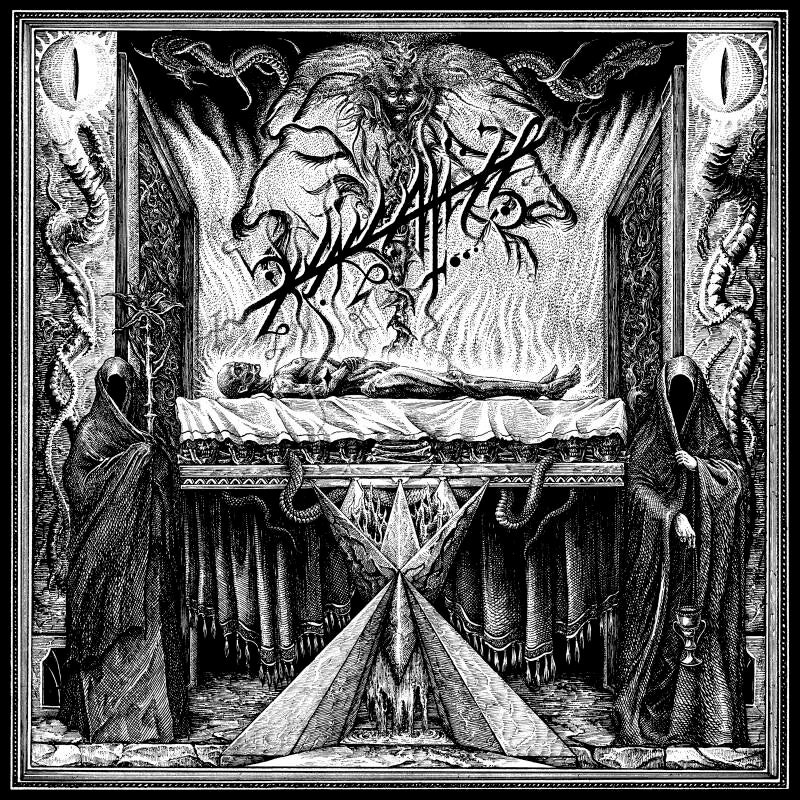
“Legatum Mortuorum” sounds rooted in grief, collapse, and transcendence. How did the album’s main concept begin for Desiccation?
James: I would say that it is a continuation of the ongoing theme of the band as a whole. The concept began in 2020 when the world shut down from the covid-19 pandemic. Northern California, where we were born and raised - was running rampant with wildfires and windstorms. We live in an area where there are thick forests. A lot of unmaintained land makes fire danger an extreme risk. Each day there would be a new wildfire burning close to our home, so our anxiety and fear was amplified. The band was a catharsis for that fear and anxiety. The loss of land, homes, and personal property; along with the loss of loved ones continues to be expressed in the themes of our music.
The album mixes blackened doom metal with death metal, black metal atmosphere, and post metal depth. How do you decide where one part ends and the next one begins?
James: I decide a part is 'done' when it has clearly fulfilled that role and any further repetition starts to feel like I'm just stalling the journey instead of deepening it. For me, it's less about verse/chorus, and more about managing the energy and narrative across the different metal vocabularies. In this project I'm constantly asking myself: what emotional job is this section doing, and has it finished its work yet? I try to let the evolution come naturally.
How were the recording sessions for “Legatum Mortuorum”? Was the album built slowly over time, or did it come together in one focused period?
James: It was built slowly over time. There were periods of intentional focus, and periods of just writing parts and adding them to the riff bank. We then would go back to some of those ideas to work them into the album later on. Patrick and I record the songs by ourselves separately. I typically start the process on my own, recording my own guitars and overdubs; send him my rough ideas, and then we build on it together from there. Once the songs are constructed, Soell and I record our vocals in my home studio. Then we meet with him at his studio in Sacramento, CA. and re-amp the guitars and bass, and then begin working on the song order and mixes etc. So, not your conventional time in the studio knocking out a whole album during sessions.
Loss and grief are central themes on the album. How do you turn such personal and heavy subjects into extreme metal without making them sound forced?
Soell: I think it all came pretty naturally; nothing on this record really felt forced. We all have darkness within us that we deal with in different ways. It's human nature. What is metal music, if not a way to try to transmute that darkness into something creative? And share it with others, so we don't have to hold it all ourselves?
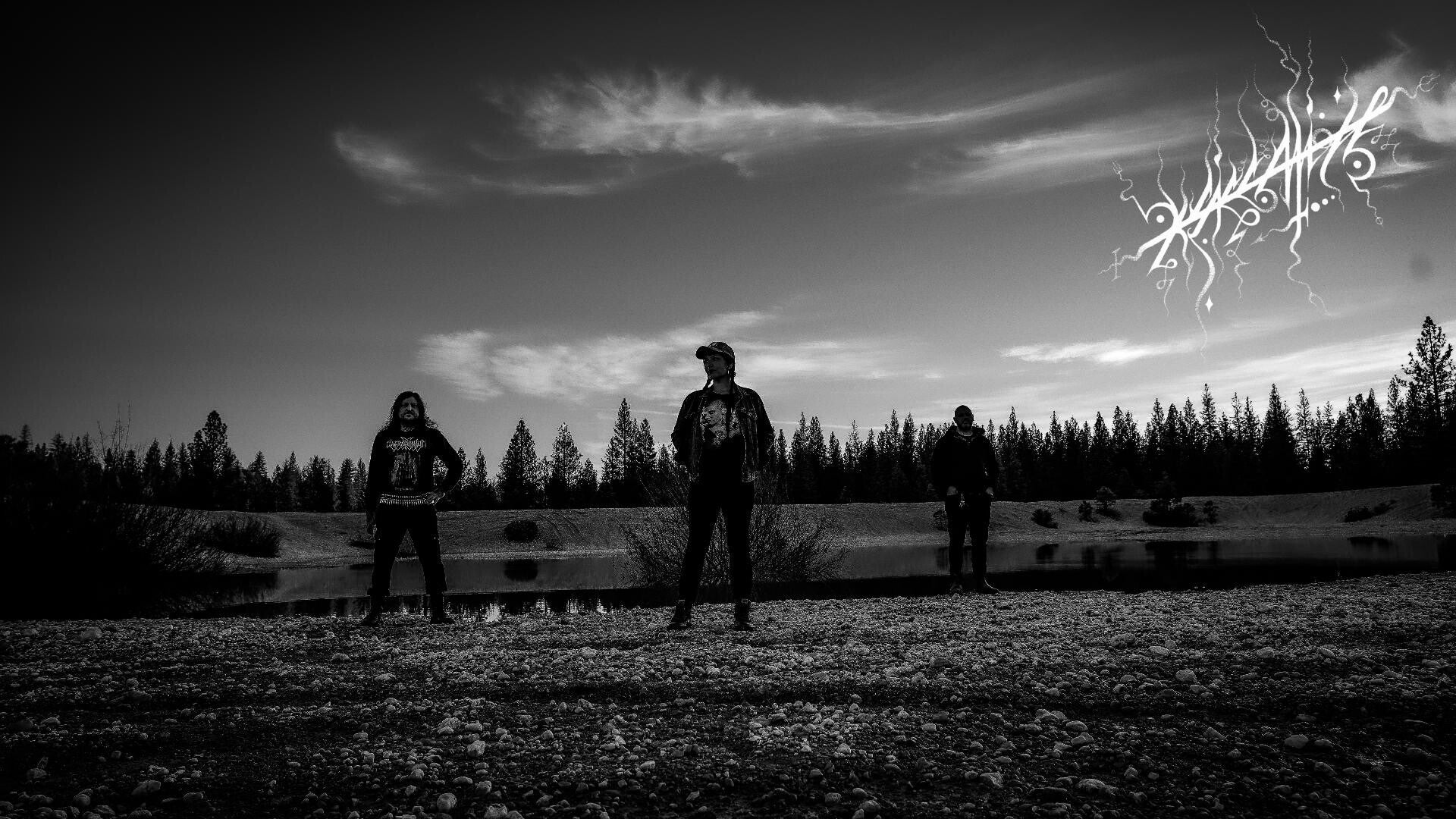
"Nothing on this record really felt forced. We all have darkness within us that we deal with in different ways. It's human nature."
Soell Bratt
The world today already looks broken in many ways, with war, climate fear, social decay. Did the current state of the world affect the way “Legatum Mortuorum” was written?
Soell: Yes. We are all trying to survive and thrive in late stage capitalism. James and I are also parents, which colors the way we see the world, thinking about what things will be like for our daughter and her future. ICE raids were getting really intense while I was working on lyrical themes, which also made me think of experiences my ancestors went through getting their families torn apart, children stolen and shipped off to Indian boarding schools; it's all connected to the themes that are portrayed in our music.
"Cold Dead Earth" introduced the band to the underground. Looking back at that record now, what does "Legatum Mortuorum" correct, and what does it keep?
James: There is no conscious correction. I personally did not feel like we aligned with the labels put on us as far as genres were concerned. We all wanted to continue making music and art that we ourselves wanted to hear and see. I tried to keep the vibes of doom metal and black metal at the forefront of our sound, while Patrick and I both share a deep love for haunting movie soundtracks and composers like John Carpenter and Ennio Morricone, we wanted to make an album that felt like watching a movie and felt seamless.
Growing up in the forests of Northern California, isolated from major urban metal scenes, how did the nature shape the music and the vision of the band?
James: I think for me it comes naturally as a part of living in solitude and isolation. To be honest I felt sheltered and ignorant to a lot of heavy music growing up. There just was not much of it around where I live. I fell in love with skateboarding when I was about 10 years old, and there was no concrete anywhere near me, so I would build ramps out of scraps of wood and trees and shit. There was no skateparks to go to be influenced by other people. A lot of it was up to my imagination and whatever magazines and skate videos I could get my hands on. Skate videos were probably my introduction to underground music. To me, my love for loud heavy music feels similar to that.
Soell: Yeah we were lucky to get any underground music we could here in the 90'S. Lots of bootlegged cassette tapes passed around our friend groups, of different genres, back then all the punks/goths/skaters/metalheads all intermingled because it's such a small town. I do feel a strong connection to the land here, growing up playing in the forests/rivers/creeks. Nature is one thing that will always regulate my nervous system. That connection and kinship affects everything I do creatively.
The album has a strong long form approach to songwriting. How do you know when a song has reached its final shape?
James: For me it is similar to writing an essay. I'm intentional about giving each song an introduction, a body, and a conclusion, and I stop when each one of those sections is doing its job and there is nothing left to add or take away without weakening it.
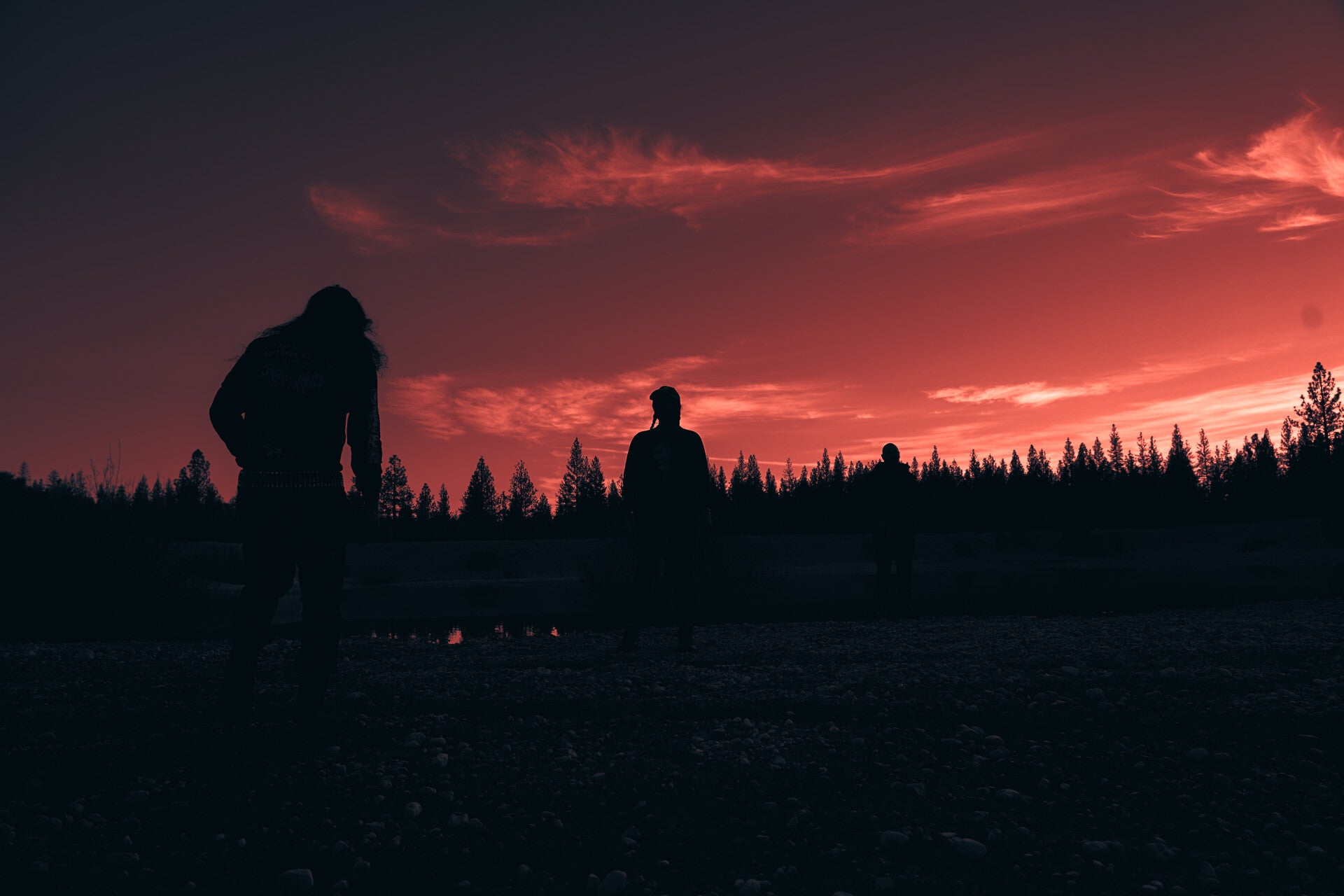
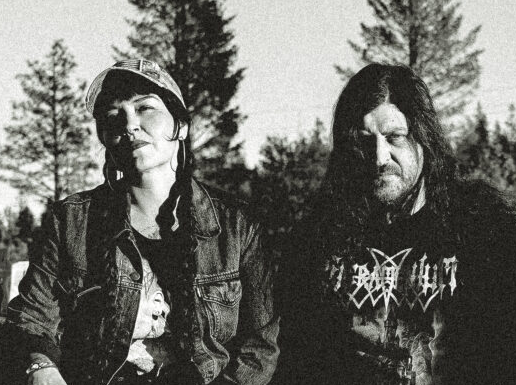
"I think for me it comes naturally as a part of living in solitude and isolation. To be honest I felt sheltered and ignorant to a lot of heavy music growing up. There just was not much of it around where I live."
James Bratt
All three members contribute vocals. How do you assign or develop those roles across a track, and does each voice has a specific emotional range it owns on the record?
James: The first thing I think about with vocals are practicality: can I actually play this guitar part and deliver the vocal at the same time without compromising either? That physical reality is what mostly determines who does what. From there I think we just lean into our natural ranges to make the contrast feel intentional.
The synth layers are noticeably deeper on this album than on the debut. Where is the line for you between synth as atmosphere and synth as something that starts to soften the extremity of the music?
James: For us the synths are there to make the horror movie around the band. We definitely pushed them much further on this album, but the line between atmosphere and softening is all about placement and mood. As long as the synths are feeding tension, dread or that Carpenter-esque unease rather than smoothing thing out, it still feels extreme to me.
Having Alex Miletich and Karl Cordtz come in as guests, both from the same underground circuit, what did they bring to the recording that Desiccation could not have reached alone?
James: I had not ever done a band with guest contributions before this, so I'd been itching to open the door a bit. Alex's technical playing style is very different from mine. There are things he can do that I simply cannot, and I knew putting that on the title track would add a layer of detail and excitement that wouldn't be there otherwise. Karl is one of my best friends and bandmate in Feral Season and was literally living in a cabin on my property while we were making the record, so it was a no-brainer to have him add vocals and a riff on the last song. His presence brought a deeper lived in layer to the album that feels very specific to our little corner of the underground.
In a scene full of bands fighting for attention, what does Desiccation want “Legatum Mortuorum” to leave behind after the last note fades?
James: None of us are interested in fighting for attention or seeking approval. We just love making art and writing the kind of music we genuinely want to hear with our own ears. That is the compass for everything we do. If people connect with it and opportunities come from that, it's a bonus, but the drive to create is going to be there no matter what, right up until we are not in physical form on this earth anymore. If “Legatum Mortuorum” leaves anything behind, I hope it's that sense of honesty - a document of us following our own instincts in a scene that can be focused way too much on noise and visibility.
Add comment
Comments