

Release Date July 17th, 2026
Format Digital
Genre Symphonic/Power Metal
Origin United States
Symphony Of Destiny comes from Richmond, Virginia, and plays symphonic metal shaped by orchestral writing, melodic vocals, heavy guitars, and power metal pacing. The band built its name through regional shows, international radio rotation, and press coverage across several countries, then widened its audience through support appearances with touring acts. The band reached audiences in the United States, Brazil, Italy, Germany, Mexico, and the United Kingdom through airplay, online coverage, and live exposure. The campaign preceding the EP produced more than one hundred documented radio plays, giving the band considerable reach before its first complete release had arrived.
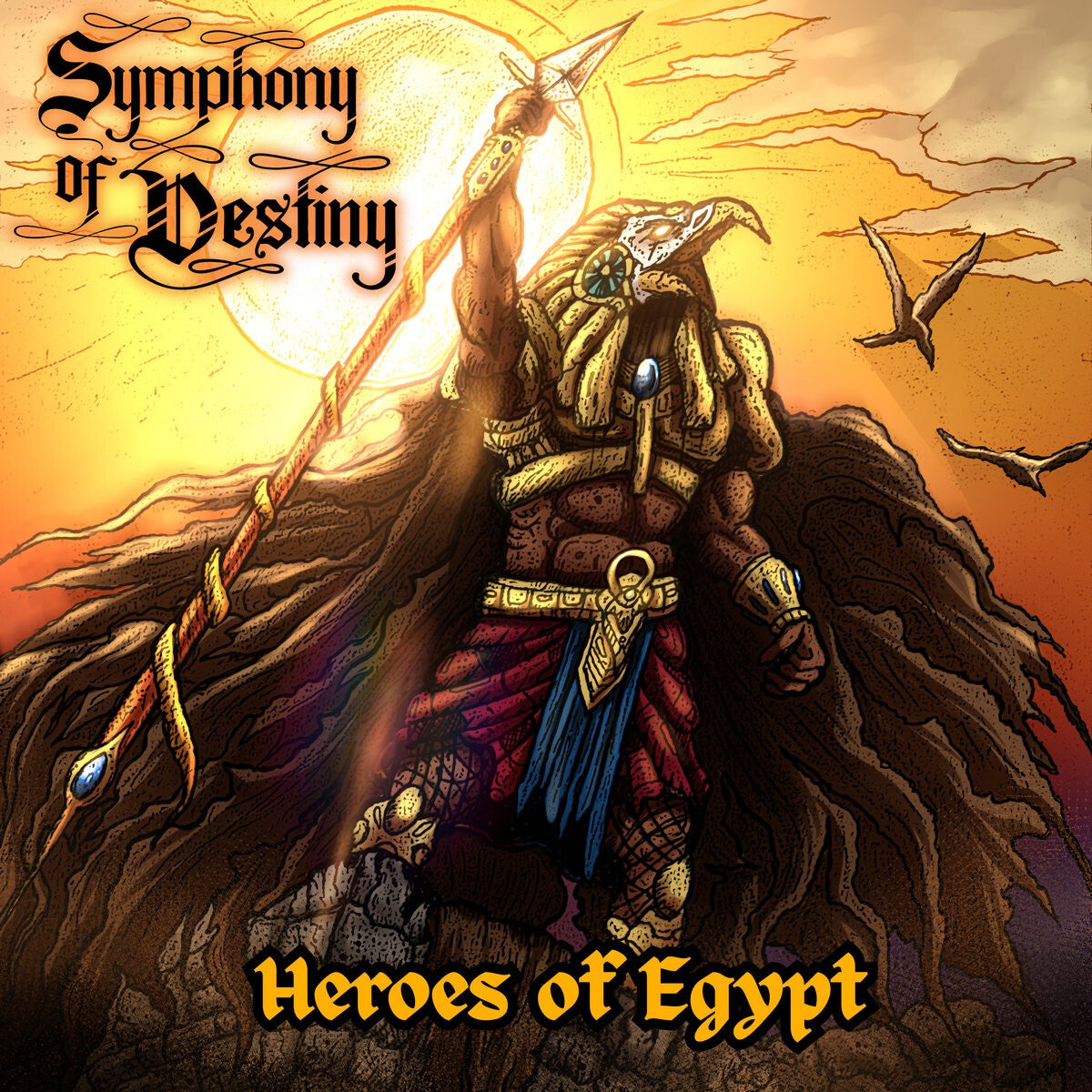
That growth happened before a full-length album or established catalogue existed, placing unusual attention on a group entering its first formal release cycle. “Heroes Of Egypt” is their debut EP and the first complete release attached to the Egyptian mythology concept introduced through earlier singles. The band draws from the grand European school of symphonic metal, though the guitar tone and vocal approach remain less operatic and more grounded in modern American metal. Ancient gods, exile, battle, riddles, and divine vengeance form the lyrical core. The subject is treated as the main framework of the music, not as decorative imagery placed over unrelated songs. Symphony Of Destiny currently build their sound from broad keyboard layers, choral accents, steady double kick passages, melodic lead work, and vocals aimed at large hooks, with little emphasis on extreme range or constant ornamentation. The presentation is ambitious for a debut EP, with the musicians choosing one historical and mythological setting and developing every song inside it.

“Heroes Of Egypt” contains four songs, with “Exile Of Horus,” “The Riddle,” and “Rampage (Bastet)” forming the central vocal material. The arrangements use sweeping keyboards and choir textures over firm rhythm guitars, while the drums maintain a controlled power metal pulse. Jack Kosto’s mix and master place the orchestral layers near the front, giving the EP cinematic scale while leaving enough guitar presence to stop it becoming a soundtrack with metal added underneath. Bass is less prominent, functioning mainly as support beneath the guitars and keyboards. Guitar solos appear briefly and remain melodic, adding color without turning the EP into an exercise in technique. The vocals sit high in the mix and follow straightforward melodic lines, making the choruses easy to retain after several plays.
Horus, Bastet, conflict, punishment, and ancient power are presented in simple language, supporting the dramatic design without burying the songs beneath excessive lore. The limitation is the narrow span of the release. The Egyptian setting suggests a larger world than four songs can fully explore, and several sections return to similar choral rises, galloping rhythms, and heroic vocal patterns. That unity links the songs, though it also reduces contrast across the EP. The keyboards occasionally sit too close to the surface, taking some raw impact away from the guitars, and a few vocal phrases follow expected symphonic metal cadences. There is also a tendency to announce every dramatic moment through another orchestral rise, where a stripped guitar passage or a darker rhythmic section could create a more effective change of pace.
The songwriting remains focused, the melodies stay in memory, and the production reaches the scale required by the theme. More variation in tempo, darker harmonic turns, and deeper lyrical detail would raise the material beyond its current level. As a debut, “Heroes Of Egypt” is a capable introduction with enough substance to separate Symphony Of Destiny from countless unsigned acts using orchestral presets and mythology as easy decoration. The EP has professional construction and a defined concept, though its ambition points toward a longer release where the songwriting, dynamics, and Egyptian setting can develop beyond this compact first presentation. It does not need more ornament. It needs wider contrast, stronger guitar authority, and a less predictable path toward each chorus.
|7.5
Add comment
Comments