

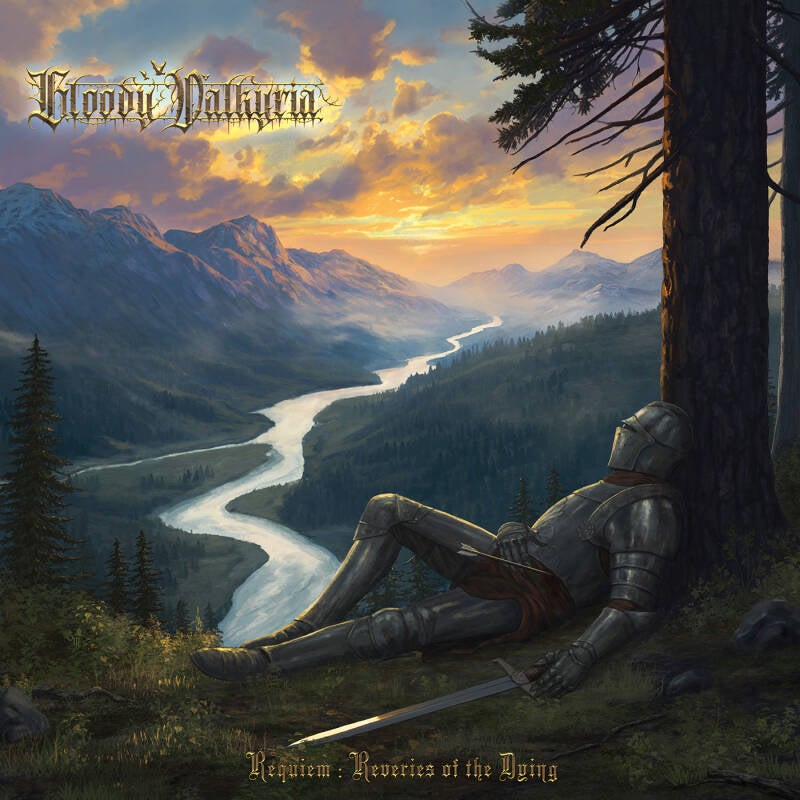
“Requiem: Reveries Of The Dying” has a deeply personal atmosphere. What pushed you towards more introspective themes this time?
For a long time, I had an idea of doing a concept album about my love for the Nordic nature of my homeland, but it felt a bit monotonous if every song would just be about beautiful scenery of forests, lakes and mountains. Then, one night when I was feeling a bit depressed (which happens a lot), I got the idea that instead of a whole album, I could do just one song about the northern landscapes with the mindset that that’s where I want to die. Then the idea just snowballed quite fast to what else I would be thinking just mere moments before my death. And the story and concept of the album came together within that one night. So, the shift to a more introspective theme came quite naturally. I did ponder if this change from grandeur fantasy to grief-filled monologue would be a good fit, but I felt so strongly with the concept that I gave it a go.
The album focuses on the thoughts of a dying man. How did you approach translating such a heavy, singular concept into a full-length musical journey?
Once I got the concept, I simply thought what my inner monologue would be if I was in a situation where I would know that I die alone within moments. It was surprisingly easy to cut that monologue into chapters/songs. If you were in terrible pain just before your death, you would most likely wish the end would just come and take away the pain, this was the idea for the opening song. Then you would probably start to think your life over. Was it a good, worthy life? This became the second song. Then there would be all the remorse and unfilled dreams surfacing into your mind, and thus the rest of the songs came.
Atmospheric black metal often creates entire worlds through emotion and melody. What kind of emotional experience do you want listeners to leave with after hearing “Requiem: Reveries Of The Dying”?
If a listener feels any kind of emotion while listening to this album, my work is done. It’s up to the listeners what they seek from the album emotionally. But I’m glad if it gives hope to someone who's feeling down. The lyrics on this album are very personal to me but when I wrote them, I hoped that maybe someone would find parts of their own stories from them and get some solace from the fact that they are not alone with those feelings. I also understand that maybe someone would listen to the album to feel sad like you would want to watch a sad movie just to cry.
Many of the songs deal with loneliness, longing and emotional exhaustion. Were these themes shaped by personal experiences or broader reflections on life?
Every aspect of the lyrics comes from personal experience, though most of it is exaggerated one way or another. My late great grandmother had some input with the shaping of the lyrical themes, for she lived nearly a hundred years, and over half her life as a widow. I had many long conversations with her about grief and loneliness. I still miss her every day.
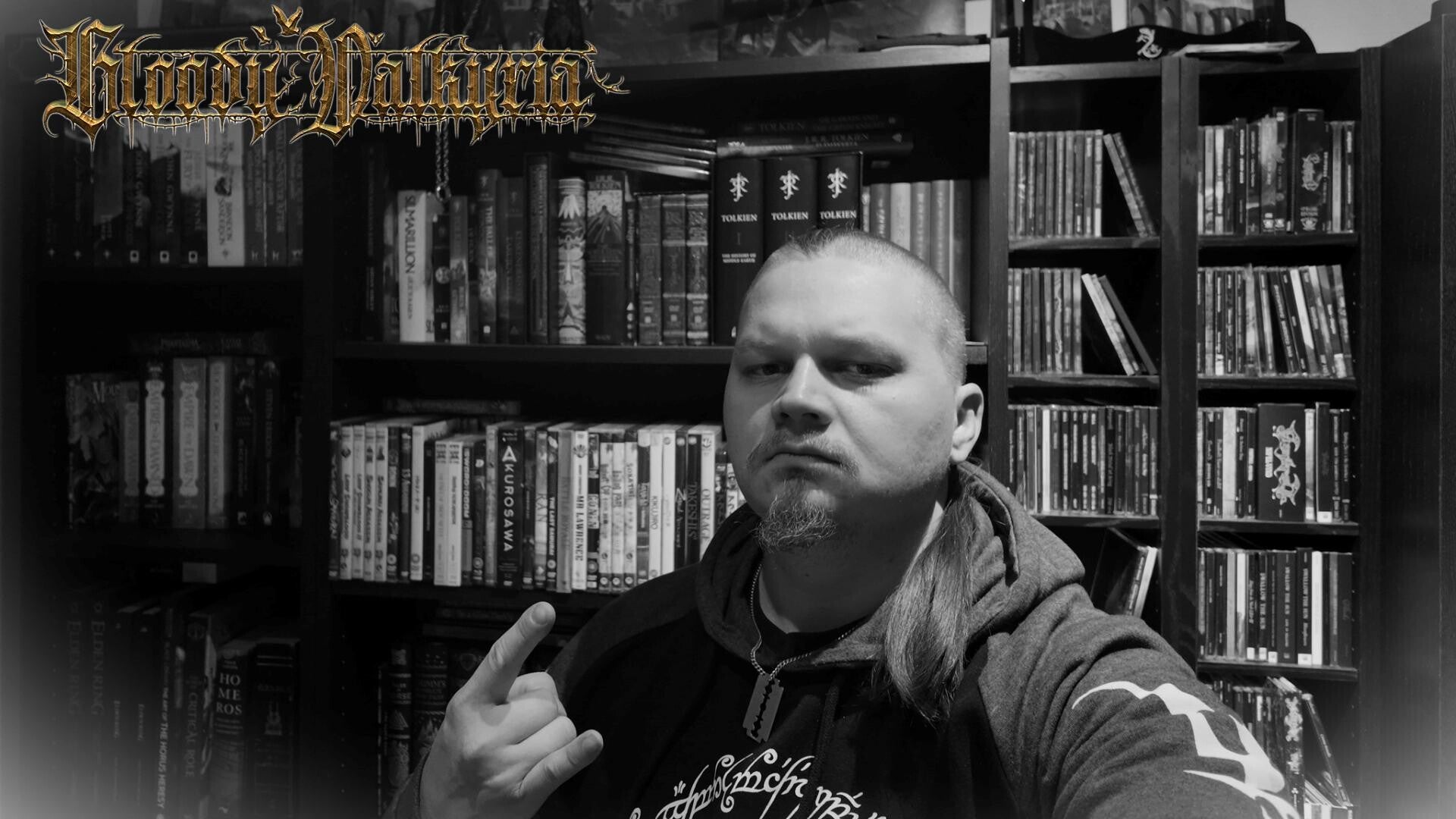
"If a listener feels any kind of emotion while listening to this album, my work is done. It’s up to the listeners what they seek from the album emotionally. But I’m glad if it gives hope to someone who's feeling down."
Working in a one man band gives full creative freedom, though it can also become mentally exhausting. How do you stay motivated throughout the entire recording and production process?
I don’t know. I guess I’m just so invested in the process and feel really strongly that the story I’m working on is worth telling. It helps when with each step forward, you just get more excited about the project. For example, if I struggle with the orchestrations on one song, it will eat away motivation, but when I find the right violin sound or the perfect counter melody for brass, the boost I get from that is more than twice what I had lost earlier.
The melodic side of the album is very strong. Do melodies usually come before the atmosphere, or does the atmosphere shape the melodies afterward?
I would say that melodies are half of the atmosphere. But which one comes first depends entirely on the song and in some cases a certain part of the song. In my workflow, usually first comes the riff, then rhythm guitars for verses, then melody which in many cases is the deciding factor on what chorus will be. But some songs begin with a specific atmosphere which kind of guides what kind of melodies and rhythms will be added. “Always” was written entirely on guitar. First the riff, then verses, adding some melodies which dictated the chorus and some more riffing. “Symphony Of Silence” on the other hand was composed “atmosphere first”. I made the long orchestral intro and then after a week or two listened to it and let the atmosphere guide my way.
“My Beloved North” closes the album with a strong connection to homeland and memory. What does the “North” symbolize for Bloody Valkyria on a deeper level?
North symbolizes to me my roots. There’s that “north will always be part of me” kind of mentality behind it. It is as you said homeland and memories. I’m one of those people that deeply love their homeland in many aspects like culture, history, nature, quirky habits, etc. I’m proud to be a very stereotypical Finn in many ways. Every summer I go hiking in Lapland (the very north of Finland) and each time when I return to home (in the south of Finland), I immediately start to yearn back. So, in the case of the song, the “north” symbolizes the character’s life, his memories, joys and sorrows, all summed up in the mentality that this is where I was born, where I grew up, where I lived and where I wish to die. And I am that character.
A lot of atmospheric black metal bands focus mainly on grand scale and epic arrangements. Bloody Valkyria seems more interested in emotion and reflection. Was that balance intentional? There is a very organic and emotional production style on the album. Was it important to avoid an overly polished sound?
For me, the story and theme of the album dictates if it will be more emotion based or epic in nature. I always aim to create grand scale arrangements but only if it fits the story I’m working on. In the case of “Reveries”, there’s obviously emphasis on emotion and reflection whereas “Kingdom In Fire” has long epic arrangements because of the epic long stories of Silmarillion. My production style and quality are limited to my skills as a producer. I wouldn’t mind if the sound was more polished but I do think that nowadays there’s too much overly polished stuff which tends to make everyone’s sound the exact same. I want a personal touch in the tone.
Atmospheric black metal often balances aggression with emotion. What matters more for Bloody Valkyria when writing music, atmosphere or intensity?
This again depends on the theme of the song. If the song is about personal struggle or horror, then the emotion and atmosphere are the key factor. If I write a song about the brutality of war, the intensity would be amped up over the atmosphere. The trick is to find the right balance between the two that serves the song best. That is the thing that I love about metal music, the combination of brutality and aggression entwined with beautiful melodies and raw emotion. There’s no other genre that does it as well as metal.
Modern black metal has become extremely diverse stylistically. What are your thoughts on the current state of the atmospheric black metal scene worldwide?
I think that the atmospheric black metal scene is thriving. I think it will never get quite as big as some other subgenres of metal, but it doesn’t need to. Metal music itself is extreme music for extreme people and only a handful of those people seek the emotional nectar that this subgenre provides. So, we’re doing well.
After such an emotional and personal album, where do you see Bloody Valkyria heading in the future, deeper into darkness or toward something different?
There will be a return in the fantasy themes but also deep dives into the darkness. I doubt there will be another quite as personal album in a while but you never know when the inspiration hits. I’m at the moment working already on two different albums, so at least I’m not slowing down any time soon.
Add comment
Comments