

Night Spectre was formed quite recently. How you came together and focus immediately on building a full album?
The goal of forming a heavy metal band had existed for many years. The first riffs and ideas were written long before the band itself was created. The first three songs were completed back in 2018, but due to various factors, it was very difficult and took a long time to find other members who truly shared the same vision, the same dedication, and the inspiration needed to create something with real respect for the genre.
Eventually, after a period of searching and through mutual friends, we all came together in 2024, and that was when Night Spectre was formed. Each of us brought our own ideas into the process. The existing songs started to be developed further, new songs were created, and once we had written enough material that we were really happy with, we decided to fully commit ourselves to it, work seriously on it, and go straight for a full album.
Since this is your debut album, was there any pressure while recording and finalizing the material?
There was absolutely no pressure, I can say. From the beginning, we took our time, we rehearsed for about a year, carefully going through all the details at our own pace. We really enjoyed the rehearsals and the process of making this music, and once everything felt ready and in place, that’s when we decided to go into the studio and record.
Once the recording process began, everything went very smoothly, as we were already well-rehearsed and fully prepared, and we knew exactly the sound we wanted to achieve. Above all, our producer was extremely experienced and had a deep understanding of the sound we were aiming for. Because of that, everything flowed naturally and progressed very quickly.
Instead of releasing singles or demos first, you chose to work carefully on a complete debut album. Why was that important for the band?
We liked the idea of introducing ourselves to the world through a complete and fully realized work right from the beginning. From that moment on, we decided that we wanted to work hard and strive for what we believed we deserved by presenting a full picture of the band and our music from the very start.
We didn’t want to release a demo first and then later re-record the same material for an album, simply because we would have become much attached to the songs and already invested a lot of work into them. Instead, we chose to present everything properly in album form immediately. Of course, every decision has both advantages and disadvantages, but this was the path we personally felt was right for us.
The influence of the NWOBHM and USPM is very apparent on the record. Which specific albums from those eras define Night Spectre’s sound?
This is really a combination of many different albums and influences. Initially, from the New Wave of British Heavy Metal scene, we would definitely point to the first seven Iron Maiden albums, even though they eventually moved beyond that exact label. We would also mention bands like Tokyo Blade, especially “Night Of The Blade”, Satan with “Court In The Act”, and Tygers Of Pan Tang especially “Wild Cat”, but also “Spellbound”. Of course, Saxon and specifically “Denim And Leather” as well. From the US power metal side, I would say a lot of Riot, especially the early period with “Fire Down Under”, as well as “Thundersteel” and “The Privilege Of Power”. And of course, a few key albums that had a strong impact on us are Jag Panzer’s “Ample Destruction", Helstar’s “Remnants Of War”, and Vicious Rumors’ “Soldiers Of The Night”.
The album balances epic sections with aggressive heavy metal pacing. How important is dynamics when building songs?
This band was formed as a way for us to express everything we’ve been carrying inside for decades, shaped by our earliest teenage listening experiences. We are fans of traditional metal in all its forms whether it’s aggressive, epic, or highly melodic. The combination of all these elements, filtered through our own perspective, comes out very naturally and effortlessly for us, and it is very important, as it makes us feel complete.
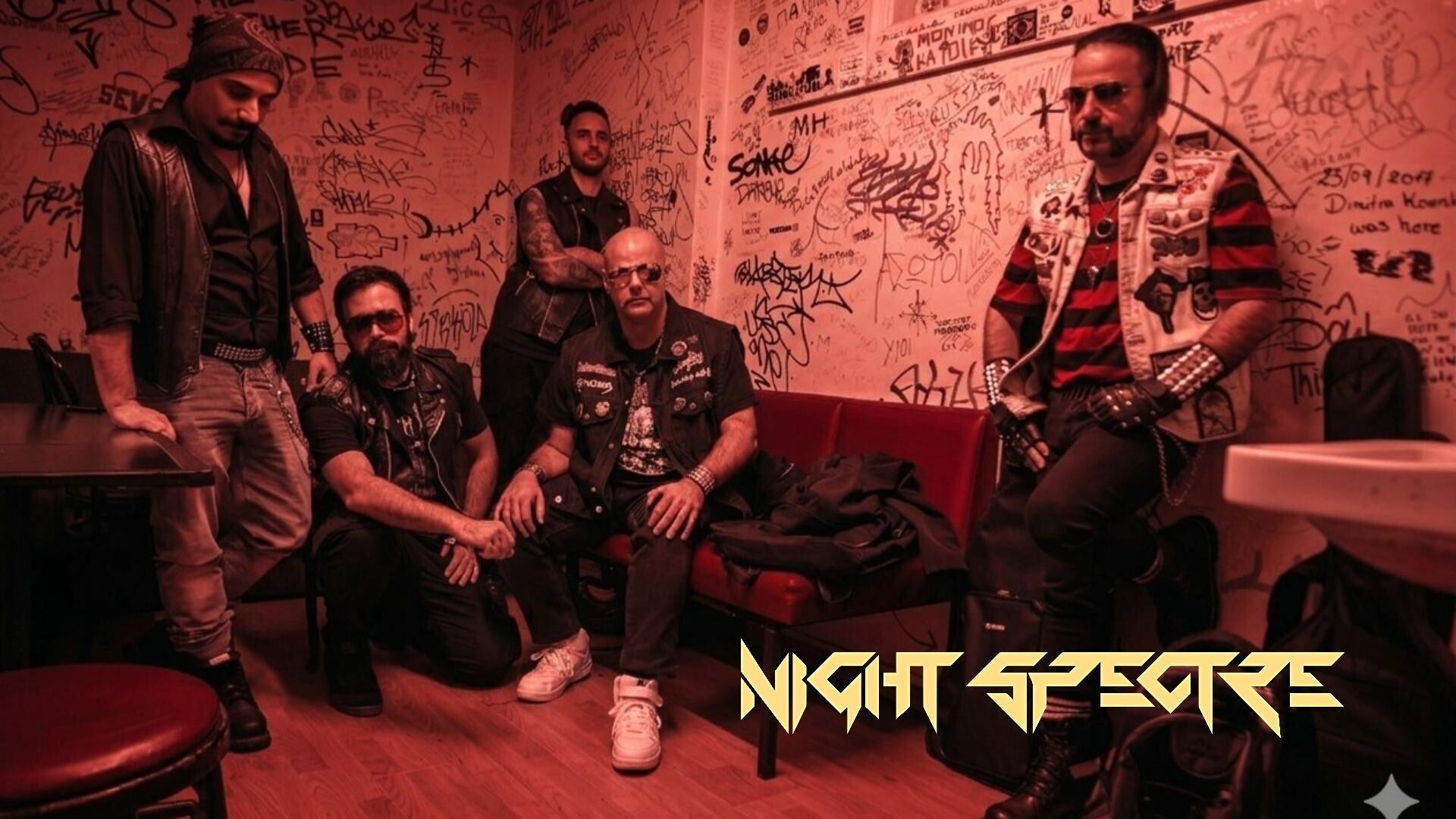
"I’m definitely convinced that, in terms of the quality of new releases, heavy metal still has a strong future ahead of it. And I think the key reason for that is that metal today is completely underground."
There is a strong swords and sorcery atmosphere throughout “Night Spectre.” What attracts the band to those themes?
First, I’ll talk about our musical influences from bands we love that also deal with similar themes. From there, we’re also very much inspired by fantasy literature, whether it explores darker subjects or more epic themes. We really like authors such as Michael Moorcock, for example, and we wanted to draw on these influences in order to symbolically express some of our inner thoughts about humanity, existence, and death.
Many of the lyrics deal with heroic battles, occult visions, and rebellion. What inspires you when writing these themes?
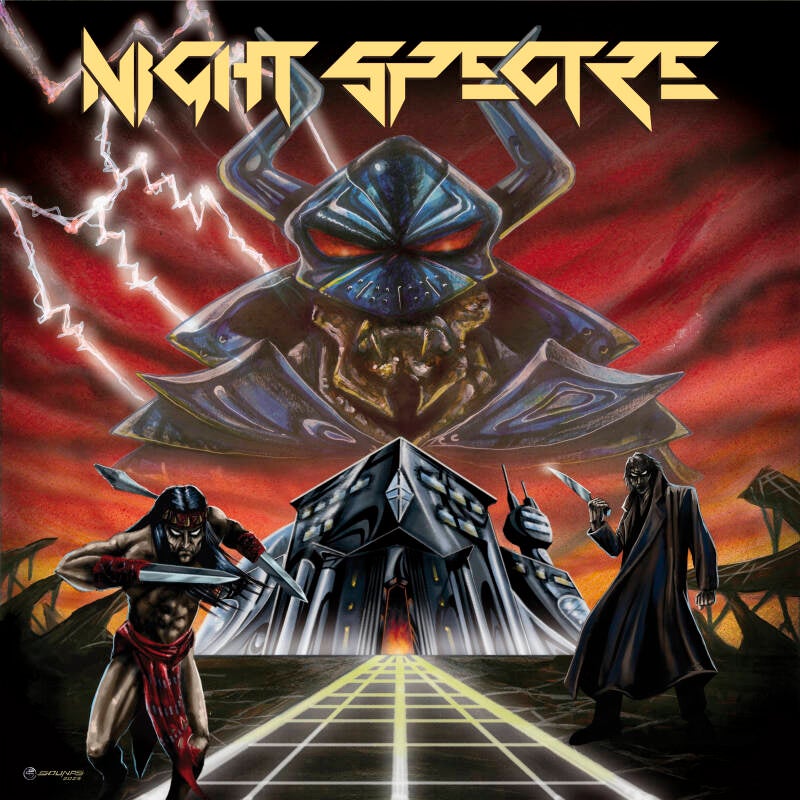
Basically, we’re inspired by any subject matter that feels truly metal to us. For example, one of our songs is about Galvarino, a historical figure whose homeland was invaded by colonial Christian forces. As a form of punishment and intimidation, they cut off his hands. But instead of surrendering, he attached blades to his arms and continued fighting, eventually becoming a symbol of rebellion and strength of will for his people. You can’t really get more metal than that.
Another song is inspired by Maniac, the 1981 slasher horror film, which portrays human perversion and psychological decay as a result of violence and alienation in a cold modern metropolis. What interests us there is the harsh truth behind it, the ugly side of society that people try to ignore or hide away. Even when society attempts to reject or suppress it, that darkness continues to exist beneath the surface. Beyond that, occult themes and subjects connected to the supernatural have always been a source of fascination and exploration for us. We’re deeply drawn to all these themes, and honestly, writing the lyrics around them was a really enjoyable and creatively fulfilling process.
Heavy metal has become very trend-driven in recent years. Do you think traditional metal still has a strong future in the underground?
I’m definitely convinced that, in terms of the quality of new releases, heavy metal still has a strong future ahead of it. And I think the key reason for that is that metal today is completely underground. But that also means that everyone involved in it is driven by passion. Everyone is a true fan. The bands themselves are fans first, because they record and play music purely out of love for the genre. There’s really no major professional incentive in choosing to play classic heavy metal nowadays. The same goes for the labels that choose to support and release bands. They operate first and foremost as fans, for exactly the same reason.
It’s also true for concert promoters. They bring bands because they genuinely love and believe in them as fans, not simply because they expect to make money from live shows. And the fans themselves are real supporters too. They don’t just support a band passively through Spotify or other streaming platforms. Of course they’ll discover and listen to music there, but when they truly love a band, they’ll go further, they’ll buy the records, the T-shirts, the merchandise, and actively support the band in a real way. So because this music is still created by fans, for fans, I think it will always carry that sense of excitement, passion, and obsession that leads to more and greater releases in the future.
The production on the debut has a very organic, classic feel. What was the recording process like to ensure the instruments sounded authentic to the 80s style?
From the very beginning, once we had finalized the arrangements and every detail of the songs through rehearsals, we had already decided that, if possible, we wanted Olof Wikstrand from Enforcer to handle the mixing and mastering. After hearing albums by other bands he had worked with (like Riot City, for example) we immediately felt that there probably wasn’t anyone more suitable to truly understand the sound we were aiming for. So once we got in touch with him and he agreed to work with us, we recorded the instruments in different studios around Athens in order to make sure we could provide him with the best possible recordings and sound sources to work with. Because of that, the whole process came together very naturally and spontaneously.
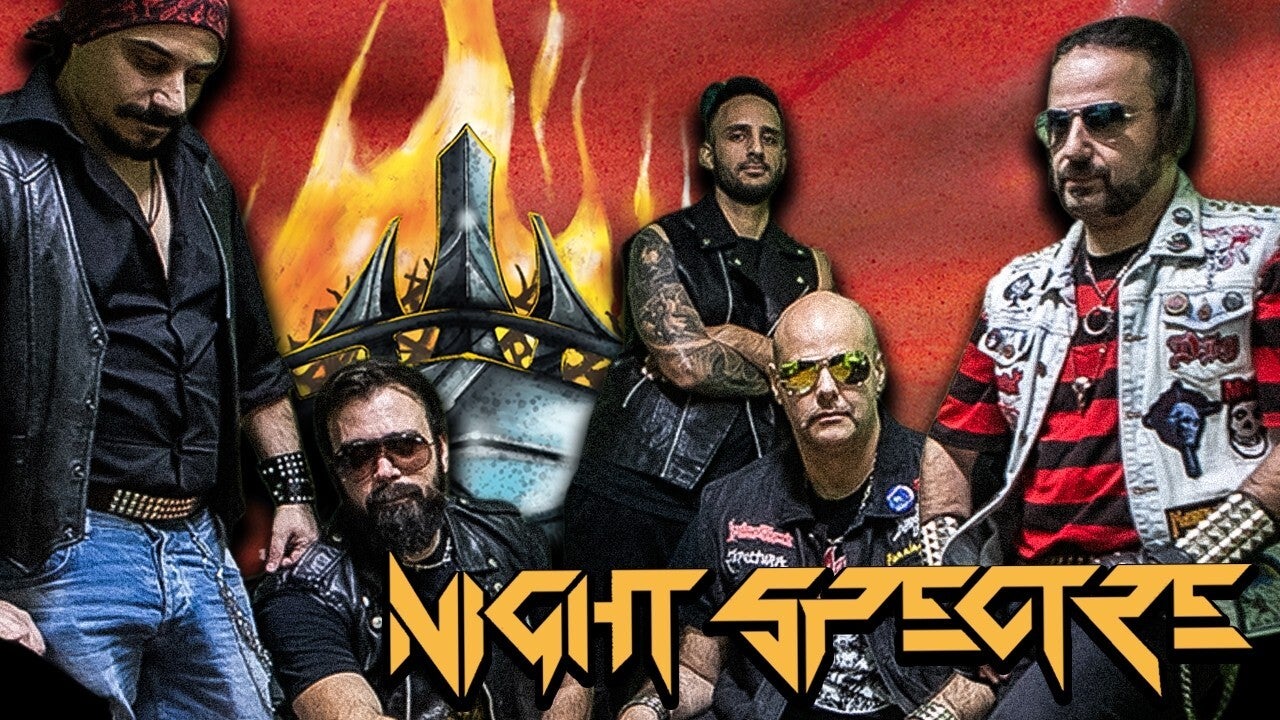
"When we use the term “old school,” we don’t mean it in the sense of being simply nostalgic or stuck in the past. What we mean is the era when this music felt more human without completely fake drums, without plastic-sounding guitars, and without endless copy-paste riffs. "
Night Spectre already sounds much tight and focused for such a young band. Do you already have ideas about where the next album could head musically?
First of all, thank you for the comment. As for what comes next, I’d say that we already have quite a few riffs, ideas, and a solid foundation for the next album. Some of the material we’ve developed a bit further feels faster and more aggressive. Very roughly speaking, I’d describe some of it as having a vibe somewhere between Riot during the Tony Moore era and Exciter.
On the other hand, one song we’ve been working on recently has a tempo and atmosphere somewhat reminiscent of Iron Maiden during the “Powerslave” era, while at the same time trying to combine that feeling with a more epic Manowar and Bathory kind of character. Of course, I’m speaking in very broad terms here and only giving a general description for now. We still have to put everything together properly and see where the music ultimately takes us.
Many modern bands try to "update" the classic sound, but you stayed very true to the roots. Why is maintaining the purity of old-school heavy metal so vital to the band?
Many modern bands claim that they are updating the classic metal sound, but what they often end up creating is something that, musically, aesthetically, and even lyrically, has very little to do with what this music truly stands for. A lot of bands also say that they are evolving metal and pushing it one step further, but in many cases the final result sounds much closer to alternative music than to metal itself. A characteristic example of this is how the lead guitar and guitar solos tend to disappear in these kinds of bands, even though solos have always been a fundamental form of expression in heavy metal. When we use the term “old school,” we don’t mean it in the sense of being simply nostalgic or stuck in the past. What we mean is the era when this music felt more human without completely fake drums, without plastic-sounding guitars, and without endless copy-paste riffs. We’re referring to a time when passion and emotion were truly captured in the recordings, when the dynamics and personality of each musician’s playing played an important role in the final production of an album. That’s why it is extremely important for us to create music in the same spirit: music made by people, for the true and devoted fans.
What is the ultimate goal for Night Spectre now that the first statement of the band has been officially unleashed?
The goal of the band is to play as many live shows as we can, both in Greece and abroad, to continue writing albums, to live this music from within, and to share that joy and energy with the audience.
Now that the debut is released through Dying Victims Productions, what are the band's plans for taking these songs to a live stage?
Simple things, really: to bang our heads, to keep pushing forward, to enjoy it all live on stage, and to transmit that energy to the people.
Finally, what does heavy metal mean to Night Spectre beyond just music?
For us, heavy metal means intensity, power, release, freedom, imagination, and always being non-conformist to whatever society imposes on you, always choosing your own path.

Add comment
Comments