

"Picenum (True Marchigian Black Metal Renaissance)" expands the geographical focus from the Sibillini Mountains to the wider Marche region. What made you decide that this was the right moment to broaden the historical and folkloric scope of Hesperia?
When I created the previous concept focused on the Sibillini Mountains, there were still a few stories left untold. More importantly, I realized that many legends and historical elements I wanted to explore extended far beyond those peaks, belonging to the broader identity of my region. Crafting a dedicated concept around the full heritage of my homeland felt like the natural and necessary next step.
The album moves through medieval history, local legends, witchcraft, werewolves, the Sibylla and the journey of Chevalier De La Sale. How did you decide which historical sources and oral traditions deserved to become songs, and where did historical fact give way to legend?
The legends of the Sibillini Mountains undeniably hold a central, preeminent place within the heritage of the Marche region. For the other folklore explored on the album, my selection was guided by a deeply personal connection: places and place-names I have known and explored since my youth, alongside recurring stories passed down to me as a child by local elders (my grandmother in particular). Another key factor was the sheer, fascinating darkness inherent to these tales. Ultimately, history and legend are tightly interwoven throughout the album; there is almost always a kernel of truth beneath the myth, making it nearly impossible to draw a clear boundary between the two.
Language has always been an important part of Hesperia. On "Picenum" you use Italian, medieval Italian, Medieval Latin and Marchigian dialect. How did the linguistic choices affect the writing of the lyrics and the way you constructed the music around them?
I select the vocal register and language (always deeply rooted in my cultural background) based entirely on the specific concept of each song, ensuring I can feel and express every word in the most spontaneous and visceral way possible. If I feel a track is best delivered in local dialect, then dialect becomes its natural and necessary vessel. I don't use English within the music itself. Instead, it functions as an external bridge for foreign listeners, much like an international film title, or through the booklet notes and translations. It serves strictly as an outside communication tool for those who don't speak my language, without compromising the authentic core of the music.
"Naturally, as you grow up you study and research them more deeply, but you always feel them deeply linked to specific places, to certain sensations, and to your own territory."
The album introduces more Renaissance elements alongside the medieval black metal approach and the older proto black metal influence. How did you translate the transition between historical periods into musical terms?
Except for the intro, which is set in pre-Roman times, the entire album takes place in the Middle Ages (much like the previous record), while occasionally moving into the Early Renaissance. I chose to incorporate Renaissance musical elements specifically in those sections where the historical context demanded it, maintaining complete chronological coherence throughout the work.
"Lu Lupu Manna" and "La Sdrega" move deeply into Marchigian folklore. What attracts you to regional legends that have survived through oral tradition, and how important is the original local context when transforming them into extreme metal?
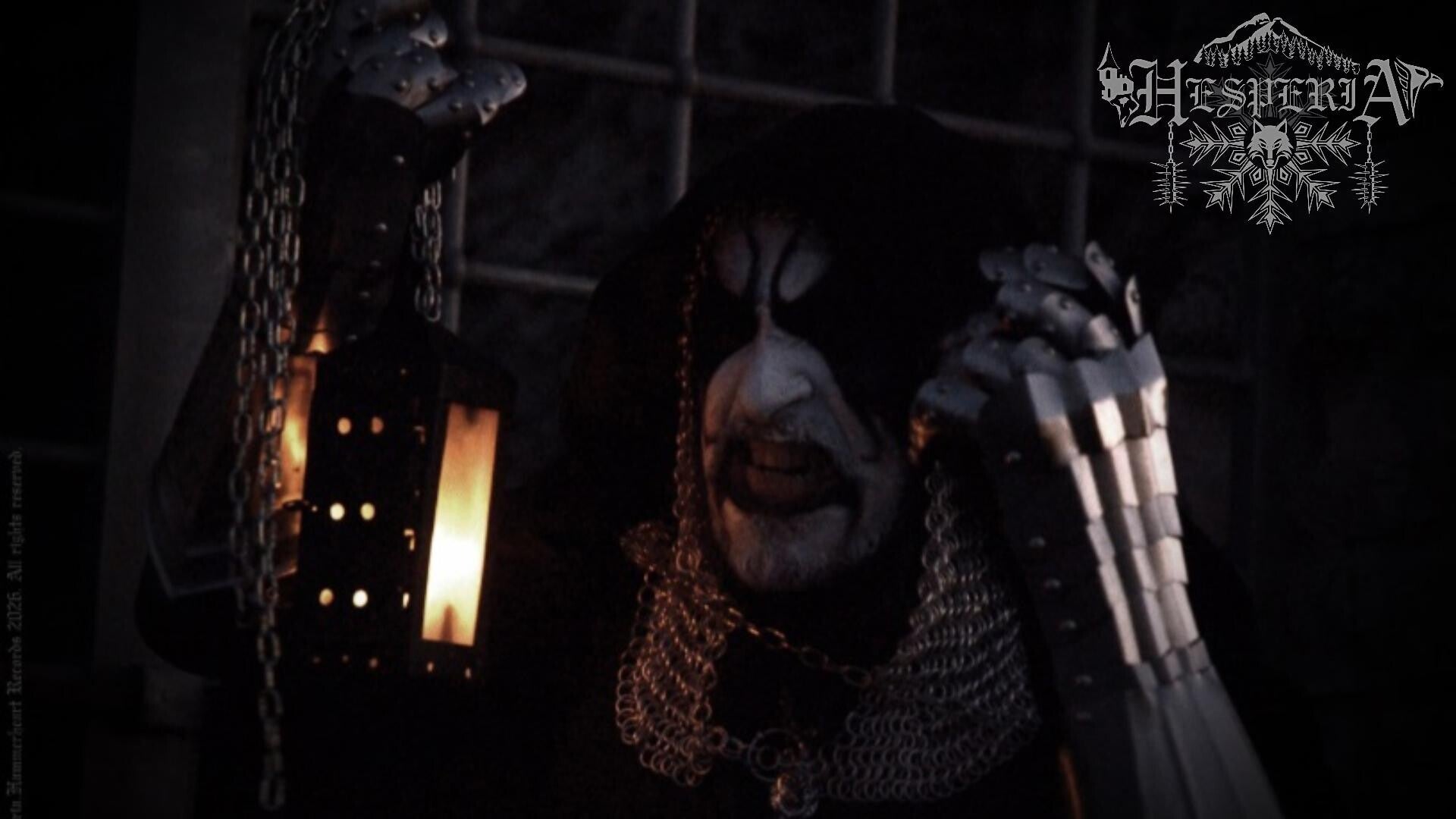
These legends have truly become part of my very core, having heard them since early childhood. Naturally, as you grow up you study and research them more deeply, but you always feel them deeply linked to specific places, to certain sensations, and to your own territory.This connection is essential to me because it represents a fundamental piece of my identity. It is something that belongs to me, and I feel a strong need to express it and share it with the listener, striving to keep its true meaning intact while conveying these sensations in the most profound way possible. Ultimately, it is also my way of preserving and passing down a legacy that was originally purely oral.
Hesperia has always been a one man project, and "Picenum" again places the entire musical and production process in your hands. What was the most difficult part of recording this album alone, and did any particular moment during the sessions force you to rethink an arrangement or performance?
With time and experience, recording techniques become instinctive, flowing naturally. That is why, despite all the work required for an 80-minute album like “Picenum”, I managed to complete everything in less than a year. The main difficulty lay in revising track lengths and editing arrangements, since some songs were originally even longer and needed to be trimmed down. I am extremely critical and strict with myself regarding every single note, arrangement, and transition; if I do not like something 100%, it simply gets discarded. The most challenging piece was “Il Sentiero Delle Fate Act I”, which was initially intended to be a simple musical interlude, but eventually evolved into a full-fledged song and required a significant amount of extra work.
Your previous work has involved recording vocals and environmental sounds in locations connected with the subjects of the albums. Did you return to the Marche locations connected with "Picenum" during the creative or recording process, and were there any unusual experiences that influenced the album?
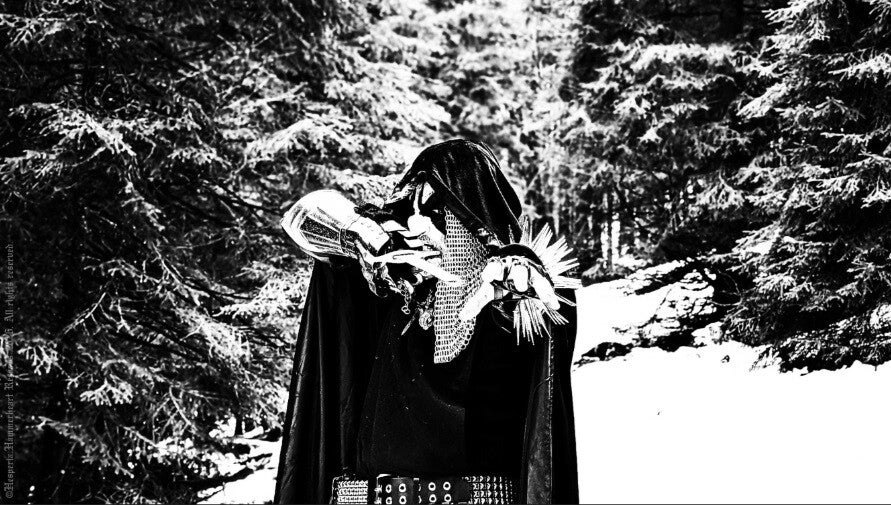
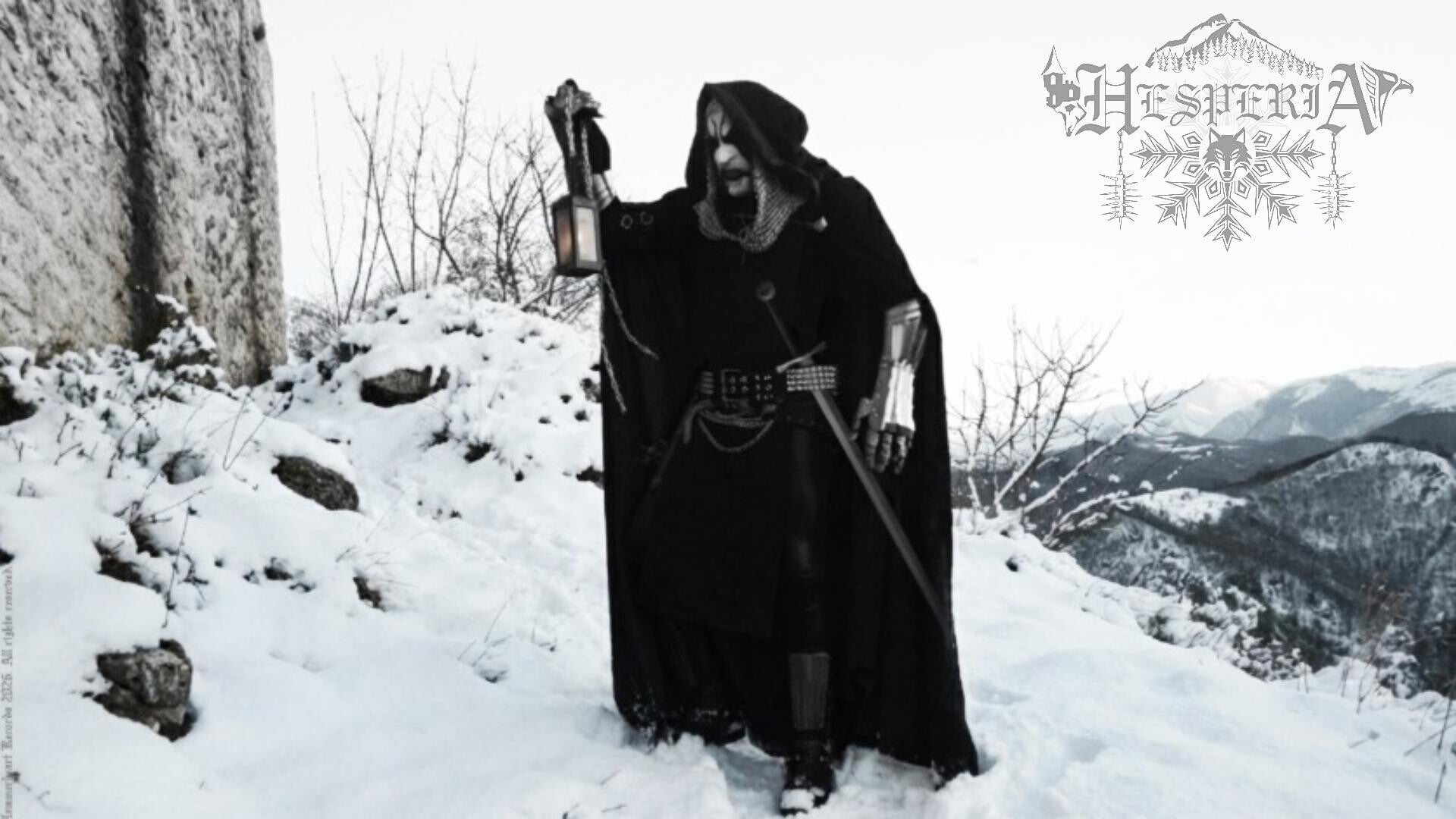
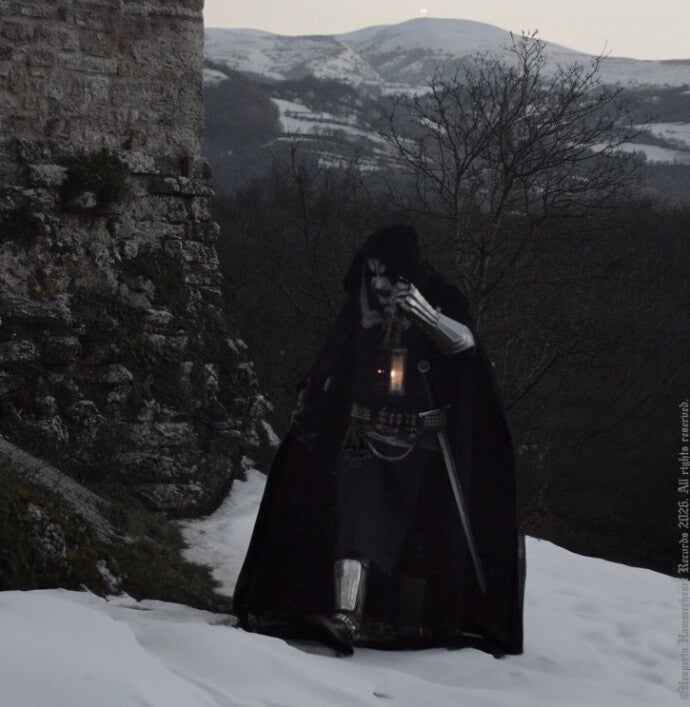
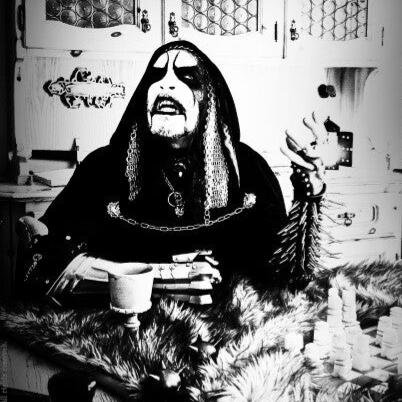
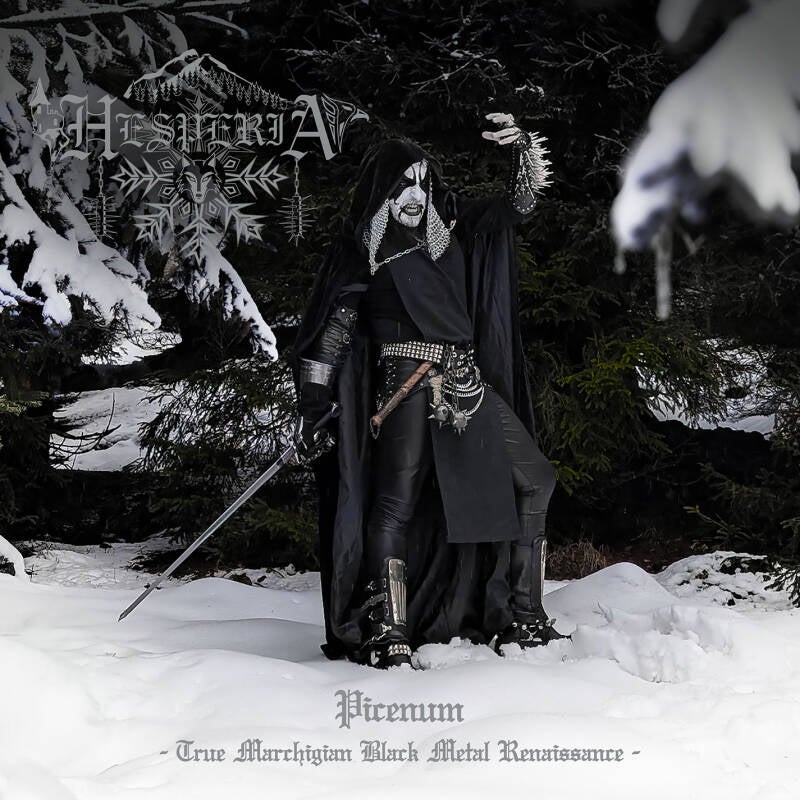
I certainly returned. In fact, I visit the Sibillini Mountains several times throughout the year (they are magical places that I deeply love and consider a core part of who I am). I also returned to the other historical sites across the region to capture ambient field recordings and carry out dedicated photo sessions. For “Picenum”, I completed five distinct photo sessions in different locations, including high altitude settings under heavy snowfall.There is real physical effort and sweat behind the visual artwork, just as there is behind the composition of the music. People who claim that black metal theatricality is for "posers" likely fail to realize the immense physical strain required for this kind of work. Yet, when you are standing out there in the elements, that hardship does not weigh on you. You are filled with a profound sense of pride, driven by the desire to capture that inner spirit visually just as fiercely as you do through sound. Regarding unusual occurrences, something happened that initially seemed like an obstacle, but ultimately felt like a powerful sign of approval from the winter sky and the frozen nature. While shooting the main photo session (the one for the cover art and key promotional photos) above 1,200 meters, it suddenly began to snow, even though no precipitation had been forecasted. Snow was already covering the landscape since it was January, but that unexpected snowfall added something truly unique and magical to those photos.
The final part returns to the Sibillini Mountains through the stories surrounding the Sibylla and Chevalier De La Sale. What interested you most about De La Sale as a historical figure, and why did his real journey provide such a strong conclusion for this particular concept?
There are many stories and legends of knights who traveled to these mountains on an initiatory journey in search of the cave and the Sibylla, facing numerous dangers and trials once inside. The most famous tale set in these peaks is Andrea da Barberino's Guerrin Meschino, which I explored on the previous album. Here, however, we are dealing with a real knight. Antoine de La Sale is a true historical figure who left an authentic record of his journey in his work Le Paradis de la Reine Sibylle. He drew a map of the mountains and transcribed both his own impressions and the stories he gathered from the locals of Montemonaco (including tales of other knights). It represents something real and documented. Even though he did not venture beyond the vestibule of the cave and expressed skepticism (likely a necessary stance given that the region was under the vigilant eye of the Inquisition), he nevertheless preserved those oral traditions in writing. In particular, within the album's final suite, I adapt the story he recorded about the German knight. Unlike Guerrin Meschino, this knight succumbed to lust within the Sibylla's cave and chose to remain in "that" paradise forever, rather than seeking the salvation promised by a clergy that had initially denied him absolution.
"Picenum" is being released by Hammerheart Records in digital, CD and 2LP formats. How important is the physical presentation of an album when the music is so closely connected with history, geography, artwork and written material?
Physical presentation holds immense importance. If you truly believe in the work you have created conceptually, musically, and visually, you must give it the proper packaging, because the physical presentation is an integral part of the total artwork. Take, for example, the double gatefold vinyl edition: when opened, it reveals a massive photograph across the inner sleeve like a rising curtain. It is a winter photograph of Mount Sibilla (where the cave of the Sibyl is hidden), taken by me in late December from the medieval walls of Montemonaco framing the peak. It acts as a true theater of nature and historical eras. Consider also the vinyl editions themselves: alongside the classic black vinyl, there is a "Glacier" variant designed to mirror the cold hues of Lake Pilato in winter (the dark glacial lake I explored on the previous album). Furthermore, the release includes a map of the Sibylla's cave that I hand-drew based on ancient descriptions of the subterranean kingdom, illustrating its dangers, trials, and sacred beatitudes. Every single element serves as a direct contribution to the complete experience of the album. I can say that Hammerheart Records did a great work with these physical copies.
Hesperia has existed since the 1990s, when making extreme metal in Italy involved a very different underground infrastructure. Looking at the scene today, what changes have genuinely improved the environment for underground musicians, and what developments have made it more difficult?
Making metal (and extreme metal even more so) in Italy has never been easy, and it still is not today. It is true that certain aspects have improved (there is far more infrastructure, better press coverage, and many more bands compared to 30 or 40 years ago), but the general mindset remains several steps behind, especially within broader society. Furthermore, a persistent issue remains: if you are an Italian band, many listeners in Italy only truly value you after you have received validation from abroad. It may be unintentional, but it is an undeniable fact of our scene.
Artificial intelligence, streaming platforms, social media and algorithm driven music discovery are rapidly changing how people create and consume music. Do you think these technologies will eventually alter the artistic value of recorded metal, or can underground music remain outside that system?
I began playing in a pre-computer era, back when recording studios used reel-to reel tapes. The earliest Sulphuria demos had a reel master before the arrival of CDs, and the first Hesperia album was recorded on a 4-track cassette recorder. Yet, when I eventually transitioned to using computers, the underlying spirit never changed. Technology itself is not the issue; what changes everything is how you choose to use it. If your mindset is rooted in authenticity and you refuse to let your music sound like plastic, it will remain organic regardless of the medium or technology involved. Regarding streaming and digital platforms, they offer great utility by allowing more people to listen to the album anywhere in the world. However, I will always continue to collect physical formats, and I believe the vast majority of metal listeners feel the exact same way.
Now that the story has returned full circle to the Sibylline Mountains, is there anywhere left in Marche's history or legend you still want to explore, or does this close that chapter for good?
Currently, the regional chapter focusing on my homeland of Marche concludes with these two albums. That is not to say I will never revisit the subject in the future. However, for the next record, I will return to a national scale (remembering that Hesperia is the ancient name for Italy, dedicated to retracing the dark eras of the peninsula). It will revolve around a theme and a story that might seem unusual for Hesperia at first, but truly is not. It is an even darker and blacker tale, rich in historical and anthropological depth. Thank you for the interview, and my best regards to the entire editorial team and to all the readers. Stay Hesperian.
Add comment
Comments