

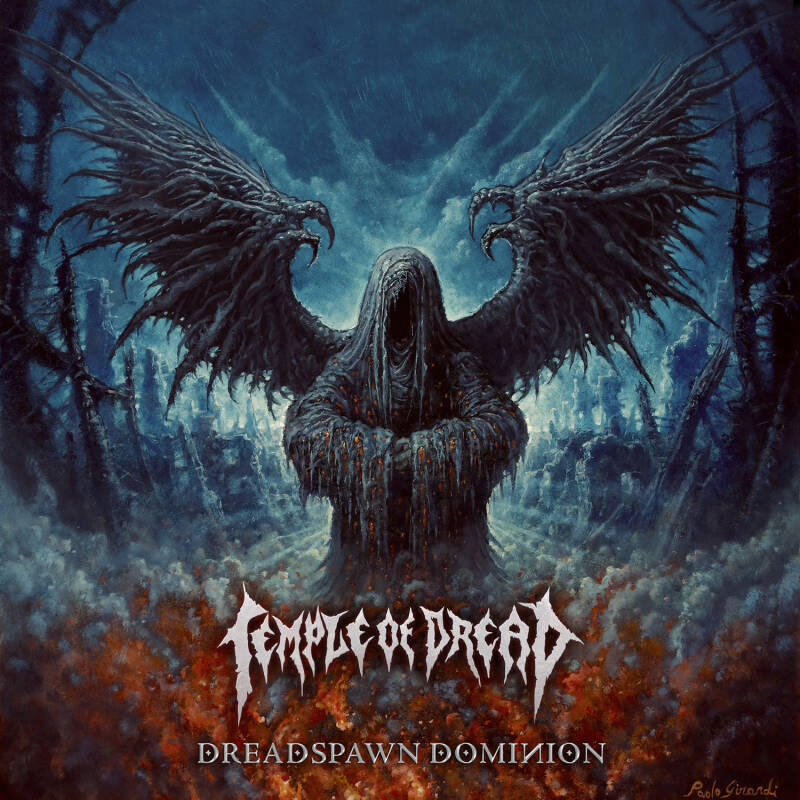
"Dreadspawn Dominion" marks Temple Of Dread’s expansion from a trio to a five member lineup. How did that change the writing, arranging and decision making inside the band?
Unfortunately, our two new members, Andi and Daniel, only joined the band after most of the songs had already been written. However, they came on board before the recording process started, which meant that Daniel was still able to contribute numerous guitar solos and also composed the really cool intro. Andi completely re-recorded all of my original bass tracks and, in particular, was able to give the bass much more power and dynamics than my original tracks would have had. Both of them put an incredible amount of effort into the album and are unbelievably talented musicians. I’m sure they will become even more involved in the songwriting process on future albums.
Earlier albums were assembled through members developing their parts separately before the music came together at Soundlodge. Did the new lineup change that method during these sessions?
It’s still the case that each member of the band works out their own parts at home, and everyone is given complete freedom by the others to do so. That absolutely includes Daniel and Andi as well. The recording process itself, of course, was a collective effort, but each of us worked out our individual parts on our own at home.
The clash between Charon and Hades continues here. What new stage does "Dreadspawn Dominion" add to their conflict, and is the story heading toward a final resolution?
Charon, the new ruler of the Underworld, or the new God of the Godless, as we called him on the previous album, is expanding his reign of terror in the Underworld and feels very comfortable in his new position. He is not only oppressing Hades, but also all of Hades’ former followers, and he is every bit as cruel a ruler. We assume that this story is not over yet, but will probably be continued on the next album. And it could very well be that Hades rises again and that there will be a final battle for the throne of the Underworld, hahaha!
How does the band turn Frank Albers’s psychological background and interest in antiquity into lyrics that remain brutal without reducing mythology to gore?
As you said, Frank is not only a psychologist and an expert on ancient mythology, but of course also a very eloquent lyricist. Greek mythology is absolutely packed with dark themes and stories about monsters, evil deities, the Underworld, and tragedies. So, in the end, you don’t really have to change all that much to turn these myths into great death metal lyrics.
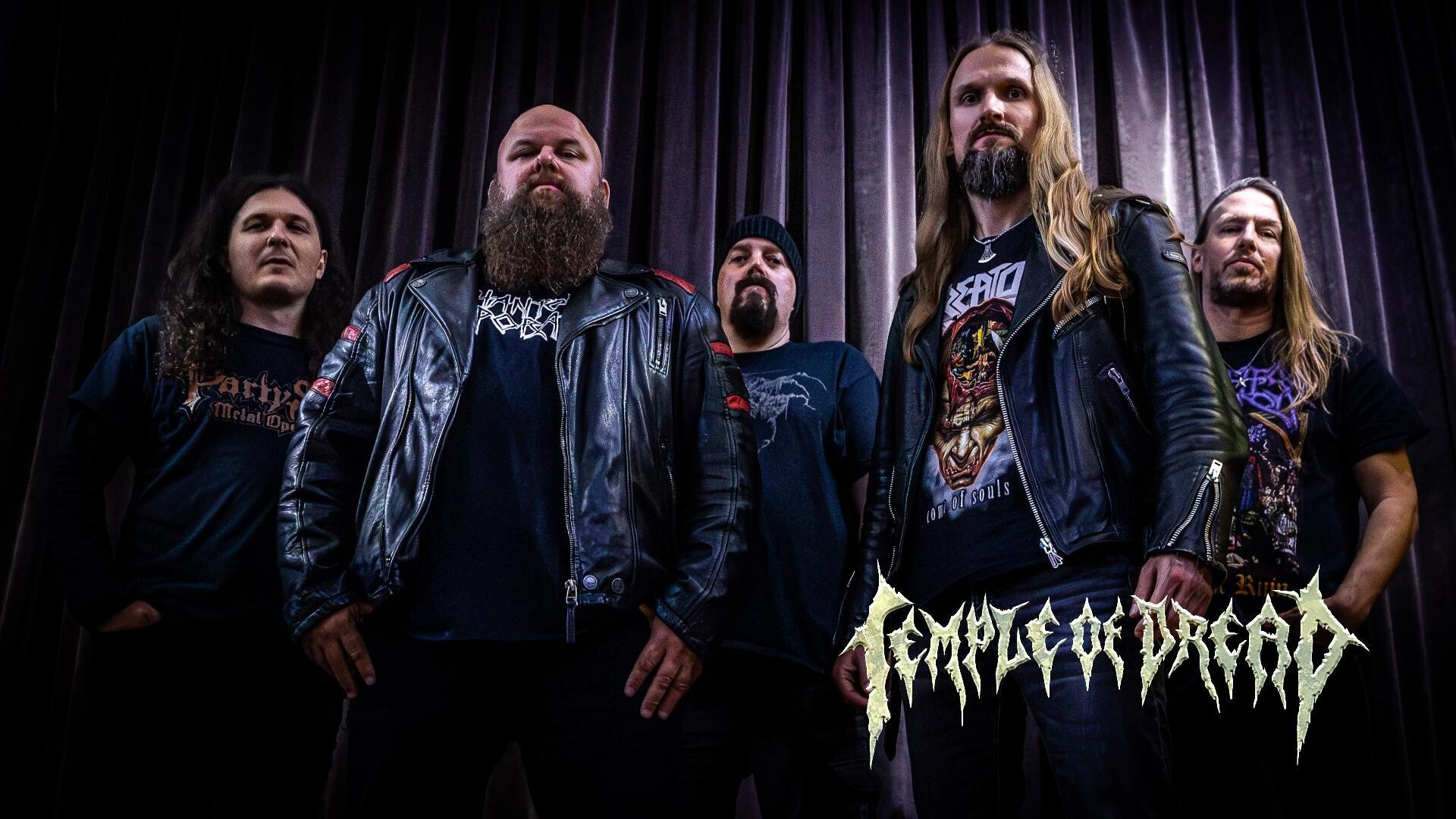
"The Greek myths are almost perfect reflections of our society today. What the gods on Mount Olympus were doing back then is still being done by political elites all over the world today. There is corruption, nepotism, envy, resentment, and abuse of power."
The cinematic side has grown across "Beyond Acheron", "God Of The Godless" and the new album. Where does the band draw the line between atmosphere that deepens a song and ornament that weakens it?
It’s very important that a song, or an entire album, creates a certain atmosphere. That atmosphere has to encompass the artwork, the music and the lyrics, and it should allow the listener to drift into a certain state of mind. I think we’re getting better and better at achieving that without compromising our sound, becoming musically softer, or making an album sound watered down. It takes a great deal of sensitivity and finesse to incorporate atmospheric elements without taking away from the heaviness and impact of the song.
Production, recording, mixing and mastering were handled within the band at Soundlodge. Which sonic decision required the most debate this time?
Honestly, there weren’t any major debates or arguments within the band. Of course, we sometimes disagree over really minor things, like particular words in the lyrics or the length of certain parts, but overall, we’re very much on the same page when it comes to everything, especially questions of sound. Jörg is not only our drummer but also our producer, and we give him complete freedom when it comes to the production. Jörg and I initially discussed the guitar sound and decided that the best approach would be to use exactly the same amp I use live, namely my EVH 5150. Other than that, Jörg puts a lot of emphasis on having natural-sounding drums and vocals, and we’re always very happy with the final result, without the need for any major discussions or debates.
The title "Dreadspawn Dominion" suggests power created through fear and decay. Is that dominion purely mythological, or does it also reflect how power operates in the present day?
Everyone is free to interpret that for themselves. Basically, the Greek myths are almost perfect reflections of our society today. What the gods on Mount Olympus were doing back then is still being done by political elites all over the world today. There is corruption, nepotism, envy, resentment, and abuse of power. So you could say that all of Temple Of Dread’s lyrics deal not only with ancient mythology and ancient stories, but also with subjects that have a connection to the present day, or perhaps even with contemporary issues.
Charon serves Hades while fighting for release, a conflict between duty and freedom. Where does Temple Of Dread see itself within that struggle, and did writing "Dreadspawn Dominion" alters the band’s view of loyalty?
That’s where we also find ourselves caught up in the eternal struggle between fulfilling our obligations and being free. We don’t want to disappoint anyone with what we do. We want to meet the expectations of our fans, but of course we also want to keep developing within the boundaries of our genre. So you’re always caught somewhere between simply fulfilling your obligations and doing what is expected of you, and the urge to just do whatever you feel like doing. That’s an inner conflict that every band, and probably every person, experiences sooner or later in one situation or another in everyday life.
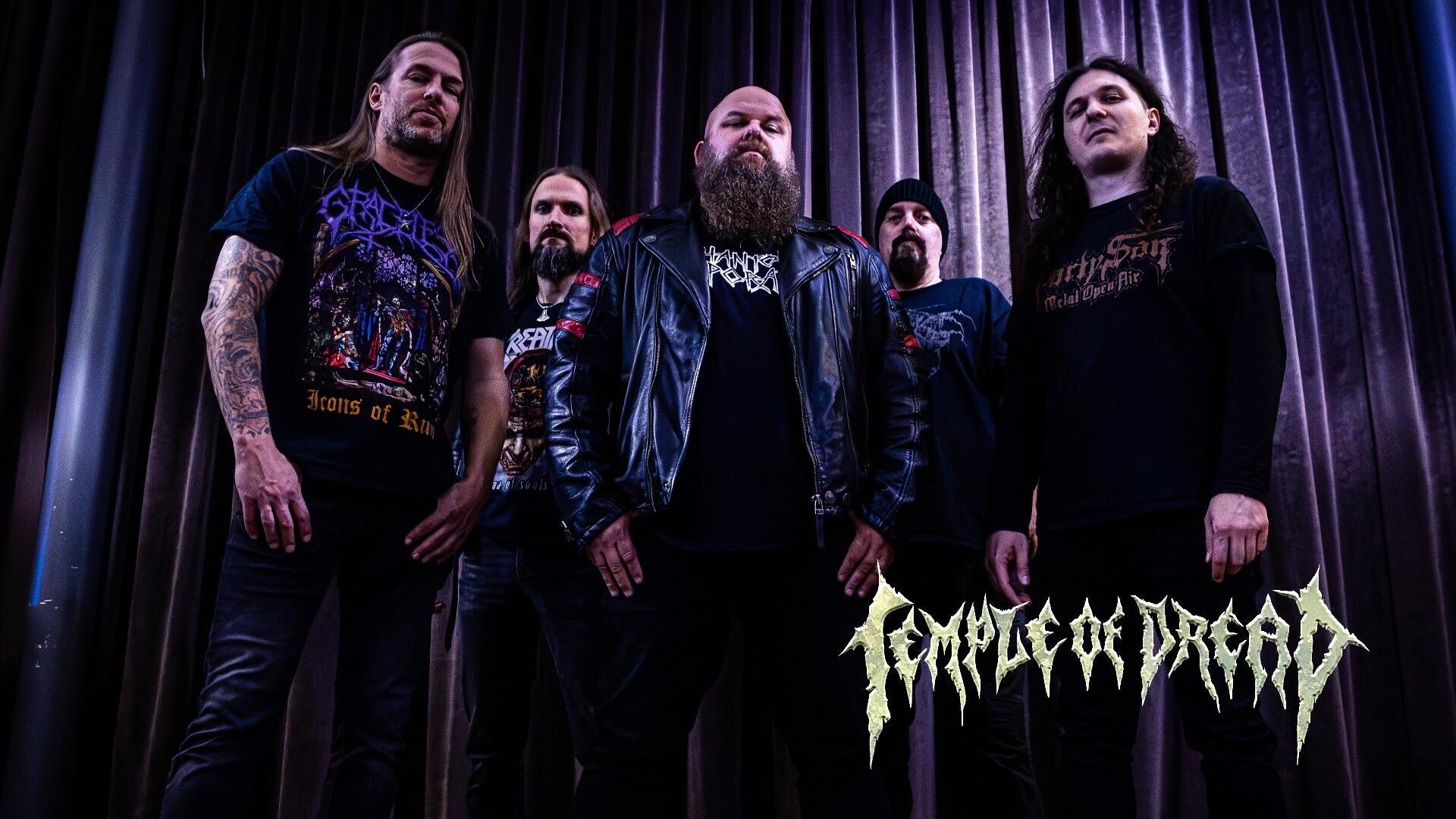
What did the band learn from playing live after years as a studio based project, and did stage experience alter the pace or arrangement of the new material?
The fact that we’re now also playing live definitely has an impact on our songwriting. We’ve noticed in many instances that songs that work perfectly on record or sound really great in the studio don’t always have the same impact on the audience when played live. On the other hand, much more simply structured songs can sometimes hit the audience like a force of nature in a live setting. So when we’re writing new songs now, we always keep in mind that a song should also work live and be able to get the audience moving. Especially because the atmosphere is completely different at a concert or festival, where the crowd is there to have a good time, compared to listening to the album at home on your own.
With six albums in seven years and a base far from Germany’s main music centers, how do distance and release pace shape the band’s working discipline?
In fact, we're moving at a fast pace when it comes to writing and releasing new albums.But overall, a lot of things are simply easier nowadays. We can communicate and exchange ideas online, and since Jörg has his own recording studio, we can be much more spontaneous and handle many things far more easily and efficiently. The fact that we’re geographically quite far away from Germany’s major cities isn’t really a problem. I’d say the bigger issue is that many of the cool shows and festivals in Germany take place in the south, which means extremely long drives for us. I’m sometimes a bit unlucky in that respect, especially since I also live on a North Sea island, because we often have to spend hours on the road to make it to certain shows. But overall, our discipline is still very high, and we’re very motivated to continue releasing new albums at least every two years.
War, political division and economic strain dominate daily life. Should death metal address current reality directly, or can ancient myth expose human behavior with greater precision?
I believe that especially in tense times and during difficult situations, music should entertain rather than lecture people. We’re not here to provide solutions or tell people what to do, but we can be there to accompany and support people through their fears and struggles. Death metal can do that very well, either by addressing the problems people are facing today directly, or by simply, as we do, hiding them within ancient mythology.
After six albums, which part of Temple Of Dread’s early approach has become restrictive, and what musical territory is the band prepared to explore next?
By and large, we’ve found our sound and our style, and we want to stick with it. There will always be songs that drift a little more towards thrash metal or into the realm of black metal. But overall, we want to remain firmly rooted in old school death metal. That’s where we wanted to be, that’s where we’ve established ourselves, and that’s where we feel comfortable. We don’t fundamentally want to change that.
Add comment
Comments