

Twelve albums in nineteen years are an extraordinary rate of output and almost none of them sound like the one before. Is that restlessness a deliberate artistic policy or simply the byproduct of a project that mirrors whatever its creator happens to be living through at the time?
Well, I never really had a strategic plan. Since I don’t depend on anyone - whether it’s a record label or other musicians - I do what I want, when I want. So, I’d probably go with the second point you mentioned. As for the large number of albums - well, I wouldn't actually call it a huge number. Just look at how bands and musicians released music back in the 60s through the 90s: albums came out almost every year, or every two years early on. Later, new music appeared a bit less frequently, but still, nobody spent five years working on a single album. In my case, it’s simple: for the first seven or eight years, I was absolutely buzzing with ideas and just wanted to keep creating. As a black metal fan at the time, I wanted to dress the black metal skeleton in new outfits - trying different approaches and experimenting with sound. At one point, I got into recording not just multiple guitar tracks, but also two bass parts and panning them to separate channels. All in all, the early period of Die Entweihung was one big experiment where my lack of experience in sound engineering and playing technique was offset by a completely fearless drive to try new things, without worrying about whether I was following established conventions. After all, my project is called "Die Entweihung" (Desecration), and the meaning I originally invested in it had nothing to do with desecrating graves or churches; primarily, it was about desecrating musical and lyrical conventions and norms. My project's name is a synonym for "freedom".
“Neverending Terrorism” is usually pointed to as the turning point, the moment the black metal foundation gave way to something more overtly heavy metal, and the lyrics turned outward toward the world. Looking back from here, was that a conscious break, or did you only recognise it as a threshold after it had already been crossed?
In reality, it was a gradual process; if you listen to the albums preceding "Neverending Terrorism", you’ll find elements of the style I arrived at in 2015 on almost all of them. And if you listen closely to the album that came right before "Terrorism" - "The Cage" - you can already hear practically all the musical structures and riffs that would appear on "Neverending Terrorism" (I’m intentionally skipping the album released between them here, as it was a Joy Division tribute and contained almost no original material). That said, "The Cage" had a raw black metal production style, whereas "Terrorism", let’s put it this way, set my "gold standard," as the recording and mixing quality was far superior. Incidentally, work is currently underway to remix "The Cage"; the plan is not just to remix the album but also to re-record the vocals with English lyrics, so it’s quite possible that this album will shift from being a raw black metal release to taking its place among Die Entweihung’s blackened heavy metal albums. As for the lyrics - yes, the shift in concept was a deliberate choice made specifically for "Neverending Terrorism"; I wanted to create a concept album about what is actually happening in the world. Ultimately, however, that concept became a permanent fixture, and I’ve continued to explore it in one form or another for the past 12 years.
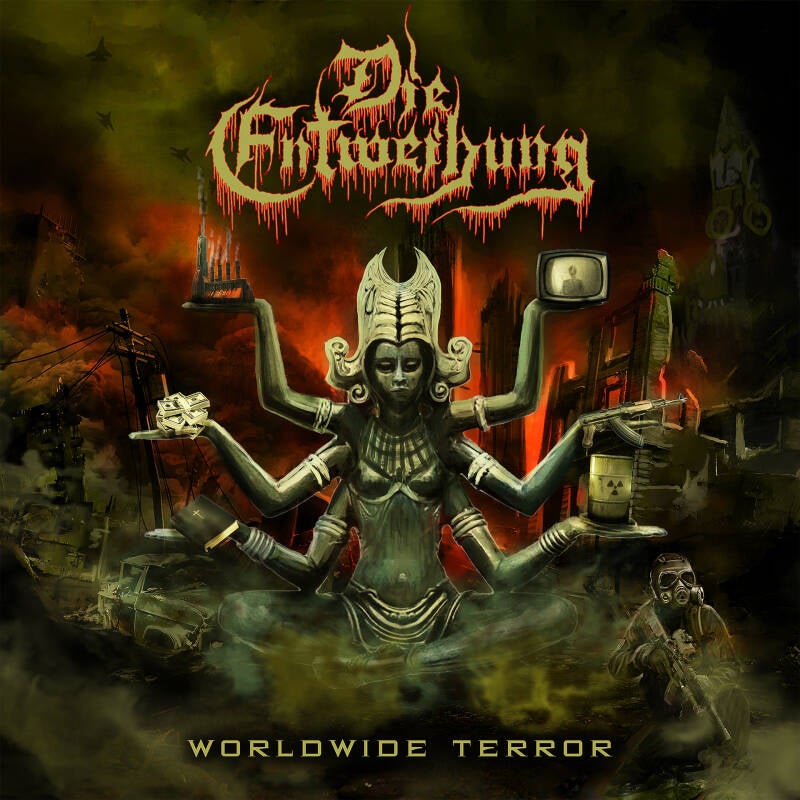
“Worldwide Terror” is framed around the idea that humanity's appetite for cruelty is not a failure but an achievement, that we keep inventing new depths rather than stumbling into them. What pushed you toward that particular reading of the present moment, and is there any consolation built into the record at all?
That’s not quite the case. It might have seemed that way from the outside, or perhaps such thoughts were prompted by the album’s press release, but in reality, it’s simpler: on this album - just as on all the previous ones, I don’t draw conclusions, urge anyone to do anything, or make any statements. In fact, each of my albums is simply an observation of what is happening around me. The album represents me in the role of an observer. The concept took shape right when I started working on the music; the war in Ukraine was already in full swing, and around that same time, the massive terrorist attack of October 7, 2023, occurred in Israel, dragging the country into a protracted war on multiple fronts. On top of that, local conflicts keep flaring up here and there across the globe, so "war and terror" became the central theme of the new songs. The album features lyrics about the war in Ukraine - sung from the perspective of a Russian "liberator" setting out to kill Ukrainians in order to "free them from (invisible) fascists" and about events in Israel (the album’s closing track is a brief account of what happened on October 7, 2023, preceded by an instrumental piece that musically depicts the night before the attack). The title track serves as a sort of manifesto: its message is that, even though children are born into wartime and a peaceful life is no longer a reality for anyone, we must fight at all costs to survive and put a stop to the events unfolding across the globe. Another song tells the story of a child born during the war who was effectively robbed of his childhood; instead of playing with toy soldiers or making friends, he is forced to stand guard outside his home with a gun, watching for the next enemy to creep closer. There is also a song that could be described as semi-autobiographical, though it also speaks to the experiences of many creative people whom - often due to societal pressure - end up living a life that isn't truly their own; they choose an alternative path, abandoning the music or other passions that once gave their lives meaning. There is one more song, which I will discuss a little further on. Unfortunately, there is no consolation to be found - nor will there be - and there is no happy ending.
The album is described as a confrontation with reality rather than an escape from it. Where do you draw the line between bearing witness and preaching? Do you trust a listener to arrive at the right conclusion without being pointed toward it?
Well, just like all my albums since 2015, every album and every song represents another confrontation with reality in its various forms. As I mentioned in response to the previous question, I am by no means preaching, to preach something, you have to actually live by what you say, and I don’t; I’m just a human being, just as much a "piece of shit on two legs" as anyone else. Of course, I could make something up right now, something along the lines of "all my songs aim to show people, through all these horrors, that we need to be kinder to one another" - but what’s the point if it isn’t true? Everyone has to draw their own conclusions. If someone reads my lyrics, reflects on something important, and at least tries to become a better version of himself - well, I’d be nothing but happy about that. But, again, I’m not telling anyone how to live; I’m simply observing and showing what’s happening in the world the way I see it. People might not necessarily agree with what I share in my lyrics, and that’s perfectly fine, too.
“Eight Billion Headed Whore” is an unusually blunt title even by this album's standards. What is the accusation behind it, is it aimed at institutions and power, or at the ordinary complicity of everyone alive?
This is the song for which a lyric video, featuring some really cool imagery, will soon be released. I think some journalists even found the title amusing; well, yes, sometimes I give my songs slightly odd or funny names, but the thing is, those amusing titles often mask things that are anything but funny. The concept behind the lyrics is a comparison of humanity to "spiders in a jar", creatures scrambling to the top by trampling over others, not caring a bit about anyone else. It’s all about "me, right now," with a "let the world burn after I’m gone" attitude. Yet, the essence of humanity lies in interaction; in reality, however, we spend our time trying to grab the biggest slice of the pie without a thought for anyone else. This "Eight-Billion-Headed Whore" is us - each of us is a fragment of this massive whore whom we ourselves are violating for our own gain. Well, I suppose it’s foolish to expect anything else from people when, from the cradle, we’re conditioned with messages like "be successful," "make more money," and "only you matter - the rest don't," and so on. So we don't expect anything different; we just keep up this cycle of self-violation, don't we?
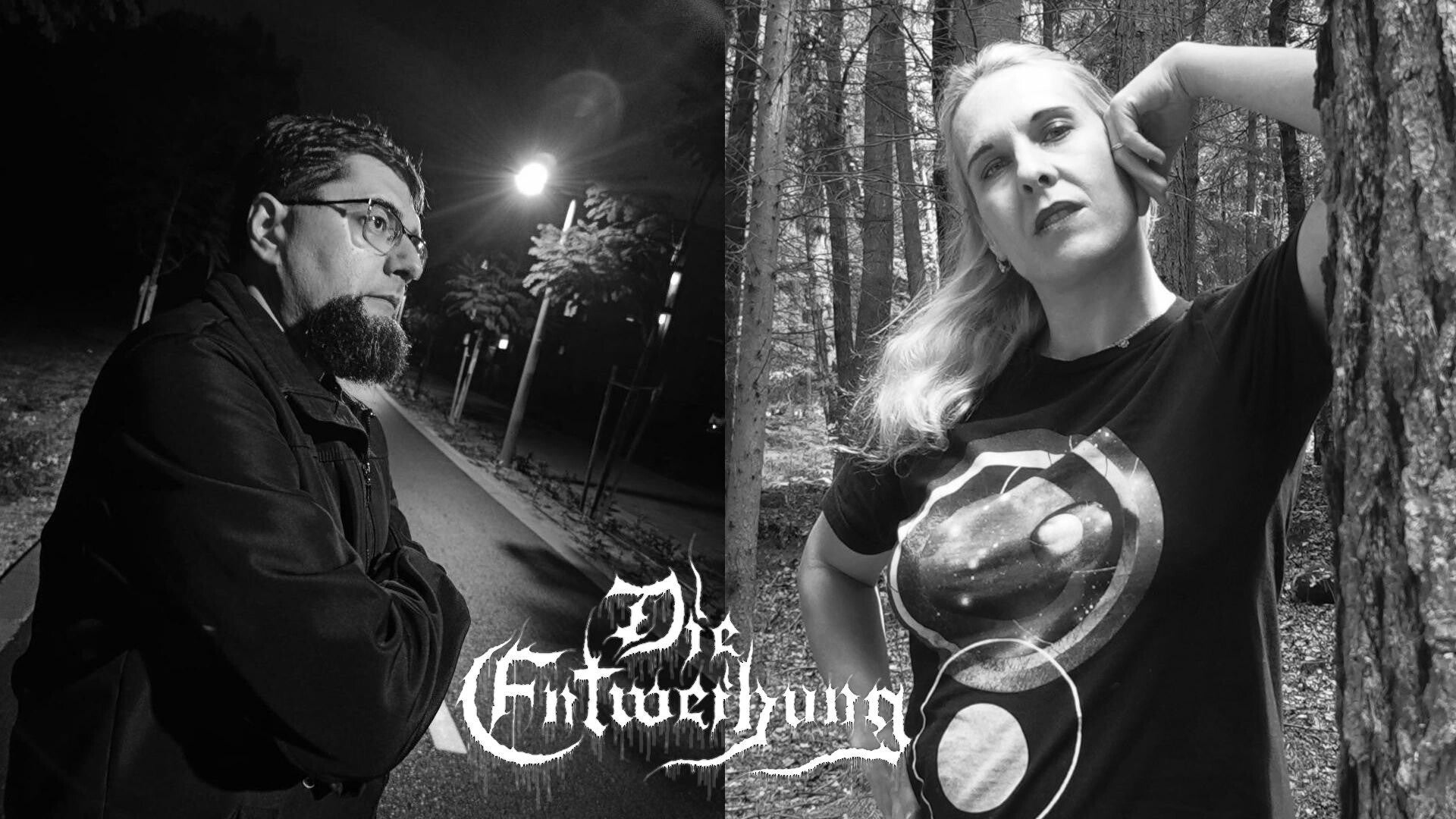
Alena 7's voice is present across the entire record rather than as a guest appearance on a track or two. What made you hand over that much of the album's identity after so many years of doing nearly everything alone, and how did her interpretation change songs you had already written?
Alena and I have known each other for about eight years; it all started with the release of "Fire & Shade", the third album by her main band, Nocturnal Pestilence. At the time, I was conducting interviews and writing reviews for the Ukrainian magazine Atmosfear and the Russian fanzine Hellz Zine. The label that released her band's album suggested I interview Alena; I really liked the record, not least because of Alena’s clean vocals, and while we initially arranged an interview only for Atmosfear, our conversation continued, and we soon decided to do another one for Hellz Zine. We became great friends, and a couple of years later, I asked Alena if she’d like to record something for "Kings & Pawns", an album I was working on at the time; ultimately, her vocals appeared on a cover of Lennon’s "Working Class Hero" and on the track "The Nonsense Games." It turned out great, but back then, I wasn't quite ready to completely abandon black metal vocals as the primary style in my music. Consequently, Alena’s presence increased on the next album, "Strict Regime Country" - she contributed to about half the tracks, though the lead vocals remained black metal. It was only after releasing "Strict Regime Country" and considering the direction of my next material that I decided it needed to be as far removed from black metal as possible in every respect; the vocals had to be more than just an important element, they had to set the tone for the entire project. Alena agreed to sing everything, bringing to life my long-held dream of creating an album with female vocals in the vein of my favorite, Doro Pesch. Yet, beyond standard rock vocals, Alena contributed many of her own vocal arrangements, even though I wrote the core vocal melodies. Here and there, you can hear harsh vocals, growls, Dickinson-esque vocal runs, low and high registers, and much more; her dramatic performance on the final track is simply masterful. Although I wrote all the songs and handled the bulk of the work, Alena’s contribution accounts for 50% of the final result.
Cello, violin and saxophone appear alongside the thrash architecture, instruments that could easily have become decoration. How did you decide where they belonged, and were there moments where they rewrote the arrangement rather than ornamented it?
Well, I wouldn't say these instruments completely changed the "rules of the game" for the album - there aren't enough of them to claim a truly massive influence, but I feel each one appears exactly as much as needed, effectively breaking up the standard rock instrumentation. Basically, all the parts were originally written on guitar, so I had a rough idea of how things would sound; for instance, the saxophone in the title track was added for a duet solo. I wanted that solo to capture the spirit of those legendary Deep Purple call-and-response exchanges between organ and guitar... only here, the saxophone took the place of the organ - you can also hear Saxophone solo briefly in the song "Newborn." The cello fit perfectly into "The Blackest Morning," while the violin added contrast to the usual guitar-and-drums heavy sound in the instrumental "Generation of Pawns." The album also features a bit of Irish bouzouki on that track about the "Eight Billion Headed Whore" and also "Warriors Of the Lie". I used that instrument much more heavily on a couple of previous albums, but this time I decided not to make a big deal out of it, since it only appears in two songs as a supplementary rhythm layer. I’ve always thought it would be good to expand my instrumental arsenal; before I had the means, I used software and synth emulations to get different sounds and imitate instruments. Now that I can afford to hire session musicians at a reasonable cost, I try to enrich my songs with new instruments. Down the line, I’d like to add a sitar and perhaps include more saxophone parts. Time will tell...
“The Blackest Morning” is described as the album's emotional summit, moving from melancholy through terror to rage before collapsing into sorrow. How long did that song take to find its final shape, and was it always intended to be the last word?
To be honest, I don’t remember exactly how long it took to create this song, but I do recall that I initially set out to craft an epic piece dedicated to the horrific events of October 7th in Israel. The song’s structure didn't just appear out of nowhere; I planned it from the start as a narrative with distinct shifts in mood. Once the songs were written, even back at the recording stage, I realized that this particular track had to close the album, as there was nothing else on the record quite as powerful or dramatic. Attentive listeners will easily grasp the album's structure: the tracklist is arranged into two "sides" of four songs each. Every side opens with an energetic track, followed by something more measured, then an instrumental, and finally an epic number. That’s the influence of classic rock on me; I love those side-based breakdowns. Even when listening digitally or on CD, the album's structure matters immensely, it’s meant to be a journey. Unfortunately, for many people today, that concept means nothing; they cherry-pick one or two songs and discard the rest. I don't get that, and I never will. It’s also a shame that so few people pay attention to the lyrics. I think if people really delved into the meaning behind the words, they’d get so much more out of the music. "The Blackest Morning", along with "Newborn," the album's other epic track, is a perfect example of music and lyrics working hand in hand; ignoring the lyrics means missing out on a huge part of the experience. By the way, there’s a brief vocal section in the middle of "The Blackest Morning" performed in Hebrew by Noa Khaos, from the Israeli black metal project Khaos. She wrote this part herself, and it turned out, in my opinion, really cool and atmospheric, like an intro to the song's most dramatic section.
You produced and mixed the album yourself and sent it to Sondre Solberg for mastering. What were you protecting in that process, what did the record need to keep that a more polished, contemporary treatment would have sanded off?
As for production and mixing, it’s the usual story: I do it all myself, even though I wouldn't call myself a seasoned pro at it. But I feel that no one else can record or mix my music quite the way it needs to be done. Sure, you can load up on samples and presets; you can create a massive, ultra-fat, yet sterile sound - but then what? I hardly listen to modern music precisely because of that sterility; it just irritates me. I believe every album should have its own identity, or at least strive for one. Why was it that all those Norwegian black metal bands recorded in the same studio, yet each one had its own distinct sound and character? Why did Metallica’s early albums each have such a recognizable sound and atmosphere? Take Metallica’s recent albums as a classic example: everything is polished to a mirror shine, drums replaced by samples, guitars heavily compressed, everything processed and edited to the point where there isn't a hint of a mistake, but, damn it, there’s no life in it either (I’m not talking about the songs themselves; those are actually fine). I don’t want that kind of fate for my music. It might not be played perfectly, and the sound might be raw, but it’s MY sound - MY vision of the material. I’m not a hundred-dollar bill; I can’t please everyone. It’s the same with my music; it doesn’t have to appeal to everyone. I create it the way I feel it, the way I think it should be and should sound. The rest doesn't concern me. One group of a hundred people might dislike that kind of sound, while another group of a hundred might love it. And that’s a wonderful thing. As for the mastering - unfortunately, the friend who handled it for a couple of my previous albums fell seriously ill just as this one was ready for the process. Since so much time had already been invested, I decided not to sit idly by and instead hired a sound engineer from a freelance platform. Essentially, he used the mastering from my previous two albums as a reference point to create the mastering for "Worldwide Terror". That’s the whole story. That is why I credit two people for the mastering in the new album's credits.
Between Belarus and northern Israel, you have spent two decades writing from places where political violence and war is not an abstraction. Does proximity to real conflict make it harder to write this kind of music honestly, or does it simply remove the temptation to use horror as decoration?
I haven’t lived in Belarus since 2004, but yes, I keep an eye on what’s happening , especially since I still have friends and relatives there. Although, to be honest, for the last few years there hasn't really been much to follow. The country was essentially sold off to Russia; following the 2020 wave of protests and the subsequent persecution of many people by the authorities and police, thousands left Belarus. All the music for Die Entweihung was written while I was living in Israel, starting in 2007, by which time I had already been there for three years. Let’s just say that before 2020, I didn't think much about these political and military conflicts, because almost everything happening here resembled minor skirmishes, flare-ups in the Gaza Strip or Lebanon (we spent about a month under bombardment in 2006), but they usually ended relatively quickly. From 2020 onwards, the situation began to change drastically in both Belarus and Israel. First, following the sham election in Belarus, the country was swept by a massive wave of protests; it seemed as though the people had finally woken up and that the nation was on the verge of freedom and change. But no miracle occurred: after the protests were brutally suppressed, the authorities began hunting down participants. Many received actual prison sentences; some were beaten, others got off with fines, and some were forced to simply drop everything and leave. One of my closest friends was sentenced to a year and a half in prison years later, all because of a single comment in a private social media chat. All of this is reflected in the album "Strict Regime Country", a concept album dedicated entirely to the protests in Belarus. And since the start of the war in Ukraine, Belarus has also become an accomplice to Russia by making its territory available. My homeland is in deep shit, there’s nothing more to say. Meanwhile, in Israel, a no less horrific saga began after the October 7th terrorist attack: what started as "revenge against Hamas" spiraled into an incredibly protracted conflict that has dragged in, to one degree or another, pretty much half the world. Whether in the US, Israel, Belarus, Russia, or Iran, those in power are senile old fools dragging the world into the deepest pits of hell. That’s why I don’t need any horror-movie backdrops for my lyrics, I just have to look out the window or read the news. The events unfolding around us offer enough song material to fill three double albums, if not more.
Extreme metal has always claimed to be the genre that tells the truth about the world. With reception increasingly driven by algorithms, and streaming, do you think that claim still holds, and what would you tell a young musician starting a project today that you could not have told yourself in 2007?
Back in 2018, the song "Not For Devil Anymore" appeared on the album "The Worst Is Yet To Come"; in it, I essentially articulated what is happening on the rock and metal scene right now. There was a time when this music was dangerous, when parents and grandparents would call upon Jesus and cross themselves repeatedly upon seeing or hearing the likes of Elvis, Beatles, Sabbath, Alice Cooper, Sex Pistols, Motörhead, W.A.S.P., Venom, Slayer, Burzum, Manson, and so many others. But what about now? Modern "rockers" are afraid to make a peep or fart out of turn, fearing "cancellation" - that the gigs will dry up or the label will drop them. Remember the story of Marduk and their EP with the provocative title "Fuck Me Jesus"? The band faced plenty of trouble back then, but their label, Osmose Productions, didn't turn its back on them; they stood firmly behind the musicians. I highly doubt a label would stand up for its artists if something like that happened today. Rock musicians used to convey their own version of the truth and their vision of freedom through various musical and visual forms, but the core message was always the same: refuse to accept the crap this plastic world dumps on us every day and protest by any means necessary. Now, in my view, there’s nothing left. Rock music has morphed from a form of protest into something hollow; as you rightly noted, catching the algorithm's eye has become far more important than playing by your own rules and standing by your truth, no matter what.
What would I say to a young musician just starting out today? Think carefully about whether you really need all this. Have you thought it through? Now think about it again. And again. Okay, if you really do need it, then stick with it to the end, believe in yourself and in what you’re doing, no matter what. People will likely try to talk you out of it, insisting you don’t need it and that you’re just throwing your money away; you’ll also hear plenty of "authoritative opinions" from all sorts of armchair critics and self-appointed advisors who think they know the "right" way to do things better than you do. It won’t be easy. Learn to tune out the criticism and those "experts on life". Only you know how it should be, because it’s YOUR music. But above all, enjoy what you’re doing - otherwise, what’s the point of it all?
The record arrives through three labels across three territories, including an exclusive Indonesian edition. What does that kind of decentralised, underground distribution network say about where the scene's real energy sits now, as opposed to where the industry thinks it sits?
Well, actually it’s simple: there was an initial agreement with two US labels for the main pressing , 300 copies, complete with a booklet and stuff. Both labels have the capacity to ship CDs worldwide and have connections to other labels in various countries, which is really the key factor. I don't think the label's physical location matters at all these days; what’s far more important is its ability to promote releases and facilitate distribution. The Indonesian pressing is essentially just a small DIY release, produced, as far as I can tell, practically in-house by the label. There might also be a Philippine pressing, again, a small CD-R run for the local market. A cassette version of the album is also coming out via the Australian label Scorched Earth Records. As for where the scene's real energy lies and how the album's distribution will ultimately play out, only time will tell; it’s still too soon after the release to say. Plus, we shouldn't forget that many people don't buy physical media at all these days, opting for streaming or digital files instead. In any case, CDs, cassettes, and vinyl are here to stay. Thanks for the interview, and thanks to everyone who read this far! I hope you enjoy "Worldwide Terror" and don't forget to wash your hands before you eat.
Add comment
Comments