

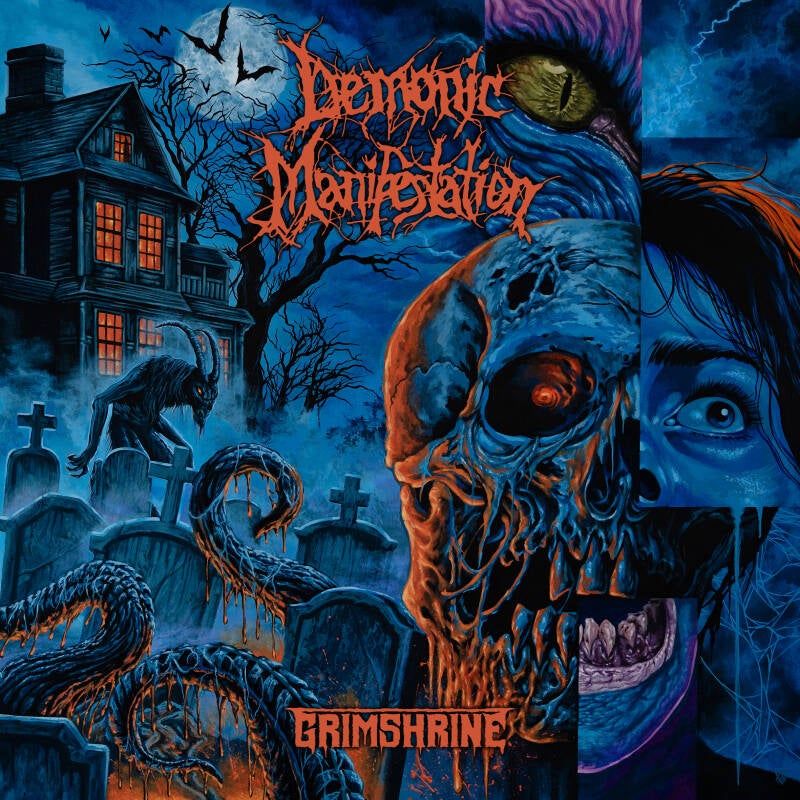
On the eve of the release of your third album, "Grimshrine," how does it feel to finally deliver a full-length after nearly nine years, with only a 2020 split standing between "Necrokult" and now? What made this the right moment to return with a full-length?
First of all, greetings from Colima, México. My name is Victor Mercado, and I’m the vocalist and rhythm guitarist of Demonic Manifestation. Regarding the delay in releasing “Grimshrine”, I want to make it clear that it was never the result of the band becoming inactive, losing interest, or distancing ourselves from the project. Demonic Manifestation has remained active within the local and national metal scene, performing at numerous shows and events. However, a series of circumstances happened one after another. First came the pandemic, followed by a knee injury that took more than a year and a half before I was finally able to undergo surgery. At the same time, there were other things developing around our other bands and projects, including releases that were already pending with Altumtenebris and Silent Tombs. During that period of suspension, some of the compositions that eventually became part of “Grimshrine” were recovered and revisited. But the album is not simply a collection of old material that had been sitting there waiting to be released. Some of those songs were redefined along the way, others evolved into something different, and several of the compositions were actually written during the more recent stages of the band. So “Grimshrine” is really a combination of things: there are ideas and compositions that come from that earlier period, but there is also material that was developed and created in the present. The album grew and took shape over time rather than simply remaining suspended until we could finally release it. For us, that moment was when we could clear the way and allow the other material we had been working on with our different bands to come out first. Once those releases were taken care of, we could finally focus completely on “Grimshrine” and give it the attention, weight, and push it deserved. Releasing a new album also brings an immense sense of satisfaction and gratification. Being able to hold the finished work in your hands and listen to it as a complete piece creates a perfect mixture of emotions that intoxicates you with pleasure. It is the artistic climax, the moment when all the work, effort, and passion finally become something tangible and real.
The album is described as a return to the dark, melodic character of early Swedish death metal, but “Grimshrine” also carries elements of the heavier and more primitive side of death metal. How did you decide where to draw the line between paying tribute to your influences and maintaining the identity of Demonic Manifestation?
Demonic Manifestation, in its current form, is essentially the embodiment of our passion for death metal. Beyond simply paying tribute to any particular band or trying to recreate a specific sound, it is the sum of our love and devotion to extreme music and death metal throughout the years. And it goes even further than that. It is also the result of everything we have experienced through the different kinds of music we have created from one project to another. We actually started out playing black metal many years ago. We are talking about the late ’90s, around 1999 and 2000, and by 2001 we had already released our first demo with another black metal band we were involved in. So experimentation has always been part of our musical journey. We were born in black metal, moved into death metal, and grew up alongside the entire late ’90s extreme metal scene. So, although the Dismember and Entombed influence is certainly there, and it is quite explicit in some aspects. I would say that “Grimshrine” is much more like a photograph of our entire musical background: everything we have been absorbing since we were teenagers up until today. Over time, that magical combination of music and the traditional elements of the underground scene became part of what “Grimshrine” is. It is a collective expression of all the music that has influenced us, not only old-school death metal, but also the combination of darkness, epic atmosphere, sinister and violent elements, and everything that can be translated into a contemporary context through music. All of those influences, experiences, and that character have been running through our veins since we were teenagers discovering metal. “Grimshrine” is simply the way all of that has come together.
The tle itself, "Grimshrine," conjures something sacred and profane at once. What is the lyrical and conceptual thread running through the album, and how does it extend or depart from the horror-and-chaos territory you explored on your first two records?
The concept behind Demonic Manifestation has followed the same path throughout the years: a devotion to horror, death, the disturbing, and the strange. I’m the one who takes care of the lyrics, and I draw heavily from my passion for horror cinema, especially films from the ’80s and ’90s. I grew up in the ’80s watching movies about killers and horror since I was about five years old. As far back as I can remember, those were the kind of films I was most drawn to, alongside the classic children’s movies, of course. From one album to the next, our approach to songwriting and composition has been refined and reorganized. It has gradually taken a more defined direction, not necessarily a more serious one, but one that incorporates different situations, imagery, and, above all, the way we express our fascination and devotion to occultism, the occult arts, and darkness. “Grimshrine” is precisely a painting of that attraction to darkness, to fear, to the inner fear of the eternal and the finite. It is an expression of that fascination with everything that lies beyond what we can fully understand, and with the darker side of human imagination.
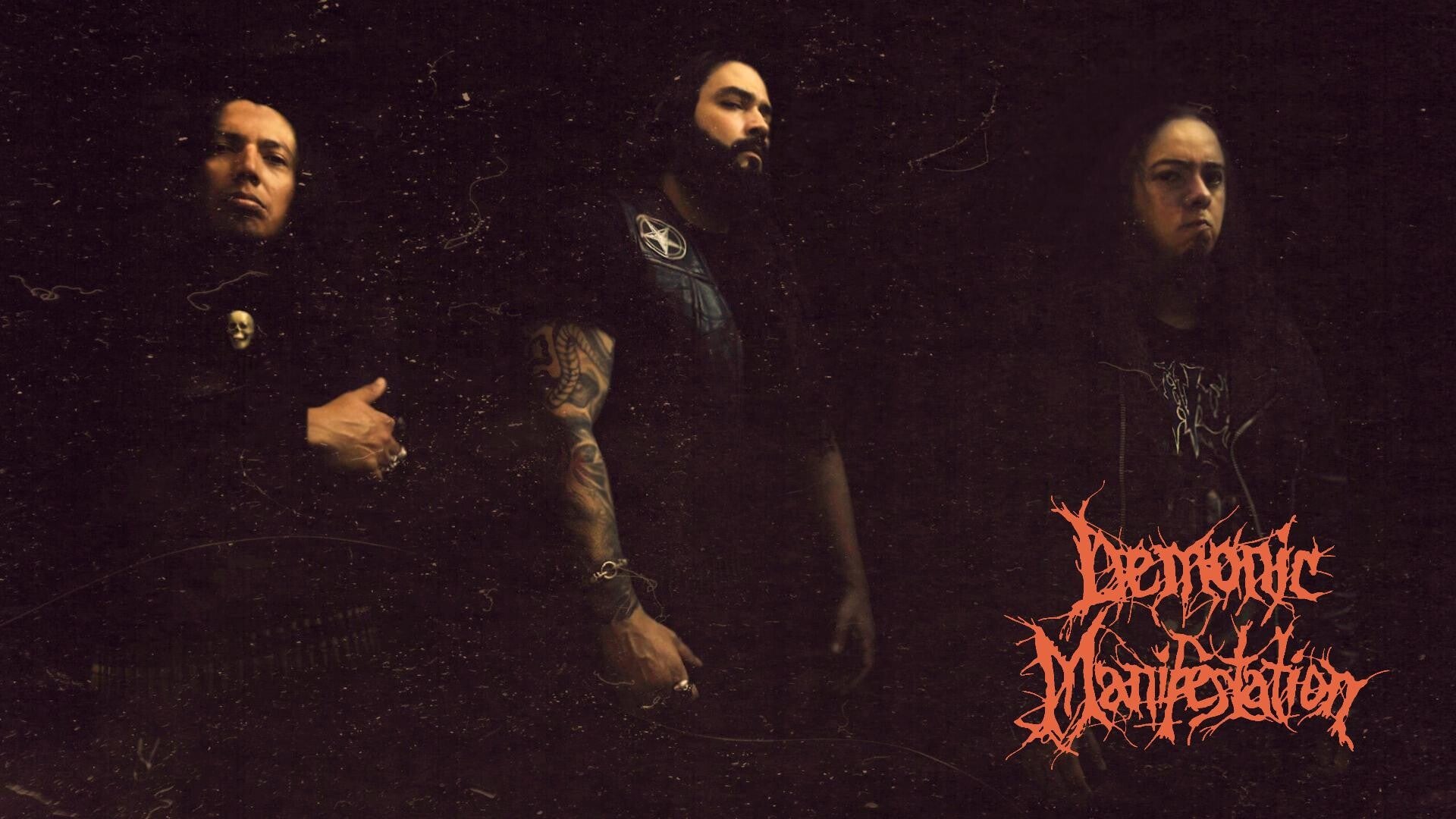
"There are new fusions that seem to be designed to fit better into the current commercial environment, taking that mysterious, harsh, dark side of metal and mixing it with music that, personally, and without trying to offend anyone, I find absolutely repulsive."
“Grimshrine” was recorded with a new power-trio lineup. How did this configuration affect the songwriting, arrangements and overall character of the album? Did working as a trio give the music a different kind of aggression or freedom?
Nothing really changed between the previous albums and this one. The role of the bass player in Demonic Manifestation has always been more complementary than compositional. Our former bass player, in particular, was not really involved in the music-writing process. He was essentially functioning as a session musician, so his role did not have any significant influence on the actual creation of the music. In the early days of the band, César García Avitia, who was part of the original lineup, did have some involvement in the structural aspects of the songwriting to a certain extent. But after that, the following bass player came into the picture without really having any influence on the composition process. So, from a songwriting standpoint, the way we create the music has remained essentially the same.
Your previous recordings were strongly associated with an old-school production philosophy, where the sound remains powerful without becoming excessively polished. What did you want from the production of “Grimshrine”, and how important was it to preserve the feeling of a genuine underground death metal recording?
I think that, in order to preserve that formula, we tried to remain faithful and honest to our original sound. The fact that having access to a larger, more dedicated or specialized studio, or even a bigger budget, is not something closed off to the band. But we try to focus more on making sure that the music retains that essence, that spirit, that soul of sounding genuine rather than completely elaborated or overproduced. So, rather than taking the philosophy of what death metal or an old-school production should be even further, we try to focus on making our recordings properly and making sure that, in the final mix, the music conveys what we really want to offer. It is less about following a particular label or a predetermined idea of how metal is supposed to sound, and more about allowing the music itself to determine what it needs. That is what has allowed us to maintain the band’s sound. And with “Grimshrine”, although there is definitely an improvement compared to our previous productions, the focus is still on making the essence of the band perceptible rather than simply making it sound beautiful or overly polished.
Death metal has changed considerably since “World Of Horror” and “Necrokult”, with the old-school revival becoming a major movement and eventually becoming almost a scene of its own. Do you think this renewed interest has helped preserve the spirit of death metal, or has it also created another formula that bands can easily fall into?
I don’t really think death metal has changed that much, at least not from my perspective. What I have noticed more is the way the versatility of other genres has turned metal into part of a trend or a tool for gaining visibility, getting likes, attracting fans, and taking advantage of new trends and new career opportunities. There are new fusions that seem to be designed to fit better into the current commercial environment, taking that mysterious, harsh, dark side of metal and mixing it with music that, personally, and without trying to offend anyone, I find absolutely repulsive. So I don’t think death metal itself has reached that point. At least at the moment, I’m not aware of death metal and even less of death metal in the Swedish or old-school vein trying to move in that direction. So I don’t think it has changed significantly in the way you’re suggesting. Yes, I do think death metal is very attractive, especially in this particular style. It can be extremely catchy, and it has so many different atmospheres that it can take you from something intense and aggressive to something that is genuinely enjoyable to listen to. It is a very versatile genre within its own boundaries. I’m certainly not the one to define everything that makes it work, because its influences and characteristics are quite evident, but I can say that it is one of the most intense and enjoyable branches of metal from my point of view. There is also something very appealing about knowing what kind of changes and sensations a song or a record is going to take you through, while still being able to find different shades within that same framework. Death metal has a recognizable language, but that doesn’t mean it has to become predictable. I think that is part of what has allowed the genre to preserve its identity. You can explore different atmospheres, tempos, arrangements, and levels of intensity without necessarily abandoning the fundamental character of death metal. So, for me, the renewed interest in old-school death metal doesn’t necessarily represent a new formula that threatens the genre. If anything, it shows that there is still a genuine connection between people and the sound, the energy, and the atmosphere that made death metal so powerful in the first place.
Beyond your own band, several of you are also involved in other Colima-based projects. How does that cross-pollination of musicians in a small, close-knit scene affect the sound and identity of Demonic Manifestation specifically?
Demonic Manifestation has always remained one of our main projects. Even though we are involved in other bands and projects, I wouldn’t necessarily call them secondary. Each one has its own weight and importance, and Demonic Manifestation has always been a fundamental part of the musical path of those of us involved in this world. What has kept us here is the love we have for the music, for the band, and for sharing this experience with other musicians. That passion is what has kept Demonic Manifestation alive throughout all these years. And that is why, no, there isn’t really any negative effect on Demonic Manifestation. Each project flows on its own, with its own identity and direction. If anything, the experience we gain from each one complements the others and gives us more tools and perspectives to keep creating new music. Being involved in different projects allows us to explore different ideas and approaches without necessarily bringing one project into another. Each band has its own character, but the experience we gain as musicians continues to grow. In that sense, the cross-pollination is more about the musicians themselves evolving and bringing that experience into the creative process, rather than mixing the identities of the bands. Ultimately, each project follows its own path, and that diversity is something that keeps us creatively active.
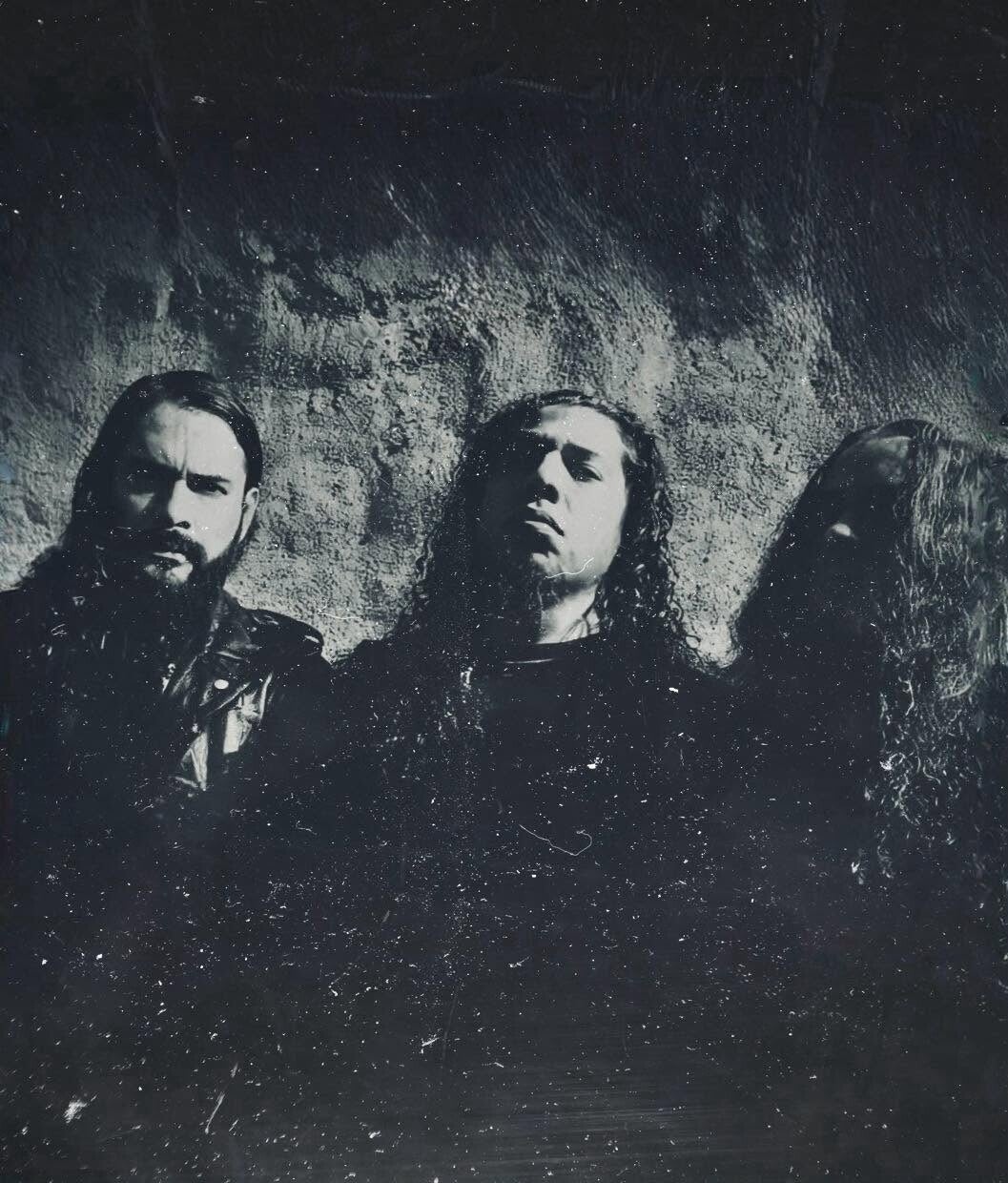
"What kept us going was our passion for what we do and the love we have for the band. We don’t make a living from this music, so we don’t feel the pressure to release one album after another. We create and release music as life allows us to, without forcing the process."
The modern metal scene is increasingly shaped by streaming pla orms, social media algorithms, short-form content and the constant pressure to remain visible. Can a genuinely underground death metal band s ll build a las ng iden ty without adapting its music and presenta on to these demands?
I believe there has to be an adaptation and a transition. In the past, we discovered new bands, genres, and movements within the scene through correspondence, tape trading, and exchanging knowledge and music. Later, that evolved into the use of different platforms and even pirated applications for sharing music through servers, along with the whole culture of collecting records, magazines, catalogs, and even the catalogs that used to come included with CDs. So I think that transition has to happen, because some of those old practices have become completely obsolete. Collecting music has moved into a second or even third place. We no longer see crowds of people eagerly waiting for the next album from a particular band. We are living in an era of fast consumption and fast disposal at the same time. So yes, I definitely think a band can be affected if it refuses to make that transition into the contemporary world. It does matter. What remains important for preserving the essence of a band is getting involved in the way music is distributed and staying present, while still maintaining the fundamental identity of your band. You shouldn’t sell yourself out or design your music simply to gain other people’s approval. As long as you preserve the spirit, the essence, and the love you put into your compositions and your music, I believe that even if the scene evolves into something completely different in the future, the identity of each band can still remain intact.
Between "Necrokult" and "Grimshrine" you stayed active underground rather than disappearing entirely. What kept the band's identity intact through that long gap, and what almost derailed it?
We never stopped rehearsing, creating, or thinking about where and when to release our next album. What happened was simply that a combination of circumstances and different events interrupted the natural continuity of our production and release cycle. Basically, what kept us going was our passion for what we do and the love we have for the band. We don’t make a living from this music, so we don’t feel the pressure to release one album after another. We create and release music as life allows us to, without forcing the process. For us, this isn’t a job. It’s something we do because we genuinely love it, and that passion is what has kept Demonic Manifestation alive throughout all these years.
Death metal in 2026 exists alongside streaming algorithms, AI-generated music, shrinking physical formats, and a metal scene that's increasingly fragmented across niche subgenres. Do you see old-school death metal as a refuge from that noise, or does the genre have to adapt to survive the next decade?
No. For us, death metal is not a refuge from what is happening in extreme music today, nor do I believe it needs to adapt to it. I think it would lose its strength, its principles, and its essence if it were constantly reshaped to follow whatever trends are happening around it. Death metal should remain true to what it is, without adapting itself to fashions or trends. Its identity comes precisely from that uncompromising character, and I believe that is what allows it to preserve its strength and essence.
Looking past the release of "Grimshrine," what do you hope this album change, for the band's place in the underground, and for how people perceive death metal coming out of Mexico?
We don’t really have any particular expectations for the release of this album beyond projecting our ideas, our creativity, and our desire to make music for the thing we love so much: extreme music. Our position within the underground remains exactly where it has always been. We are not trying to become the center of attention or to follow wherever the current of a particular movement or scene is heading. We simply want to let that current determine where the band goes. We don’t want to direct it. We want the music to speak itself and, depending on how people receive it, to position us wherever it naturally takes us. At the end of the day, the satisfaction is already there. Once this album was born, we felt extremely satisfied with the work we had done. Whatever perception people may have of it, and I genuinely mean this, any opinion is welcome. But nothing is going to change how significant this album is to us or how proud we are of what we accomplished with it. I also don’t really think we are going to change the perception of metal, or death metal in particular, in our country. Death metal in Mexico tends to stand out especially in regions where there is an established scene, or where larger cities concentrate groups of bands that you constantly see on festival and show bills. For us, coming from a smaller city and from the provinces, reaching those places is always difficult. The scene is quite limited in terms of financial resources. Production costs are high, audiences are limited, and there simply isn’t enough money circulating within the scene. So trying to become highly visible or establish ourselves within those scenes, under the economic circumstances of our country, can make a band like ours almost invisible. What is particularly interesting and somewhat ironic, considering some of the topics we’ve been discussing about contemporary times, AI, streaming, and the importance of staying visible, is what the statistics provided by these platforms actually show us. They make it very clear that the support we receive does not come primarily from our own country. A significant part of it comes from abroad. So when an international audience can discover us, listen to us, and give the band that kind of recognition, while that same level of support isn’t necessarily reflected in our own country, it makes us question what we can really expect people to think about a band coming from a place like ours. There is a very interesting discrepancy between how a band from a provincial city can be perceived locally and how much greater the response can be from listeners abroad. Because of that, we don’t really spend much time worrying about what people think Mexican death metal should be, or whether we fit into that definition. We don’t carry a flag saying that we represent what is being done in Mexico. We simply do what we do. Wherever it comes from, however it is perceived, if someone enjoys it that is more than welcome. As long as we continue enjoying what we create and remain faithful to our passion, that is enough for us. And if someone else shares that passion, then they are more than welcome aboard. Thank you for giving us the opportunity to share our thoughts, our music, and a little piece of what Demonic Manifestation is all about. Stay true to the underground, keep supporting extreme music, and thank you for listening.
Add comment
Comments