

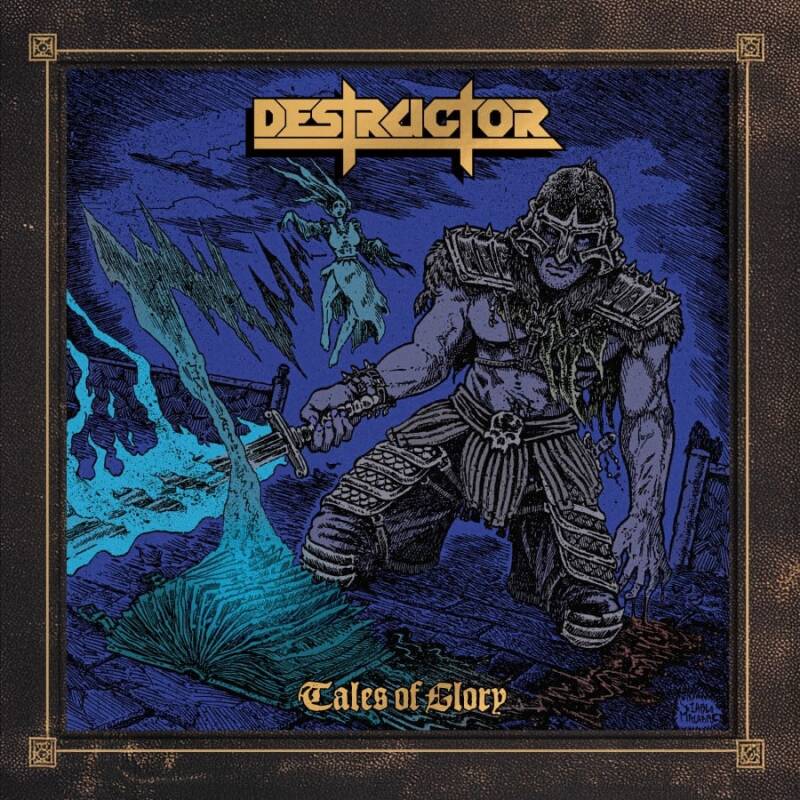
“Tales Of Glory” is your seventh album, arriving three years after “Blood, Bone, And Fire”. What did you want this record to do that the last one hadn't already done?
“Tales Of Glory” is intended to continue to demonstrate our ability to stay current and show we still have plenty of great songs to share with our fans and hopefully bring in new listeners.
You’ve described this as not quite a concept album, but more like "a book of old telling some stories." How did that framing shape the way you approached the lyrics once the songs started coming together?
Everything happened very naturally. As the music was being written I was working on lyrics to fit the songs and it dawned on me that these songs were kind of stories and seemed to all fit together. It wasn't intentional but it seemed to have a flow that worked with my working title.
The album moves from power-thrash toward traditional heavy metal and anthemic speed metal. Was that expansion planned from the outset, or did it emerge naturally through collective songwriting?
It all has been in our wheelhouse. I didn't see any real change in the style of the music from our past to today. We have always displayed all of those characteristics.
The writing process for this album brought back former members alongside the current lineup, with different players contributing full songs and co-writes. How do you keep a record feeling unified when the material is arriving from so many different hands and eras of the band?
It's pretty simple. Jamie, when a member of Destructor, has written much of the music on past records and Nick wrote 2 songs on the last record, “Blood Bone And Fire”. Tim also wrote a song on that record and proved he knew what would fit and work for Destructor. Mark, our newest member, has a great metal mind and I chose him for the band because of his style and ability to fit right into the fold. I always have the last say when it comes to arrangements so if an idea didn't fit or needed work I would edit the material to put my stamp of approval on the finished product. I want for a newer member to feel like they are part of this band and not just musicians that are playing these songs.
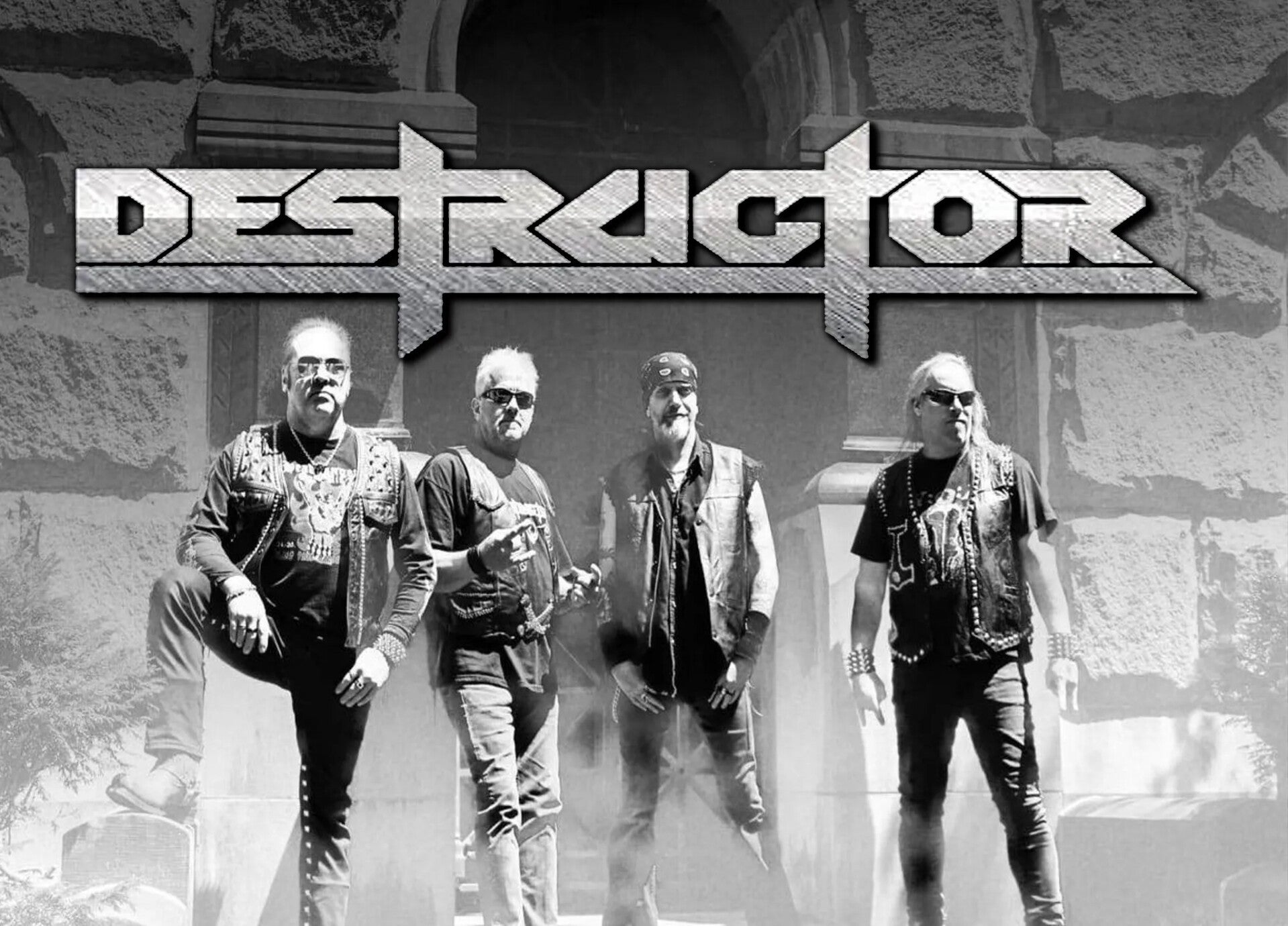
"Destructor has stayed true to our roots with still being able to expand some. We have never lost track of what we were always about and refused to jump on any new trends. Some people will praise us for that and some will be critical of that as well. What we stand for has always stayed intact."
Ten songs in thirty-nine minutes, yet the record is being described as sounding bigger and more expansive than that runtime suggests. What was the key to achieving that sense of scale without simply writing longer songs?
Our songs, nowadays, are intended to not overstay their welcome, meaning they should get to the point and the writing and song length serves the songs and not the musicians writing them. Long songs seem to lose the listener when overindulging the song with too much showing off.
Cleveland has shaped this band since 1984, through label interest, tragedy, a breakup, and a reunion. How much of that history still finds its way into the songwriting, even indirectly, on an album like this one?
That's a hard question to nail down but essentially Destructor has stayed true to our roots with still being able to expand some. We have never lost track of what we were always about and refused to jump on any new trends. Some people will praise us for that and some will be critical of that as well. What we stand for has always stayed intact.
Were there any moments during the writing or recording of “Tales Of Glory”, a riff, a lyric, a session, that surprised you, or that took the album somewhere you hadn't expected?
The surprises were that the songs were very strong and made it easy for me to write lyrics for and to find where I would be singing and allowed me to show more of my vocal abilities. Really fast songs are difficult to put harmony and melody to so not all of our songs ended up in the speed metal category.
Heavy metal and thrash have both gone through cycles of reinvention and revival over the decades you've been active. Where do you see this current wave of interest in traditional and power metal heading, and does that broader movement in the scene influence how you write?
Again, this is not easy to answer but I think subconsciously everything ends up being a bit of an influence over a 41 year period. It also helps to keep us grounded in what we want to continue to be. Meaning, we don't want to end up being a progressive band or trying something that doesn't fit our style or reputation.
Physical formats are central to this release, with CD and vinyl pressings alongside the digital version. In an era dominated by streaming, what does it mean to you that fans still want to hold a record like this in their hands?
Some fans will always want to support bands by buying physical copies of a release. Streaming is fine and has its place. You can't play compact discs in most newer cars so choosing to stream music is a natural selection. The positive thing about streaming a band's music is that someone thousands of miles away can still discover new music and that creates more fans. Streaming and the internet has brought many of us closer together so that can't be a bad thing.
The world outside the rehearsal room has shifted a great deal since your early years in the Cleveland scene, and even since your last album. Does the current climate, culturally, politically, economically, feed into the themes of glory, struggle, and defiance running through this record?
Maybe subconsciously. We do write about world events or the climate of things politically but we are not directly a politically minded band. I was influenced by punk rock as a young person so some of that still flows through a lyrical idea. It's more of an observation than a lyric telling the listener how to think. That's up to the listener to decide how they feel about all the happenings going on in the world nowadays.
After seven albums and four decades of history, what do you want a new listener discovering Destructor for the first time through “Tales Of Glory” to understand about who this band is?
We want them to understand that an older band can still be relevant. Many older bands have lost the ability to write great new music or have changed in some way. Destructor have always stayed true to our roots and we hope the new fans enjoy the music and find what we do new and fresh in a musical landscape where there are thousands of bands all trying to get noticed.
Looking past this release, what does the road ahead look like for Destructor, more records, more shows, or something you haven't done yet?
We hope to continue to play shows around the world and make more new music. We want to do as much as we can while we are still able to do so. I plan on writing a book about the history of Destructor so that's new territory for me and the band.


Add comment
Comments