

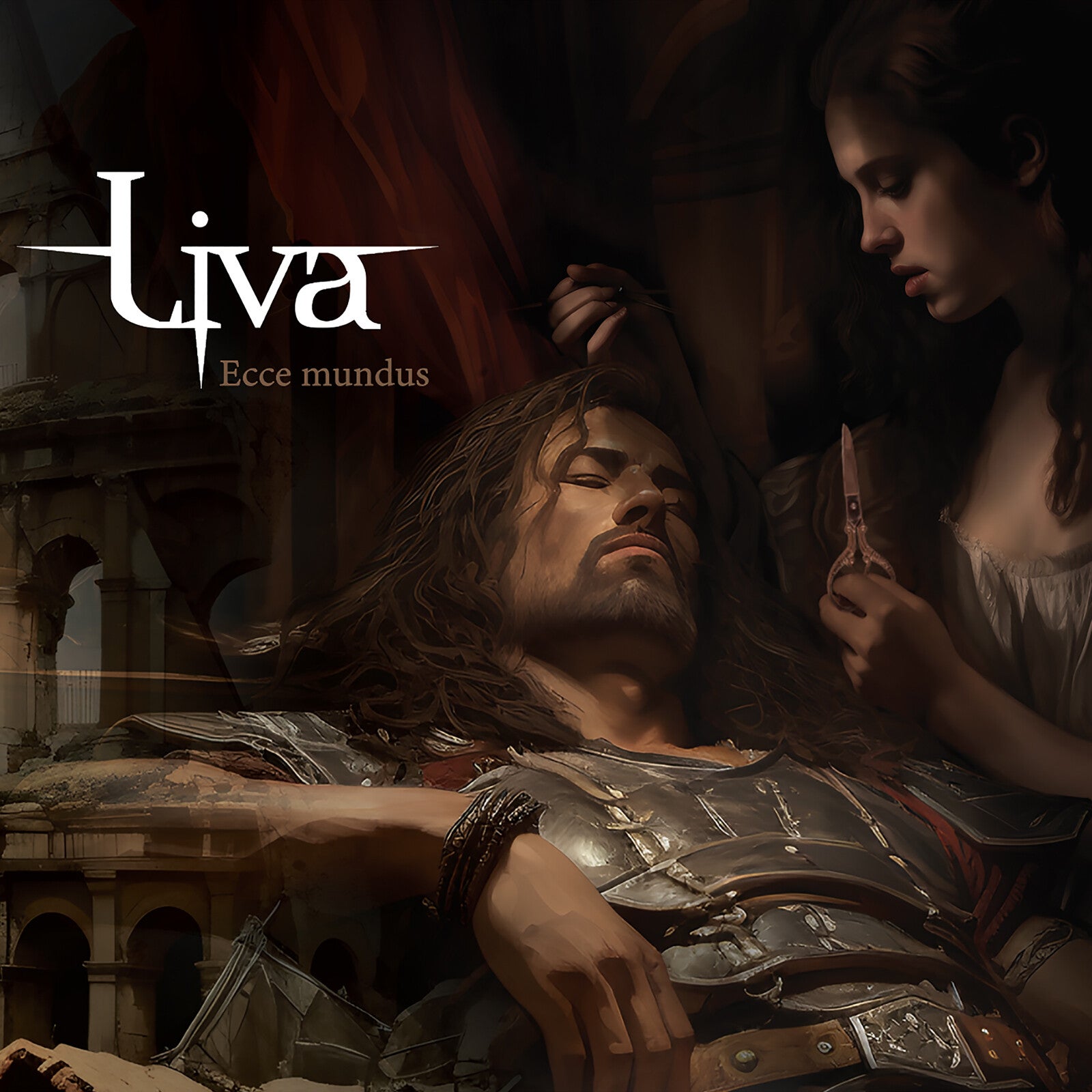
Release Date May 29th, 2026
Format Digital/CD
Genre Symphonic/Power Metal
Origin Canada
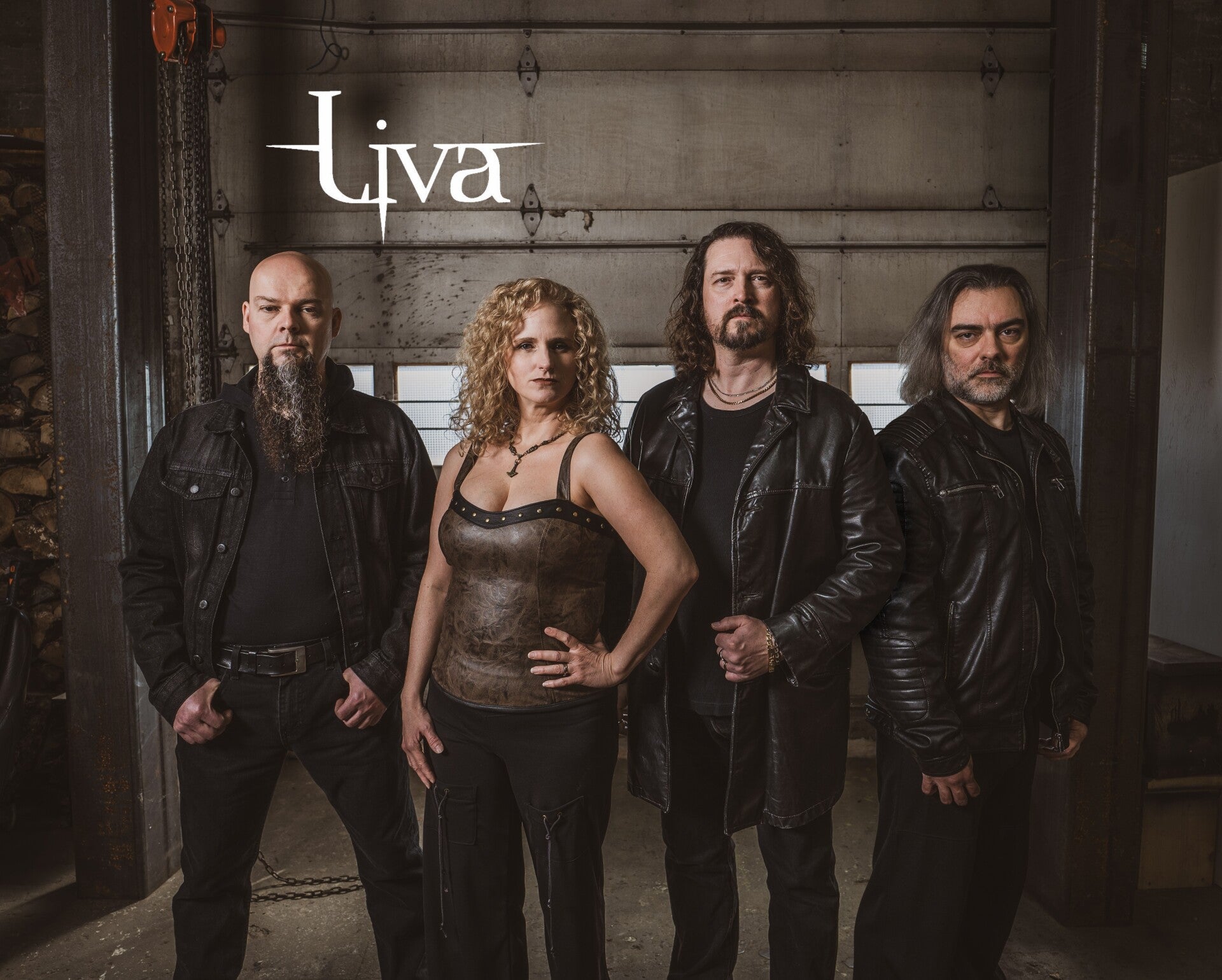
Liva formed in Sherbrooke, Québec, in 1997 and have spent almost three decades at a rare junction of symphonic power metal, classical vocal writing, death-metal phrasing, electronics, and Latin text. The current lineup is Nadine Guertin on soprano vocals, Pier Carlo Liva on death and tenor vocals, guitars, and electronics, Martin Tremblay on bass, and Claude Lacroix on drums. Their history is more substantial than the unusual premise might suggest. “Requiem” arrived in 2002 as a heavy-metal treatment of the Latin requiem mass. “De Insulis” followed in 2007, built around texts by twelfth-century theologian Alain de Lille, before “Human Abstract” appeared in 2013.
In March 2002, Liva performed with a thirteen-member chamber orchestra for a Radio-Canada broadcast, a setting that exposed how deeply classical composition sits inside their metal framework. A MIMI award for most avant-garde artist came the following year. Their concert history includes bills with major names from progressive, death, symphonic, and extreme metal. That background matters because Liva are not using Latin as decoration or as an easy route to eccentricity. The language, trained singing, choral sensibility, and extended composition have remained central from the beginning. Twenty-nine years into their existence, the band occupy a narrow lane few acts would attempt, mixing academic discipline with heavy-metal form in a manner that can sound ceremonial, severe, and oddly personal.
“Ecce Mundus” contains nine songs and lasts 56 minutes. Its central tension comes from the clash between Guertin’s trained soprano and Pier Carlo Liva’s death and tenor voices. The contrast is immediate, sometimes severe, and rarely decorative. Latin gives the vocal lines a formal, liturgical character, while the guitars and rhythm section drag them back toward heavy metal. This creates disciplined symphonic
power metal with an austere edge. The album title and songs such as “De Avaritia Et Luxuria Mundi,” “Ecce Mundus Demundatur,” and “O Roma Nobilis” point toward moral decay, worldly excess, religious imagery, and history. The words function as sound and argument at once, with cadence as important as meaning.
Production is controlled and spacious enough for the soprano, growls, guitars, bass, drums, and electronics to remain distinct. Vocals occupy the front, guitars fill the middle, and the rhythm section maintains a firm presence beneath the orchestral-minded writing. This separation prevents the arrangements from collapsing into indistinct noise. The guitars rarely chase speed for its own sake. They build firm harmonic frames and open into melodic passages shaped by the vocal exchanges. Tremblay’s bass is audible beneath the arrangements, and Lacroix’s drumming remains disciplined through long sections and shifting accents. Electronics add atmosphere in measured doses.
This is a metal album with classical construction, not symphonic dressing pasted onto ordinary riffs. The longer songs are where “Ecce Mundus” gains scale and where its flaws become obvious. Several passages circle the same melodic or rhythmic idea longer than necessary. The formal vocal approach can create emotional distance when an arrangement needs a quicker spark. The two-part “Samson & Dalila” section expands the dramatic scale, though the album’s pacing can flatten when solemnity becomes its default condition. “Sunt” provides a shorter counterpoint, while “Obscura” and “Silence” return to extended forms. That contrast helps, though it does not fully solve the uneven pacing.
The Latin delivery may also place a barrier between the music and anyone who relies heavily on immediate lyrical connection. I do not need to understand every line to hear the intent, though some passages communicate more through discipline than emotion. There is enough craft here to hold attention, especially in the exchanges between soprano and death vocals, the carefully arranged harmonies, and the darker turns beneath the ceremonial surface. The musicianship is accomplished. The editing could be stricter. “Ecce Mundus” is distinctive, intelligent symphonic metal rooted in a concept Liva has developed across decades, not adopted as a temporary novelty.
|7.0
Add comment
Comments